Weather
Mount Rainier's Snowpack Is Still Growing
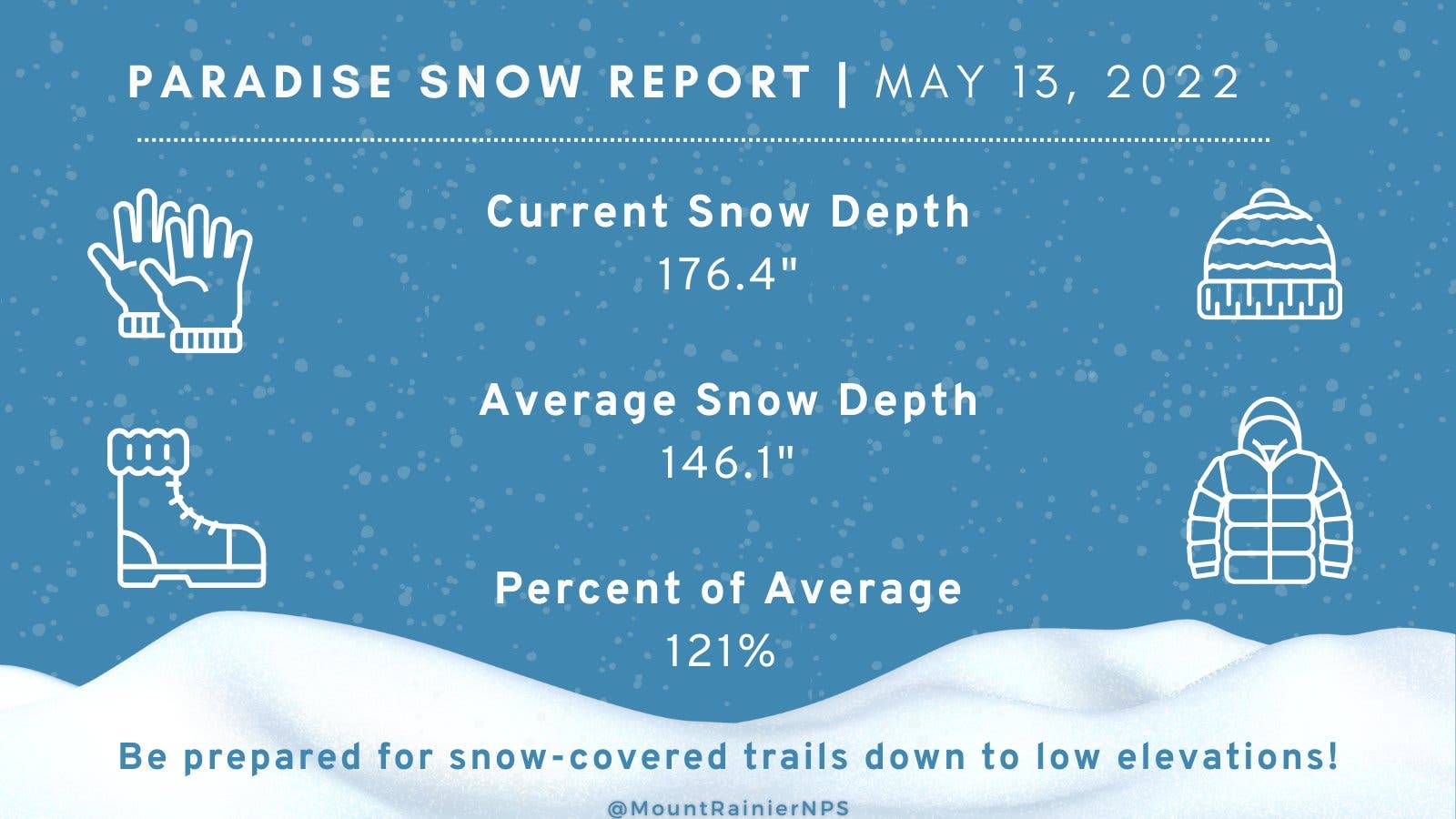
Nearly halfway through May, the snowpack at Paradise sits at 121 percent and has added more than a foot since last Friday.


MOUNT RAINIER, WA — While it might not feel like it, Washington is well into spring, but it still looks a lot like winter all around Mount Rainier.
According to the National Park Service, Paradise added another 15.6 inches to its snowpack since last Friday, and the current snow depth of 176.4 inches is more than 30 inches north of average in the middle of May. Park officials advised visitors to prepare for snow-covered trails, even at low elevations.
State transportation crews, meanwhile, face an uphill battle in clearing Chinook and Cayuse passes in time for the Memorial Day target. According to the Washington State Department of Transportation, the passes have seen 150 inches of new snow since April 1.
Find out what's happening in Seattlefor free with the latest updates from Patch.
The opening dates for both passes fluctuate each year, and in 2021 both opened with a few days to spare. The latest opening in recent years arrived on June 9, 2017. WSDOT recently shared dozens of new photos of the snow removal work and said they still hope to open both roadways by May 30.
Up north, WSDOT successfully reopened the North Cascades Highway on Tuesday, despite fresh weekend snow and added challenges amid a particularly cool spring.
Find out what's happening in Seattlefor free with the latest updates from Patch.
According to the U.S. Department of Agriculture's online map, Washington's "snow water equivalent" readings — a common measure of snowpack — remained well above average almost across the board Friday, landing as high as 145 percent in Central Puget Sound.
While forecasters see cooler, wetter conditions persisting into at least early June, climate outlooks draw a much different picture for summer. Odds from the Climate Prediction Center favor above-average conditions for most of Washington and nearly all of the United States between June and August, with below-average rainfall across the Pacific Northwest.
Get more local news delivered straight to your inbox. Sign up for free Patch newsletters and alerts.