Crime & Safety
Parents Of Man Killed By Seattle Police Feel Stranded By System
Ryan Smith, 31, was killed on May 8 by Seattle officers. There is no support system in Seattle or King County to help them in the aftermath.


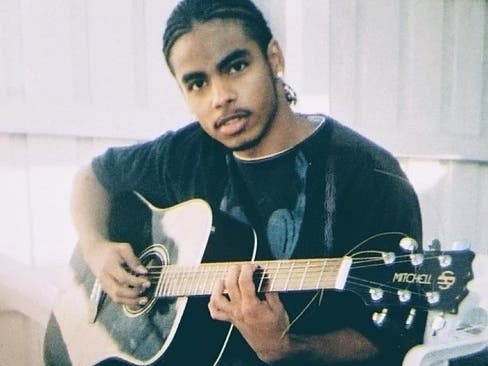

SEATTLE, WA — Rose Johnson's son, Ryan Smith, had been dead for about 20 hours before someone called to break the news. Johnson was away from home on a work trip when she got the call, and she had already been anxious because her son hadn’t been answering his phone.
“He’s here with us,” a King County Medical Examiner's coroner told Johnson at around 3 p.m. on May 9.
“You mean he’s dead?” Johnson said.
Find out what's happening in Seattlefor free with the latest updates from Patch.
“Yes.”
The coroner couldn't provide many more details, except that Ryan had been shot by police and that his body could only stay with the coroner for a few days before it would need to be moved. Johnson doesn’t remember much else. She got off the phone and searched “Seattle police” on Google hoping to get more details.
Find out what's happening in Seattlefor free with the latest updates from Patch.
An hour later a Seattle police detective called to warn Johnson that a video of Ryan’s shooting was about to be made public. The detective said Ryan had been in an “altercation” with police, which she assumed meant he had hit an officer. No one explained that there had been no physical contact between Ryan and the officers who shot him, she said.
“I said, ‘altercation?’” she recalled. “What did Ryan do? It didn't make sense to me. Ryan would not have hurt any police.”
Two months after that frantic, confusing afternoon, Johnson and Ryan’s father, Mark Smith, haven't gotten much further in their quest for information. They have fallen into what one Seattle official called a "vacuum" in the multi-agency machine that handles deadly police shootings.
There is no formal support system offered by the city of Seattle for family members who lose a loved one in a police shooting. There is no hotline or victim’s advocate to help Johnson and others like her figure out what’s going on. She’s on her own figuring out things like how to get Ryan’s body and possessions back, or what it means that King County has a police shooting “inquest process.”
By definition, Ryan is a homicide victim. But Ryan’s homicide isn’t like one caused by a drunk driver or serial killer. His death was caused by Seattle police officers, and that triggers a special investigation involving multiple agencies. The people involved are tight-lipped. Ryan morphs from a victim into a kind of liability, a thing to be investigated but not talked about in too much detail.
She’s confounded by the “stoic” conversations she’s had with Seattle police. That some people don’t use Ryan’s name, use imprecise words like "altercation," or just give her inaccurate information.
She wonders aloud, "Am I on a planet all by myself?”
6 Months In Seattle
Ryan Smith, 31, moved to Seattle at the end of 2018 for love. He reconnected with a woman he knew from high school on Facebook, and they decided to move in together. Ryan's parents saw this as a fresh start for him after a rough time in his 20s filled with bouts of depression, alcohol abuse, and a string of jobs.
Johnson raised Ryan in Burbank, Calif., and he spent his 20s living with her. But for two years in high school he lived with his father in West Seattle. That’s where he met Jess (not her real name), the woman he would eventually move in with, and the last person he had contact with on the night he was shot.
Ryan began experiencing depression in his late teens, his father remembers. Johnson said he used alcohol to cope with social anxiety. He wasn't a mean drunk, she said, and was well known around Burbank, having gone to school with officers there. One night at 3 a.m., two Burbank cops brought Ryan home after a night of drinking. She remembers it as a positive interaction when Ryan thanked the officers for help before wandering off to bed.
He did get treatment and was taking medication for depression, and spent six months in a sober living house right before he moved to Seattle.
Mark Smith remembers feeling happy when Ryan said he was moving up to Seattle. The move brought father and son closer together. For the first time in years, Ryan told his dad, “I love you.”
“Once he told me he was moving to Seattle, I was happy. I loved Seattle,” Smith, who now lives in the Bay Area, said. But now, he says the thought of the city pains him so much he can't bring himself to look at Seattle Seahawks clothes he owns.
Ryan took a Greyhound to Seattle in December to be with Jess. They eventually settled in an old pre-war apartment building in Lower Queen Anne, the kind common in Seattle's older neighborhoods with carpeted hallways, cast-iron radiators, crown molding, and thick wooden doors.
“From the moment she picked him up, he never left her,” Johnson says. She knew about how “madly infatuated” they were because she talked to Ryan regularly. Sometimes the three of them would talk on a video call. She once called to find them using therapy coloring books.
Ryan worked at a restaurant in downtown Seattle, and later cleaning yachts, Johnson said. He was a just a few days away from starting a new job at an aerospace supply company when he died, she said.
Things were looking up.
The Shooting
Jess called 911 at around 7:15 p.m. on May 8 and told the dispatcher through heavy crying, "My boyfriend is trying to kill me!" It was a warm, sunny evening, and Seattle was experiencing a sudden spike in shootings.
She tells the 911 dispatcher: Ryan is armed with a 4-inch switchblade, although she’s not sure of the exact size. He threatened to kill himself. He tackled her before she retreated to the bathroom. Jess had packed up all of Ryan’s stuff before the fight started. The dispatcher asks what race Ryan is, and she tells him, "black and Mexican" — a detail that bothers his parents because it came before the dispatcher asked for Ryan's name.
“He needs help,” Jess tells the dispatcher.
According to Johnson, Jess and Ryan had been arguing about money and Ryan's drinking in the few days before the shooting. Both parents believe Ryan was very drunk when he was shot, and possibly incapacitated by antidepressents — although the autopsy and toxicology reports had not been relesed as of June 27.
In the middle of the 911 call, Jess' crying subsides, she sounds almost hopeful.
“I might live,” she tells the dispatcher as sirens blare in the background.
Then something happens that causes Jess to panic. She starts crying, and then screaming.
“Do not shoot!” she wails. Her screaming escalates. Gunshots ring out somewhere in the apartment. She drops the phone and leaves the bathroom. She screams her boyfriend’s name. The call ends.
The police bodycam footage, with Jess' screams in the background, offers another perspective.
An officer runs down the long, carpeted hallway, joining two officers already standing at Jess and Ryan’s door. One officer is kicking the thick wooden door hard, and you can hear it rattling against the doorframe.
Another officer takes over the kicking. He’s wearing white latex gloves and holding his gun in his right hand. He kicks about 10 times, then the door bows before splintering. Another angle of the video reveals that the officer had kicked the door so hard he left a torso-size crater in the drywall behind him.
When the door falls away, you see Ryan standing in the dark a few feet behind the door. He’s just a shape. In the background, you can see the bathroom door crack open.
The shooting happens quickly — about six seconds pass between when the door falls and Ryan falls.
Once the door is down, Ryan takes one step toward the officers. A second officer standing to the left of the doorway sees this, draws his gun, and aims it at Ryan. The two officers take a few steps back down the long hallway, screaming at Ryan to drop his weapon. Ryan takes one more step into the doorway. One of the officers turns on a flashlight. Right as the light hits Ryan, the shots begin and his body collapses. The officers continue shooting at the crumpled body in the doorway. The video ends.
.jpg)
Johnson cannot bring herself to watch the video yet. Mark Smith has watched many times.
“I thought I was watching the military raid a house in Baghdad,” he says.
One thing that stands out for him in the bodycam video is when the cop’s flashlight hits Ryan. The light illuminates a small knife in his left hand, the blade pointed at the ground. SPD altered the bodycam video to freeze on that knife for a few beats. They also add a red circle to highlight the knife, to emphasize that Ryan was armed. A picture of the knife released by police shows that the blade was about 2-½ inches long.
What Mark Smith sees, however, is his son raising his hand to shield his eyes from the flashlight, not an attempt to stab.
“There’s one shot I know broke his wrist and his neck. He raised his hand up to block the flashlight,” Smith says. “I watched it over and over again. Once that light came on, Ryan automatically raised his hand. That's why he was shot in the wrist.”
From what Johnson has heard — people have described the bodycam video to her — she thinks Ryan was moving toward the officers to talk or surrender. That, or he was so intoxicated he didn't realize what was going on.
"Ryan needed their help, not to be shot 10 times and killed," she said.
Ryan was the third person shot and killed by Seattle police since Dec. 31, when Iosia Faletogo was shot while wrestling with Seattle officers after a traffic stop along Aurora Avenue North. Like the video of Smith's shooting, the video showing Faletogo getting shot freezes for a second on a gun Faletogo was holding and highlights the weapon in a red circle.
Seattle police will not provide details beyond what has been released so far because the shooting is still under investigation.
Protocol, No Policy
According to Seattle police spokesman Sean Whitcomb, any family's main point of contact is the Seattle police Force Investigation Team (FIT). It was a member of the FIT team who called Johnson and Smith on May 9, after the coroner’s call, to tell them that the video of Ryan’s shooting was going to be released to the public.
Since the shooting, Johnson has been speaking to one FIT detective, but she describes the conversations as “cold” with few details. She estimates she’s had about 10 conversations with various people at Seattle police, including a call to the police chief that went unanswered.
Whitcomb said the department has a protocol for talking to families, but not necessarily a policy you’ll find written down anywhere.
“Our investigators are available to answer questions that are within our ability to answer during the early stages of the investigation,” he said. "We want to be incredibly sensitive whenever there is a loss of life and understand that there are impacts felt for survivors of incidents like this."
From California, Johnson has mostly been doing her own work to get information. She's been surprised by some pieces of information.
In a press release about the shooting, Seattle police said "[King County] Sheriff’s Office investigators also responded to conduct an independent investigation." But that's not totally accurate. The sheriff’s office will provide an independent review of the Seattle police FIT investigation once it’s done, according to KCSO Sgt. Ryan Abbott, but no sooner. Johnson found this out when she called the sheriff’s office.
Johnson learned through an internet search that one of the officers who shot Ryan, Chris Myers, has killed before. On Aug. 30, 2014, he and another officer shot and killed a man who opened fire on officers from a Queen Anne home. He got the Seattle Police Foundation’s medal of honor in 2016 for that, which angers Johnson.
She got some of Ryan’s possessions back from the apartment building manager (who told her that Ryan used to help people around the building and was well-liked), but she can’t locate his favorite backpack and wallet, which contains a picture of Ryan with his sister. The coroner told her she would have to get Ryan’s body moved as soon as possible, which she did toward the end of May. A Seattle police FIT detective referred her to King County’s victim assistance service to possibly get reimbursement costs related to that, but she says the claim may take months to investigate. She's setting up a GoFundMe fundraiser in the meantime.

On top of these things, Ryan's parents are navigating Seattle’s complicated recent history with police shootings, and the accompanying bureaucracy.
Almost eight years ago, Seattle police entered into a "consent decree" with the Department of Justice to curb use-of-force and change other policies, like training and discipline. Under that agreement, a federal judge oversees reforms and decides whether police are complying with the consent decree.
U.S. District Court Judge James Robart found the department in "full and effective" compliance in with the consent decree in January 2018, but recent setbacks have kept SPD under the judge's watch.
In May, Robart found Seattle police partially out of compliance with the consent decree. That's because of a new police contract that change how officers can appeal discipline. Robart highlighted the case of Officer Adley Shepard, who was fired for punching a handcuffed woman, but won his employment back in an appeal process. Then on June 25, the Seattle Times revealed that Mayor Jenny Durkan, a former U.S. Attorney who oversaw the consent decree in 2012, assembled an advisory panel to validate the city’s position that reforms have been good enough.
The consent decree created the FIT team, which handles the immediate investigation after a shooting. Once the investigation is complete, the department's Force Review Board, comprised of Seattle police officers, reviews those findings to see how they match with department policies.
The case then heads to King County Prosecutor Dan Satterberg, who can decide if officers should face criminal prosecution — after a decade in office, Satterberg has never done that.
Satterberg has been stymied by an old state law that required prosecutors to prove that an officer had acted “with malice” when using deadly force. That standard changed after the passage of I-940 last November. Now, officers can be held criminally liable under a “good faith” standard that relies in part on “whether a similarly situated reasonable officer would have believed that the use of deadly force was necessary.”
Outside of criminal charges, King County Executive Dow Constantine can order inquests into deadly police shootings, but that process that has also undergone a lot of recent changes.
Constantine halted inquests in October to implement new reforms, and inquests just got back underway on June 1. A new panel of retired King County judges will oversee inquests, and there's a new online portal to view findings.
But now there's an inquest backlog. There are five left over from 2017, including Charleena Lyles, plus seven more that have been sent to Constantine for inquest review by Satterberg's office, one of those being the Dec. 31 killing of Iosia Faletogo.
The civilian-led Seattle Office of Police Accountability, meanwhile, handles complaints against officers. Johnson has been in touch with OPA, but hasn’t filed a formal complaint yet against Myers or Ryan Beecroft, the other officer involved in Ryan’s shooting. If she does, OPA would likely conduct a separate investigation into Ryan's shooting alongside FIT.
Of all the people involved in the process, OPA Executive Director Andrew Myerberg was perhaps most direct about the lack of support available to Johnson and Mark Smith — and all the other family members of people killed by police.
“It’s a gap in the system,” he said. "Having a central clearinghouse would be helpful."
Myerberg was recently at a meeting in California where he learned that the Los Angeles Police Department has two people on staff who help guide families affected by police shootings. It’s a position the OPA is “pretty strongly” thinking about as an option for Seattle, he said. However, the position would have to be created by Seattle police, not OPA.
“It’s definitely a work in progress in Seattle and nationally,” he said.
Community Group Fills Gap
The organization Not This Time! was founded in 2016 by Andre Taylor, whose brother, Che Taylor, was shot and killed by Seattle police that year. The Taylor family encountered the same void that Rose Johnson and Mark Smith have.
"Our family went through this same trauma, and we didn't have anyone to turn to. We started turning on each other," he said.
It's nearly impossible, he said, for families to "breathe and fight" simultaneously after a death.
Not This Time! is the one organization that local families have been able to turn to support in the wake of a shooting. Right now, Taylor estimates they're working with up to 13 families who have lost loved ones in a police shooting. The organization struggles to keep with all the work.
Taylor has also been a main advocate for reforms like I-940. He advocated for the reform of the King County inquest process, and one victory that came out of the inquest reform was the county approving funding for public defenders to represent families during an inquest. Taylor says that needs to be taken a step further, with funding for public defenders as soon as a killing happens, so families don't have to wait months for an inquest to start to get representation.
Taylor said Johnson and Smith's case is more difficult because they live in California. That means they'll have to take the time and expense to travel to Seattle to advocate for their son.
"It's unfair. That's the reality we're in," he said. "The city needs to have a fund just like they have to protect law enforcement. They need to fund organizations like mine or someone who's going to do this work to help families in trauma."
Mom Wants Human Touch
When Johnson got Ryan’s body back to California, a funeral home worker warned her about some of his wounds.
The most painful one for Johnson is the one that destroyed her son's wrist. Ryan was a talented piano and guitar player — Mark Smith fondly recalls how quickly his son was able to play “Stairway to Heaven” — and it's one of the things she loved about him most.
One time at a department store in the Los Angeles area, Ryan sat down at a piano and started playing. A woman approached Johnson and asked where her son studied. She felt proud to tell the woman that Ryan didn’t study anywhere, he was just talented.
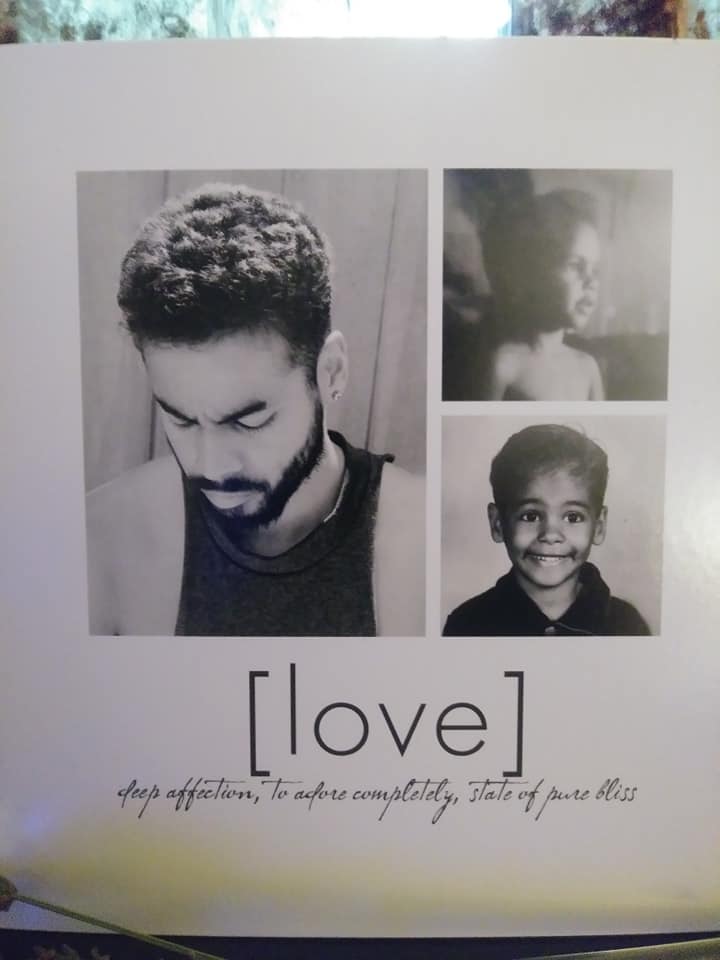
She wants investigators and police officials to remember moments like that. Ryan was a human with a life and memories, and that's who his family is missing.
“Ryan would not hurt anyone, ever. He's not a perfect person, but what I can promise you is Ryan was a good human being, he had a good heart,” she said. “When it came to those officers, he didn't think they'd hurt him.”
Clarification: This story has been updated to clarify that SPD, not OPA, would be in charge of hiring an advocate for families in this situation.
Get more local news delivered straight to your inbox. Sign up for free Patch newsletters and alerts.