Politics & Government
Port Of Seattle Race: Ryan Calkins Vs. John Creighton
Read the Patch candidate questionnaire for the position 1 seat on the Port of Seattle Commission.


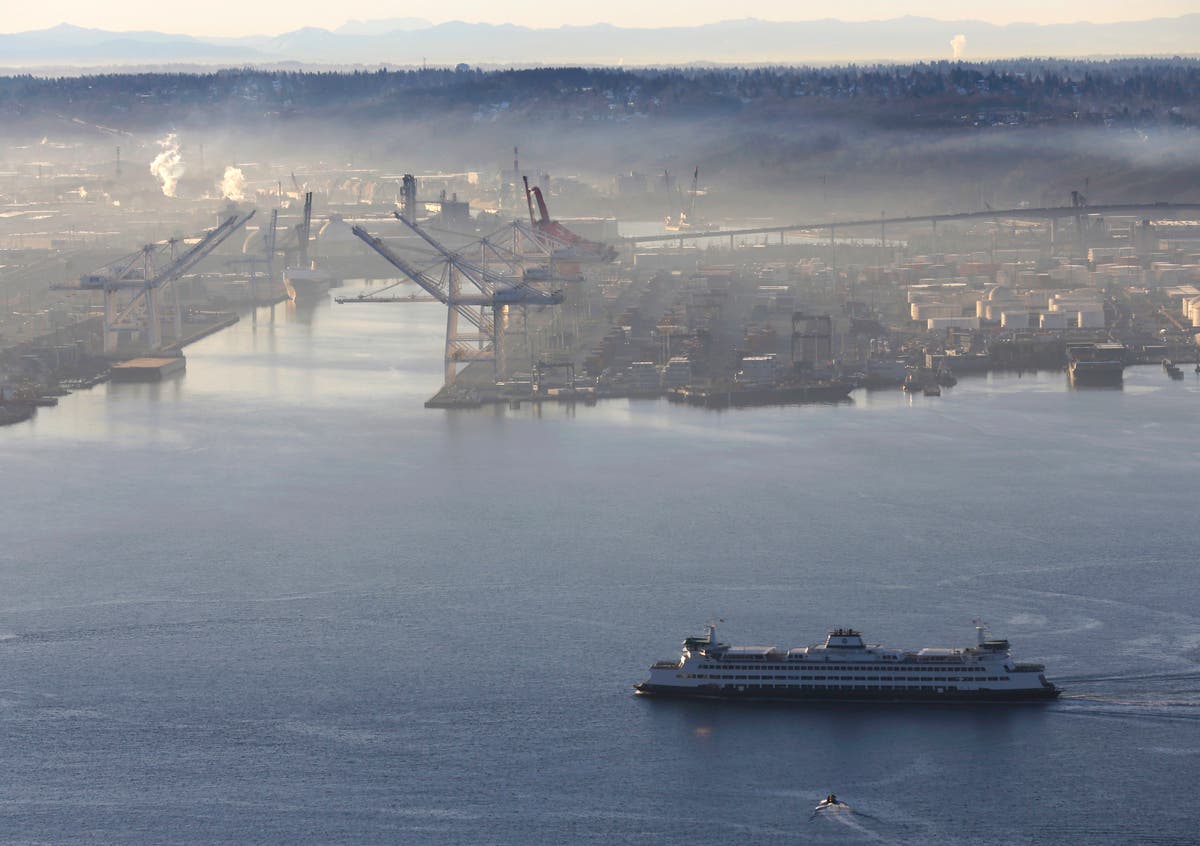
SEATTLE, WA - Many voters might gloss over the Port of Seattle races because, well, you never really hear from Port Commissioners. But these are really important races because the Commissioners are making big decisions that affect the environment, travel, and economic development. Did you hate it (or love it?) when Shell Oil used Seattle as a staging ground for its giant oil rig in 2015? Then you should pay attention to who's running for the Port Commission.
The position 1 race this year is between incumbent John Creighton and challenger Ryan Calkins. Calkins is running to the left of Creighton; for example, Calkins wants Sea-Tac should be a place of refuge for immigrants rather than a barrier for them. He also supports the $15 minimum wage, and is promising to focus on creating living-wage jobs.
Creighton, who has served as a Commissioner since 2006, has more institutional support - he's received big donations from corporations like Delta, BNSF, and Alaska Airlines; he's also been given $2,000 by local developer Martin Selig, who was a Donald Trump supporter. But if experience is your thing, Creighton definitely has that. In addition to being a lawyer and serving three terms on the Commission, he serves on the state Freight Mobility Strategic Investment Board.
Find out what's happening in Seattlefor free with the latest updates from Patch.
In late September, Patch sent local candidates questionnaires to help voters decide who they want to pick. We did not edit the answers and allowed candidates to write as much or as little as they wanted. Here are the answers from Calkins and Creighton:
Ryan Calkins
Why did you decide to run for this seat? For incumbent candidates, what made you decide to run for reelection?
Find out what's happening in Seattlefor free with the latest updates from Patch.
I am a business owner, nonprofit professional and lifelong Democrat active in progressive politics running to bring new leadership to the Port. For over ten years, I ran an import company, working directly with shipping operations at the Port. I’m currently working for Ventures, a nonprofit that supports low-income entrepreneurs as they start and grow their businesses. I’m running for the Port of Seattle Commission to make an impact on critical issues facing our region: economic opportunity, environmental sustainability, and effective leadership.
If you could pick one thing for the Port to stop spending on, what would it be?
I will work to eliminate any and all spending on the dirtiest fossil fuels. In addition, I do not support the export of coal or oil through the Port of Seattle. While there are obvious implications for our global climate in participating in the fossil fuel economy, the local issue for the Port, and costs for our city is the threat that transporting coal and oil represents to our communities. The Port of Seattle Commission has a responsibility to safeguard public health. Transporting coal and oil puts public health at risk because of the ongoing effects on air quality and because of the risk of catastrophic accidents.
If you could pick one thing for the Port to increase spending on, what would it be?
The Port of Seattle has the capacity to be a leader in career and technical education. We are facing a shortage of workers in certain areas of skilled labor, and also must address the employment churn resulting from information technology and automation. The Port should lead a consortium of governments, businesses, and educational institutions to expand CTE.
What role do you think the Port has in mitigating the effects of climate change?
The Port has a major role to play in reducing the impacts of climate change. As a member of the Port Commission, I will prioritize action against climate change while helping to create family-wage jobs, including: Voting no on any effort to lease Port facilities to fossil fuel extraction; Encouraging the electrification of the Port vehicle fleet and the expansion of charging facilities; Working to create dockside rail connections to minimize truck traffic congestion, increase safety for non-motorized travelers, and diesel emissions; Building a more environmentally friendly airport, including the creation of safe and connected bike routes for employees and travelers to SeaTac, and other efforts to increase efficiency within the existing facility. Finally, I will work to help the Port adapt to an expanding local population by supporting policies that encourage a denser urban core rather than broader suburban sprawl.
What’s the most prominent issue facing the port right now and what do you think should be done about it?
The economic boom we are experiencing is both an opportunity for our region and a source of conflict. We need civic leaders who ensure that economic prosperity reaches all members of our community. The Port of Seattle has the economic power and the responsibility, as outlined in its mission, to address this disparity. The Port Commission should expand the already successful apprentice programs such as the collaboration between Seattle College and Vigor industries that trains hundreds of maritime welders and places them in family-wage jobs. The mission of the Port of Seattle is to create jobs through economic growth. Unfortunately, the seaport currently operates at around a third of its total capacity, in part because Terminal 5 does not have a long term lease with a terminal operator or a shipping alliance. My focus as Commissioner would be to complete the refurbishment of Terminal 5 to prepare it for the new megaships that will make up the majority of container traffic in the coming decade, and to find a tenant to operate it as a container cargo terminal.
Alaska and United will soon start flying out of Paine Field. Do you think it will eventually be necessary for the region to get a second major airport similar to Sea-Tac?
The Port Commission needs to be working with local governing authorities to improve our regional transportation infrastructure. The focus should be on the movement of people and goods north and south from Vancouver BC to Portland and beyond. The introduction of high speed rail along this corridor would displace some of the low-efficiency, resource intensive regional flights that clog our runways with smaller planes. Paine Field may help to ease that congestion; as a Port Commissioner, I will be eager to learn more about its impact to local transportation.
Do you think laws being passed in Seattle – high earners income tax, $15 minimum wage, etc. – are damaging the region’s ability to compete on a global scale?
The single most effective means of boosting economic growth is to put more money in the hands of the economically disadvantaged. Sensible increases to the minimum wage do just that. We had reached a point of near historic lows (in inflation adjusted terms) for the minimum wage and the increase at SeaTac, in Seattle, and in Washington State were vital to boosting the purchasing power of the lowest tier of earners. As a small business owner, I know that businesses benefit when more consumers can afford to patronize my business.
From a style perspective, do you prefer Alaska or Virgin?
That’s like asking me to choose between chocolate and peanut butter. Both are great, but even better when put together! I love both airlines and I’m happy to see Alaska growing to both compete in the airline industry and continue to support our local economy.
John Creighton
Why did you decide to run for this seat? For incumbent candidates, what made you decide to run for reelection?
In 2012, I co-chaired the Port Commission’s Century Agenda Committee, which developed a 25-year strategic plan to create 100,000 new port-related jobs for our region. And under my leadership on the Commission, the Port has moved forward over 50 green initiatives with respect to clean air, clean water, habitat restoration, brownfield cleanup and the like.
I want to make sure that Port jobs growth remains on track while we work to continue to be a good neighbor and environmental leader.
If you could pick one thing for the Port to stop spending on, what would it be?
The port tax levy should not be used to subsidize big business. Under my leadership on the Commission we have not only reduced the tax levy but shifted away from subsidizing operations and used it for projects that provide a public good such as cleaning up contaminated industrial sites and putting them back into productive use and noise insulation at public schools near Sea-Tac Airport.
If you could pick one thing for the Port to increase spending on, what would it be?
Federal law constrains the spending of airport revenue off airport property. Yet, Sea-Tac Airport has tremendous impact on the communities surrounding the airport and they are starting to show tremendous strain in the face of the airport’s recent rapid growth in flight operations. The Port needs to be a better neighbor to these communities and invest in ways to mitigate its impact such as planting tree canopies throughout these communities to act as sight and noise buffers.
What role do you think the Port has in mitigating the effects of climate change?
The Port has a significant role in leading the region and the world to a cleaner future. Under my leadership at the Port we have electrified ground support equipment at Sea-Tac Airport, installed shore power at many marine terminals so that ships don’t need to run their engines while at berth, and reduced energy usage at Port facilities by 25% even as we have grown, among many other projects. The elephant in the room is emissions from aircraft engines. I have championed the Port working with our airline partners on an aviation biofuels initiative at Sea-Tac Airport. Aviation biofuels would not only reduce greenhouse gas emissions; studies show they also reduce particulates by 50-70%, important to the health of communities around the airport.
What’s the most prominent issue facing the port right now and what do you think should be done about it?
As discussed in my answer below, Sea-Tac Airport has seen tremendous growth and is bursting at the seams. Last year, the Commission approved over $2.4B in airport expansion and renovation projects, but that is really just to handle current growth. We need to start discussions now about a second major regional airport.
Alaska and United will soon start flying out of Paine Field. Do you think it will eventually be necessary for the region to get a second major airport similar to Sea-Tac?
Sea-Tac Airport has been the fastest growing airport in the country for the last three years in a row. Last year, 45M people traveled through Sea-Tac, and it is projected that 65M people a year will use Sea-Tac by 2035. The problem is, initial analysis shows that Sea-Tac probably has the upper capacity to only handle 55M passengers a year! The two gates planned at Paine Field will be able to handle up to 30 flights a day. Sea-Tac Airport currently sees over 1,300 flight operations daily. Paine Field needs to continue to expand its capacity and the region needs to start a conversation about a second major airport in the Central Puget Sound region now.
Do you think laws being passed in Seattle – high earners income tax, $15 minimum wage, etc. – are damaging the region’s ability to compete on a global scale?
The issue that has raised the minimum wage debate – regional affordability – is exactly why we need to maintain a strong maritime industrial base in Seattle. The jobs supported by port infrastructure are for the most paying good-paying middle class jobs on which workers can support families. The Port under my leadership has worked with stakeholders to make sure that we have strong workforce development programs in our region to ensure that workers are getting the training they need to advance their careers and local youth are getting the training they need to access entry-level port jobs.
From a style perspective, do you prefer Alaska or Virgin?
I grew up in East King County, fishing in the Puget Sound with my father, hiking the Olympic Peninsula and the Cascade Mountains with my scout troop, skiing at Ski Acres and Stevens with friends, and running the family dogs under the tree canopies of Bridle Trails State Park.
Image via Ted S. Warren/Associated Press
Get more local news delivered straight to your inbox. Sign up for free Patch newsletters and alerts.