Politics & Government
Seattle Port Race: Preeti Shridhar Vs. Peter Steinbrueck
UPDATE: We now have answers to the Patch port candidate questionnaires from both Shridhar and Steinbrueck.


SEATTLE, WA - Back in late September, Patch sent questionnaires to all the candidates running for office in King County from the Enumclaw City Council to the Seattle Port candidates. The purpose was to get answers to some important (and not so important) questions, and to gauge the responsiveness of the candidates.
Not a surprise: a lot of people didn't get back to us. Not a single Renton City Council candidate, for example, wrote back. Issaquah mayoral candidate Mary Lou Pauly told us she's "got too many forums and campaign activities to carve out sit down time to do more surveys right now." Plenty of other candidates waited until literally the last minute to fill out the questionnaire.
As of Monday, Seattle Port Commission candidate Peter Steinbrueck had not returned his questionnaire while his opponent, Preeti Shridhar, had (within a few days of the first email we sent, in fact). But after we published that story, Steinbrueck apologized and quickly returned his questionnaire.
Find out what's happening in Seattlefor free with the latest updates from Patch.
So, we're happy to report that you can now read answers from both candidates:
Preeti Shridhar
Why did you decide to run for this seat?
Find out what's happening in Seattlefor free with the latest updates from Patch.
For the past 25 years, I have devoted my career to public service. I have been responsible for innovation in local government and made sure that is accountable and accessible. As a mom and longtime resident, I understand what we value about living here and will work to protect it. As your Port Commissioner, I will make sure that all members of our community benefit from a strong economy, while protecting the beautiful natural environment we hold dear. I will make sure that the Port of Seattle is held accountable and makes wise use of public resources. I will work to build healthy communities where an inclusive economy creates opportunities and shared prosperity for all. And I will ensure that the Port’s actions uphold the values that we share. I would be honored to earn your support.
If you could pick one thing for the Port to stop spending on, what would it be?
Lawsuits and other legal actions. Currently the Port is defending itself against several lawsuits, including for wrongful termination. The money that these legal actions cost would be better spent reducing the conflicts that led to the lawsuits in the first place. We need to take a close look at the Port’s legal department, which is much larger than those of other agencies, as well as employment and contracting practices, to put a stop to these wasteful expenses.
If you could pick one thing for the Port to increase spending on, what would it be?
Workforce development efforts. The “silver tsunami” is affecting the workforce across the Port’s industries, whether it is airline pilots or maritime workers. There are more people retiring from these jobs than are being trained for them. My experience in Renton, developing career pathways with the local colleges, would come in handy at the Port.
What role do you think the Port has in mitigating the harm of climate change?
Addressing climate change, greenhouse gas emissions and overall environmental protection is my top priority and has defined my working career. As Port Commissioner I will work hard to accomplish the following:
- I will help to manage the Port’s efforts to reduce carbon emissions and develop a sustainable aviation biofuel supply system, which will also protect the air quality in the cities around the airport.
- I will focus on converting Port fleet including drayage trucks to hybrid/CNG vehicles. In Renton, all the city garbage trucks were converted to CNG and city fleet was hybrid.
- I also have experience with comprehensive efforts to reduce waste and conserve resources, having initiated many of Seattle’s programs.
Additionally, we need to invest in sustainability to improve quality of life in our region, to protect our beautiful natural environment, and to ensure a long-term future for our businesses.
- Manage double-digit passenger growth at Sea-Tac Airport – now the ninth busiest airport in the nation – while making sure the Port’s environmental footprint doesn’t grow at the same rate.
- Work to meet all increased energy demands through conservation and renewable energy sources.
What's the most prominent issue facing the port right now and what do you think should be done about it?
I believe the most important issue facing the port is a lack of trust. Residents across King County feel there is a lack of transparency and accountability at the Port of Seattle and that affects the Port’s ability to address pressing transportation, environmental, and economic issues. I believe we must elect Port Commissioners who will serve with openness, honesty, transparency, and accountability in all decision-making and restore resident’s trust in their port.
Alaska and United will soon start flying out of Paine Field. Do you think it will eventually be necessary for the region to get a second major airport similar to Sea-Tac?
Our regional transportation system and infrastructure are designed around Sea-Tac as our major airport. Because of that, I believe we must address capacity issues to ensure our airport is serving the maximum number of flights efficiently and safely. In the long run we do need to look for the best options to meet the growing demands and need to start planning now. On this issue and any issue that comes before me as a Port Commissioner, I believe the most important thing to do is to be completely transparent, engage the community, and work towards a collective agreement. I care for airport communities and understand the issues facing them. As Port Commissioner I will work to make sure there is an inclusive discussion engaged
process to achieve the best of both interests.
Do you think laws being passed in Seattle – high earners income tax, $15 minimum wage, etc. – are damaging the region’s ability to compete on a global scale?
For the cities of SeaTac and Seattle, the $15 minimum wage increase has in a short time increased opportunity for employers and employees alike. As a longtime public servant working for local governments, I believe it is essential we allow local control. Although a high earner income tax might not be right for all cities, it could be the right step for the City of Seattle to find needed new revenue without adding to the unfair burden on lower and middle income families.
From a style perspective, do you prefer Alaska or Virgin?
I have lived in King County for 25 years and will always be loyal to Alaska Airlines! Alaska has now purchased Virgin America and says some of the airlines style will be incorporated into Alaska’s look, like mood lighting and playing music at airport gates.
Peter Steinbrueck
Why did you decide to run for this seat? For incumbent candidates, what made you decide to run for reelection?
I am running for the Port of Seattle because I have been a lifelong civic and environmental activist, and am passionate about working for the greater good! It’s a critical time for the Port, and I am an experienced and effective leader who gets things done. I am an architect, urban strategist, community planner. I was a Seattle City Council member for a decade (1997-2007), including two years as its president. As an urban planning and environmental consultant, I have a deep knowledge of best practices in greening infrastructure and sustainable cities, as well as in and use, planning, transportation, budgeting, labor relations, and how to make government work. I value our neighborhoods, but also know the importance of working regionally on issues that impact all of us. I am intimately familiar with the Port, having passed legislation to protect industrial lands, living wage jobs, and I won’t need on-the-job training. In addition to my professional training and skill set, I’m also small business owner and have over 30 years’ experience running a small business including managing, hiring, supervising, contracting, and business development.
If you could pick one thing for the Port to stop spending on, what would it be?
I would like to see a better solution to the Port’s plan to cut down nearly 3000 mature trees at Sea-Tac Airport, apparently mandated by FAA’s flight safety standards. This is a regrettable loss, as trees and our urban forests provide not just aesthetic value, but multiple human, health, and ecological benefits. The Port needs a strong tree preservation policy for it many acres of parks and open space. I want an independent review of this clear-cutting plan, and if some trees must be cut down, I a want to see nearby neighborhoods protected, and full ecological parity with the removal of larger mature trees and cover, replaced wherever possible with large trees and equal or greater cover.
If you could pick one thing for the Port to increase spending on, what would it be?
I would increase funding for youth internships, veterans, and equitable workforce development. Not everyone wants a tech job, and Port jobs are stable, middle wage jobs. Currently the Port has a youth program that provides for 200 internships for high school students throughout King County. The program holds great promise in giving young people, particularly from underserved communities, immigrant and communities of color, exposure to family wage jobs in Port industries, potential and a possible career ladder. In 2016, there were just 114 positions. I would like to see this program expanded to provide 1000 or more at the high school, college, and veteran levels!
What role do you think the Port has in mitigating the effects of climate change?
Climate change is a global crisis of unprecedented proportion, and our gravest challenge. The Port in facilities and operations has a huge environmental footprint, and an equal responsibility to do all it can within its public mission and means to mitigate it. Where there is poverty there is typically more toxic waste, pollution, and poorer health. These are also environmental justice issues with our local communities, and especially in south MLKing County where social and cultural inequities and health disproportionalities are nowhere else more apparent. As Port Commissioner, I will take a strong, active and determined leadership role through my environmental advocacy, and by directing efforts to reduce the Port’s GHG emissions clean-up of toxic wastes, and by partnering with community, other agencies and responsible jurisdictions toward healthier environment for all. Working with colleagues on the commission, I want to move the needle by extending the Port’s role beyond its legal responsibility, by building stronger partnerships with communities and local governments to support cleanup efforts and to mitigate noise and air pollution. Benchmarking, establishing measurable outcomes in clean-up efforts, and reducing all forms of pollution including CO2s are the goals that must be insisted upon and vigorously pursued. I have many bold ideas and strategies for mitigating climate change and building heathier communities.
What’s the most prominent issue facing the port right now and what do you think should be done about it?
Airport growth, and specifically capacity constraints, air pollution and noise effects are the Port’s biggest issue. Sea-Tac airport is one of the fastest growing airports in the nation, is also one the biggest generators of carbon emissions in our metro region and state. jet operations and vehicle trip generation, are the two biggest sources of CO2 emissions and about equal. Aviation biofuels can significantly reduce GHG emission and air pollution but are unfortunately not sustainable, and considered to be a huge environment justice issue globally, according to the International Civil Aviation Organization, biofuel from palm oil threatens food security, biodiversity, native forests and land protections in developing countries. A better solution for the future, may be to look to other more sustainable alternative fuels, electric powered planes, improved regional transit connections to the airport, and interstate high speed rail.
Alaska and United will soon start flying out of Paine Field. Do you think it will eventually be necessary for the region to get a second major airport similar to Sea-Tac?
Yes, Sea-Tac, the 9th busiest airport in the U.S., is already experiencing severe capacity issues from rapid growth in operations, traffic congestion, noise, air pollution, etc., and is land constrained. A second regional airport will be necessary, perhaps much sooner than some think. We must begin the work now to determine how best to meet future growth needs for air travel and (growth in air cargo transport), and where to best to site a secondary regional airport. Sea-Tac airport is a critical asset of statewide economic importance, but even with much needed facilities improvements, could react ultimate capacity within 5 to 10 years at the current rate of growth, according to Port officials, so the time is now to beginning planning for a secondary regional airport. The Port of Seattle could borrow from the model of its successful seaport merger with the Port of Tacoma container shipping facilities in looking to partner with a neighboring jurisdiction.
Do you think laws being passed in Seattle – high earners income tax, $15 minimum wage, etc. – are damaging the region’s ability to compete on a global scale?
I couldn’t tell you if the Seattle’s social equity measures are hurting our competitiveness on a global scale. In most metro area economies, jobs drive demand for housing, and from the unprecedented growth we’re seeing, it would appear the region is thriving economically. No question that we have a highly regressive tax system in Washington state, and wage and income disparities are growing acute here and nationally. And state level tax reform is a political conundrum. But if the ports of Seattle and Tacoma, our new “Northwest Seaport Alliance,” is to remain globally competitive, local governments including Seattle and King County must align economic policy, infrastructure investment, and do a better job of protecting manufacturing and industrial lands, where stable middle wage jobs are created.
From a style perspective, do you prefer Alaska or Virgin?
I have never flown on Virgin, so I couldn’t really say. When I fly, I often chose Alaska Airlines, headquartered in Seattle, and innovator among commercial airlines.
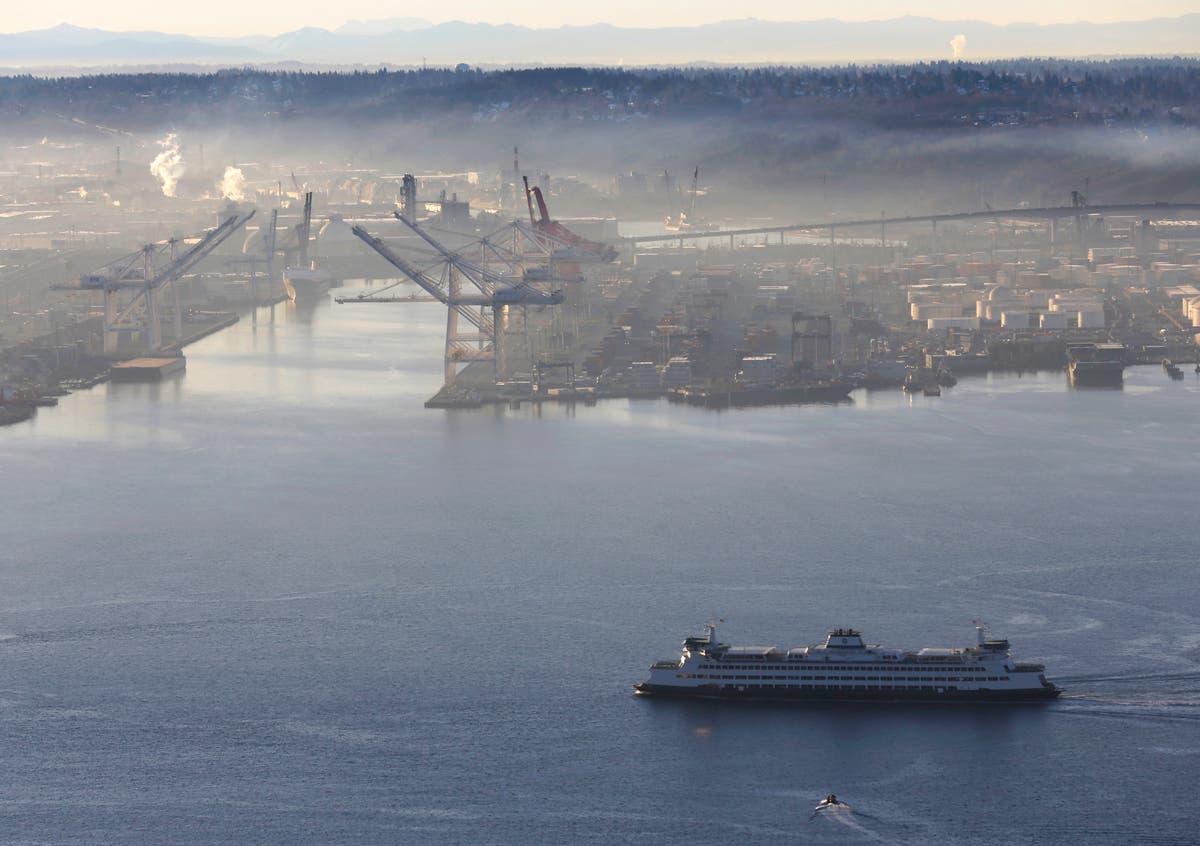
Image via Elaine Thompson/Associated Press
Get more local news delivered straight to your inbox. Sign up for free Patch newsletters and alerts.