Community Corner
Is Reporting On Puget Sound Homeless Crisis Slanted?
You asked Patch to look into whether coverage of the media crisis is slanted. Here's what we found.


SEATTLE, WA - In July, we asked you to vote on a question for us to answer about the homelessness crisis in Puget Sound. You chose a question about media coverage of homelessness.
"Why is every article about [homelessness] so slanted? Where are the stories about the negative impact [homeless people] have on the rest of the city?"
The short answer: Media outlets are cranking out stories about the “negative impact” of the homeless crisis. But, the answer to this question is little more complicated.
Homelessness has been at crisis levels in Puget Sound for years. But only recently did we find out that King County has the highest population of homeless in the U.S. only behind New York City and Los Angeles. In November 2015, former Seattle mayor Ed Murray and King County Executive declared a "state of emergency" over homelessness, and that's still in effect.
Find out what's happening in Seattlefor free with the latest updates from Patch.
There's no shortage of stories for media outlets to cover, and some of those stories reflect negatively on the homeless.
Headlines about homelessness
Find out what's happening in Seattlefor free with the latest updates from Patch.
Chatwinderjit Nagra, 26, lives in an RV at the north end of Boeing Field in Seattle’s Georgetown neighborhood. He doesn’t consider himself homeless, although he has lived on the streets before. Nagra knows people look down on the homeless and people who live in RVs.
But he believes if more people, including reporters, took the time to talk to homeless people, there might be less discrimination. He thinks there's room for improvement in media coverage of homelessness.
Media coverage is “quite a bit jaded,” he told Patch.
To get the flavor of local homelessness coverage, Patch looked at over 300 recent headlines from the websites of newspaper, TV, and radio outlets across Puget Sound. We chose stories that dealt with homeless people as opposed to stories about policy, like Seattle's head tax. We found a lot of headlines that put the homeless in a negative context, or outright blamed the homeless for problems like crime. Some media outlets regularly publish negative stories about the homeless that happen in other cities.
There’s also positive reporting on homelessness. Many of the positive stories, however, seem to focus on non-homeless people. For example, Pearl Jam got lots of positive coverage for donating proceeds from the recent “Home Show” concerts.
- "How a Homeless Man Helped this Writer Overcome His Fear of the Woods" KNKX, Jan. 20
- "Starbucks teams up with Pearl Jam in fight against homelessness," KIRO 7, July 31
- "West Seattle woman collecting 1M tampons for homeless," SeattlePI, Feb. 15
If you’re looking for a negative slant in reporting, there are outlets out there for you. MyNorthwest (KIRO Radio's website), for example, has published commentary with headlines like:
- “Now homeless people are attacking Seattle tourists in this nightmare city,” Dori Monson, June 16
- “Seattle's homeless 'tent mansion' grows, adds keg,” Jason Rantz, June 5
- “Want to solve homelessness? Make the street people leave,” Todd Herman, June 18
- "Seattle survey: Over half of homeless admit to using drugs, alcohol," MyNorthwest, March 2017
For more neutral coverage, look to outlets like Crosscut, The Stranger, and the Seattle Times. Each one (and plenty of others) has approached the homelessness issue with a lot of context and nuance, covering the root causes of homelessness or what living homeless feels like.
- “A day in the life of a homeless father of four,” Crosscut, July 19
- “How The Homeless Sweeps Fail: A Homeless Man Camping Near the Freeway is Dead,” The Stranger, September 2016
- “Out of homelessness, into a hovel: Public money spent on Seattle houses with bugs, trash, no water,” Seattle Times, May 24
Crime stories almost always lean negative (including ones in Patch). Media outlets don't typically reveal a person's living situation in a headline ("Apartment Dweller Arrested On 12th DUI Charge," for example) unless that person is homeless.
- “Homeless man arrested for raping woman in Ballard car dealership,” read a KOMO news headline.
- “Homeless man arrested for voyeurism outside UW sorority,” was one KIRO 7 headline.
- “Man Tortured For 30 Hours Inside Homeless Person's Tent,” a Puyallup Patch headline from June 2017 read.
But almost every outlet - including Patch - has covered an issue that can either reinforce stereotypes about the homeless or make them look bad.
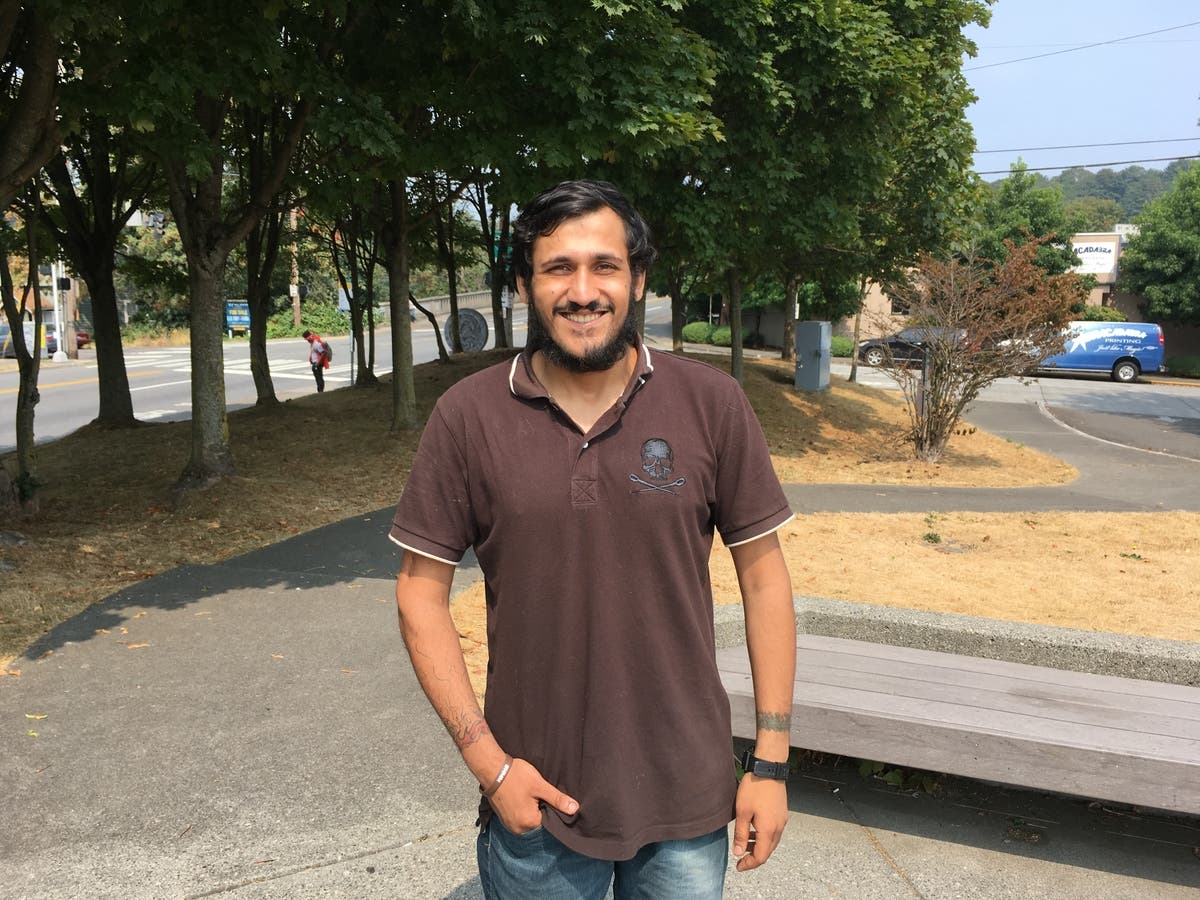
Nagra said that he was once interviewed by a television reporter for a story about homeless teenagers. He said the reporter did a good job - and he said he was pleasantly surprised that she took an interest in the lives of young homeless people. Nagra, who served in the Navy for 4-1/2 years, thinks people could stand to hear more about the lives of the homeless, and not just the gory parts.
"You can think all you want about me. I know what I am. Your opinion of me is not going to change that," he said.
Narrative of 'filth and contagion'
Back in 2008, Real Change founder Timothy Harris noticed a pattern in local news stories about homelessness. Many outlets were focusing on the “filth and contagion” associated with homeless encampments. Real Change reporters found that Seattle city officials were pushing that narrative.
“The city was intentionally creating a narrative of filth and contagion, and the media was parroting that,” he said recently.
Real Change used public records requests to gather a trove of documents about the city's homelessness response. A group of University of Washington English professors analyzed the documents, concluding that city officials were using the filth narrative to justify encampment sweeps.
Ten years later, city officials aren't using that narrative specifically, but governments can spur negative coverage of homelessness.
Seattle regularly publishes stats on the amount of trash and syringes cleaned from encampments. In late May, the Pierce County Sheriff’s Office cleared an encampment along Canyon Road near Puyallup. The sheriff’s office highlighted that the people refused to go to a shelter, and seemed to accuse the campers of scamming people for food.
“At any given time the encampments were occupied by at least 30 people who referred to themselves as ‘home free campers’; many said that they rotated from place to place throughout the year and would use social media to request free food from people,” read a sheriff’s department Facebook post about the sweep.
UW English professor Gail Stygall helped write that 2008 report. She says that there are still plenty of stories in the media about filth related to homeless people. But the coverage has also become more humane.
“The characterizations have remained similar to that of the [former Seattle mayor Greg Nickels] administration - filth, garbage, feces, and needles,” she wrote in an email to Patch. “What seems to be different is that much of the viciousness has toned down. It seems that more people realize that housing prices in cities like Seattle are impossible. Seattle's ordinances are in line with 180+ cities with new controls on the poor, a new era of poor laws. Police can still move anyone ‘camping.’ But the glee with which the sweeps were done is not so visible in the media.”
Harris agrees, saying that there’s been a larger cultural shift in perceptions of the homeless. It’s far from perfect, but far from the “filth and contagion” narrative of 2008.
“When you have homeless people out there, who've been reduced by the circumstances of their lives, behaving in ways that are problematic, that's a symptom of a larger problem,” Harris said. “To victim blame and say we have these dirty, aggressive, dangerous people out there, that we need to be more punitive - most people have come to understand that's not helpful.”
Should we report on syringes and garbage?
Tacoma News Tribune columnist Matt Driscoll has been covering the homelessness crisis in Puget Sound for more than a decade. In some recent columns, he’s fired back at seemingly anti-homeless government policies like Tacoma’s camping ban or Lakewood’s anti-panhandling campaign.
Driscoll's readers give him a grief over what he’s written about homelessness, he admits. But he uses his column as a way to find common ground with people who disagree with them.
“It can be soul-sucking,” he says of negative reactions he gets. “But at the end of the day, I always try to come back to the common ground we have: none of us want people living on the streets.”
Recently, Driscoll had a month-long email exchange with a reader from Puyallup. She was upset because she thought local governments were condoning drug use and homelessness by allowing tent encampments. Driscoll shared with the woman a story about a man who became homeless after getting addicted to heroin. The woman didn’t totally change her view, but she did seem to better understand the issues causing the tents and syringes out on the street, he said.
And, things like garbage and needles are legitimate issues to report on. The problem comes when reporters do those stories without proper context.
“People aren’t wrong to be frustrated, to be upset it is a difficult situation,” he said. “I think you have a responsibility not to just swoop and talk to the angry business owner and leave it at that. [Reporters] have a responsibility to get to the bottom of this, to get context and talk to folks - especially the homeless.”
This story is part of the #SeaHomelessness project, a collaboration between multiple local media outlets to answer your questions about the homelessness crisis. Check out questions other outlets have answered:
- GeekWire: Homelessness and jobs: What the numbers say
- Real Change: You asked: Does Seattle's exclusionary zoning really contribute to homelessness?
- Real Change: You asked: Do Retired folks become homeless?
- The Evergrey: Why do people come to Seattle for homeless services?
- The Evergrey: Are people flocking to Seattle for our homeless services?
- ParentMap: How Do Seattle’s Homeless Families Make It Work?
Caption: Photos taken by city of Seattle workers while clearing out an illegal encampment along Dearborn Street. You can see the full report here.
Photo courtesy city of Seattle
Get more local news delivered straight to your inbox. Sign up for free Patch newsletters and alerts.