Politics & Government
Seattle Council Bans Crowd Control Weapons, Police Chokeholds
Legislation to ban police tear gas, flash-bangs and other devices passed the city council unanimously Monday afternoon.


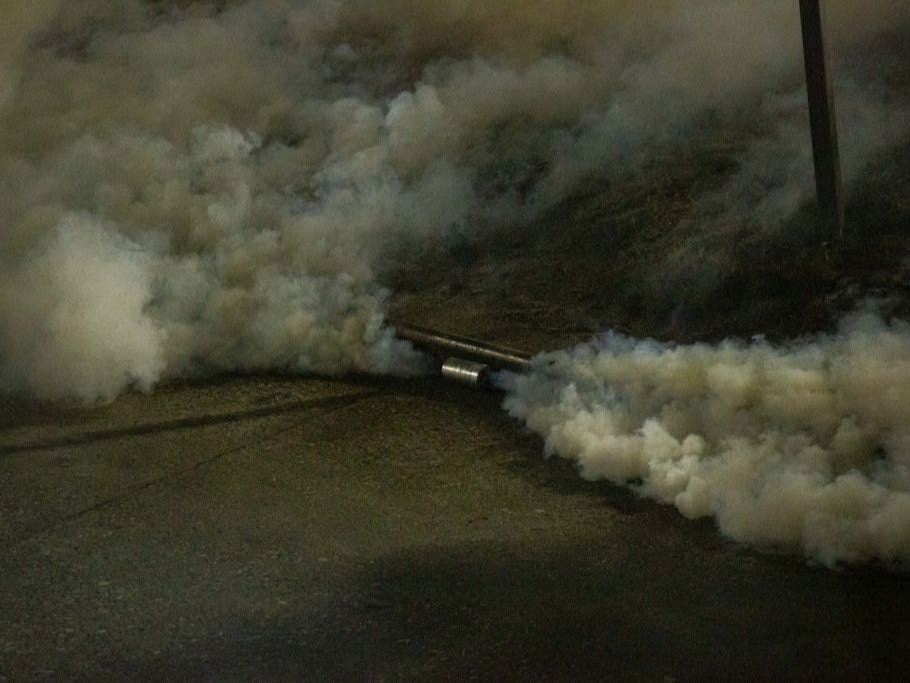
SEATTLE, WA — Seattle police officers will soon be barred from using chokeholds during arrests and deploying crowd control devices on protesters, pending final approval from the mayor's office. The Seattle City Council passed both bills unanimously on Monday afternoon.
Councilmember Kshama Sawant sponsored both pieces of legislation and described them as the "absolute bare minimum" lawmakers can do as the city pursues more systemic changes, including the redirection of police funds into community programs.
"I really appreciate that we are going to have a unanimous vote on both these important bills," Sawant said. "Passing legislation is not going to be enough, but yet it is crucially important for the movement to hold elected officials accountable."
Find out what's happening in Seattlefor free with the latest updates from Patch.
Ban on crowd control weapons
Councilmembers approved Sawant's wide-reaching prohibition on the purchase, storage and use of crowd-control weapons, including CS tear gas, blast balls, flash-bang grenades and "foam-tipped projectiles."
Find out what's happening in Seattlefor free with the latest updates from Patch.
Use of OC pepper spray would only be prohibited during demonstrations and other first amendment events. Officers could continue using the spray in other scenarios, provided it only hits an intended suspect — who is actively committing a crime or "presenting an imminent danger to others" — and no bystanders are exposed.
Monday's vote follows the Seattle Police Department's frequent use of tear gas, flash-bangs and pepper spray during recent protests, prompting a temporary ban from the police chief on June 5. However, that 30-day suspension order included notable loopholes, allowing for crowd control weapons to be deployed if certain conditions were met. A temporary restraining order granted by a federal judge last Friday kept similar caveats in place.
An amendment attached to the legislation by Councilmember Lisa Herbold originally sought to limit the ban solely to crowd dispersal, but that language was removed from the final legislation after public comment and pushback from Sawant.
"It is about not allowing police to have possession of these weapons, and that is related to the fact that we cannot trust them," Sawant said.
In the days immediately following the police department's initial ban, officers again deployed tear gas and flash-bangs on large crowds in Capitol Hill with the police chief's authorization — incidents that some councilmembers, including Sawant, experienced first-hand.
Related: OPA Launches 2 Probes Into Weekend Protest Response
"They falsely claimed that the protesters were violent rioters and that they had no alternative," Sawant said. "They even attempted to maintain those lies in the face of videos showing the police were the source, and the sole source, of the violence."
Officers boarded up the East Precinct and left the area the following day, leading to the creation of the Capitol Hill Occupied Protest — formerly called CHAZ — along the surrounding blocks. At the time, Best called the move an "exercise in trust" and an act of de-escalation.
"After the mounting public outrage eventually forced Mayor Jenny Durkan to pull police from Capitol Hill, the violence has left with them," Sawant said.
Councilmembers acknowledged an additional plan would be necessary to guide how the police department would dispose of its current stock of crowd control weapons, without selling them off to other agencies.
The legislation will head to Mayor Jenny Durkan's desk for final approval.
Ban on police chokeholds
Sawant's ordinance related to chokeholds referenced the police killings of George Floyd, Manuel Ellis and Eric Garner, and a recent ban enacted in Minneapolis in the wake of ongoing, nationwide protests. The legislation adds language to Seattle's municipal code that prohibits two specific restraints:
- Carotid restraint: any technique applied in an effort to control or disable a subject by applying pressure to the carotid artery, jugular vein, or sides of the neck with the purpose, intent, or effect of controlling a subject’s movement or rendering a subject unconscious by constricting the flow of blood to and from the brain.
- Neck restraint: any technique involving the use of an arm or other firm object to attempt to control or disable a subject by applying pressure against the windpipe, or the frontal area of the neck with the purpose, intent, or effect of controlling a subject’s movement or rendering a subject unconscious by blocking the passage of air through the windpipe.
Provided it is signed by Mayor Jenny Durkan, the new law would go into effect approximately one month later. The mayor can also allow the law to go into effect without her signature, or veto the legislation. Six council votes are required to overturn a veto.
Get more local news delivered straight to your inbox. Sign up for free Patch newsletters and alerts.