Politics & Government
Seattle No. 5 Overall In U.S. For Spending On Parks: Report
If you like parks, Seattle is a great city. It ranked No. 5 in the U.S. for total spending on parks.


SEATTLE, WA - New data shows Seattle ranks No. 5 out of the country’s 100 largest cities when it comes to spending on public parks. The Trust For Public Land released a new report Wednesday saying cities spent about $400 million more on public parks in fiscal year 2017 and the number of Americans living within a 10-minute walk of a park increased slightly to 70 percent.
Seattle spent $182 million total on parks, which is about $265 per resident. The total spending number includes both operating and capital spending of all park agencies. Parks in that number could be city park systems, portions of a county park system, state park systems within city limits and even national parks. It does not include things like professional stadiums, museums, aquariums and cemeteries.
Here’s a breakdown of parks spending in Seattle:
Find out what's happening in Seattlefor free with the latest updates from Patch.
- Public spending: $182,273,566
- Public spending per resident: $265
- Private spending: $$9,685,381
- Private spending per resident: $14
The Trust For Public Land, which advocates for creating parks and protecting land for people, said in its latest annual City Park Facts report that public spending on parks increased 6 percent nationwide, from $7.1 billion in 2017 to $7.5 billion. When accounting for $500 million in public/private park partnerships, that number totaled $8 billion in the last fiscal year.
That’s good news, Charlie McCabe, director of the organization, told Patch. It suggests cities are slowly recovering from the Great Recession, which really hit park systems hard starting in about 2008.
Find out what's happening in Seattlefor free with the latest updates from Patch.
“Unfortunately, park systems are among the first things to be cut in a downturn,” said McCabe. “Usually it’s a struggle for cities to think about what’s most important to them, and they end up thinking fire, police and EMS are the most important. Parks become less of a priority for a number of cities.”
When it comes to an individual city, the number to pay close attention to is spending per resident, McCabe noted, acknowledging the report does not take into consideration the costs of goods and services and living, which can affect buying power. Typically cities that see a lot of growth in parks spending also see a lot of income and growing revenue from taxes, fees and services.
Here are the top 10 large cities for total park spending per resident:
- Portland, Oregon: $383
- San Francisco, California: $314
- Washington, D.C.: $284
- Tampa, Florida: $279
- Seattle, Washington: $279
- Minneapolis, Minnesota: $270
- Irvine, California: $243
- Plano, Texas: $237
- Arlington, Virginia: $217
- New York, New York: $216
McCabe said there are a couple reasons that residents in some cities get more money than others. Once a city has a successful park system and is committed to keeping it alive, it will seek out other sources of funding to help grow and improve the park systems. In addition to tax revenue, this money often comes from commercial fees, such as from restaurants, events and even bond revenue. Prosperous cities generally do well. Others often struggle.
“In some cases, the cities that are doing well get better and the cities that are struggling still struggle, which is kind of a challenge for cities on the lower end of the spectrum.” McCabe lamented.
Here are the 10 cities that spend the least per resident:
100. Stockton, California: $14
99. Toledo, Ohio: $16
98. Oakland, California: $19
97. Hialeah, Florida: $25
96. Jacksonville, Florida: $30
95. Jersey City, New Jersey: $33
94. Fresno, California: $34
93. Santa Ana, California: $37
92. Indianapolis, Indiana: $37
91. El Paso, Texas: $38
90. Glendale, Arizona: $39
Cities were particularly interested in splurging on certain amenities. There were 22 percent more community gardens, 35 percent more splash pads and, perhaps most unexpectedly, 69 percent more pickleball courts for a total of 708. Pickleball is a game resembling tennis in which paddle-wielding players hit a perforated plastic ball over a net.
McCabe stressed that a big challenge is to make sure cities understand that parks are essential to people’s overall well-being. They serve as a place where people can recreate, have fun and get together with families outside. They also allow people to get from their neighborhoods to school or to the grocery store without having to drive.
“If you have little kids, it's a lot harder to get them in a car or on a bus than it is to just pop them in the stroller or have them get on their little bikes,” said McCabe.
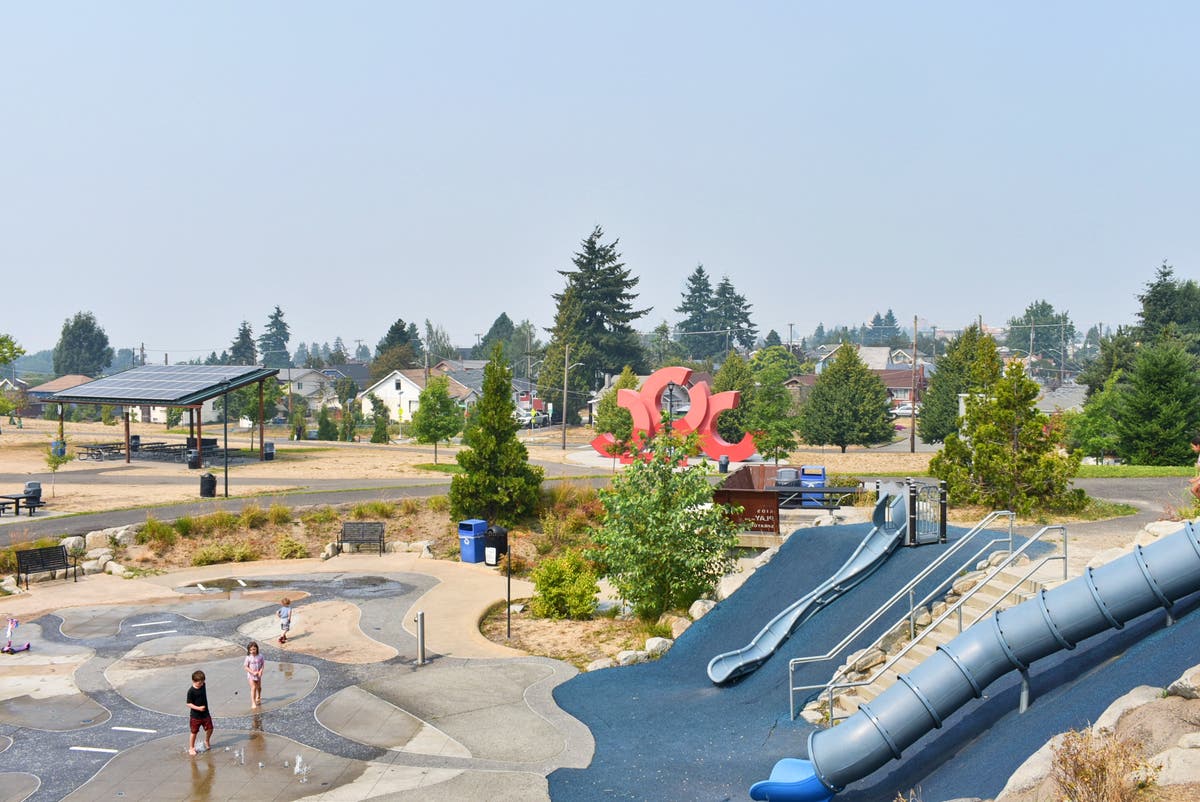
Caption: Jefferson Park in the Beacon Hill neighborhood includes a splash pad, a food forest, a driving range, skate park, and sports fields.
File photo by Neal McNamara/Patch
Patch national staffer Dan Hampton contributed to this report
Get more local news delivered straight to your inbox. Sign up for free Patch newsletters and alerts.