Politics & Government
Supreme Court Upholds Travel Ban, A Blow For AG Ferguson
Attorney General Bob Ferguson was the first to sue Trump to stop the ban.


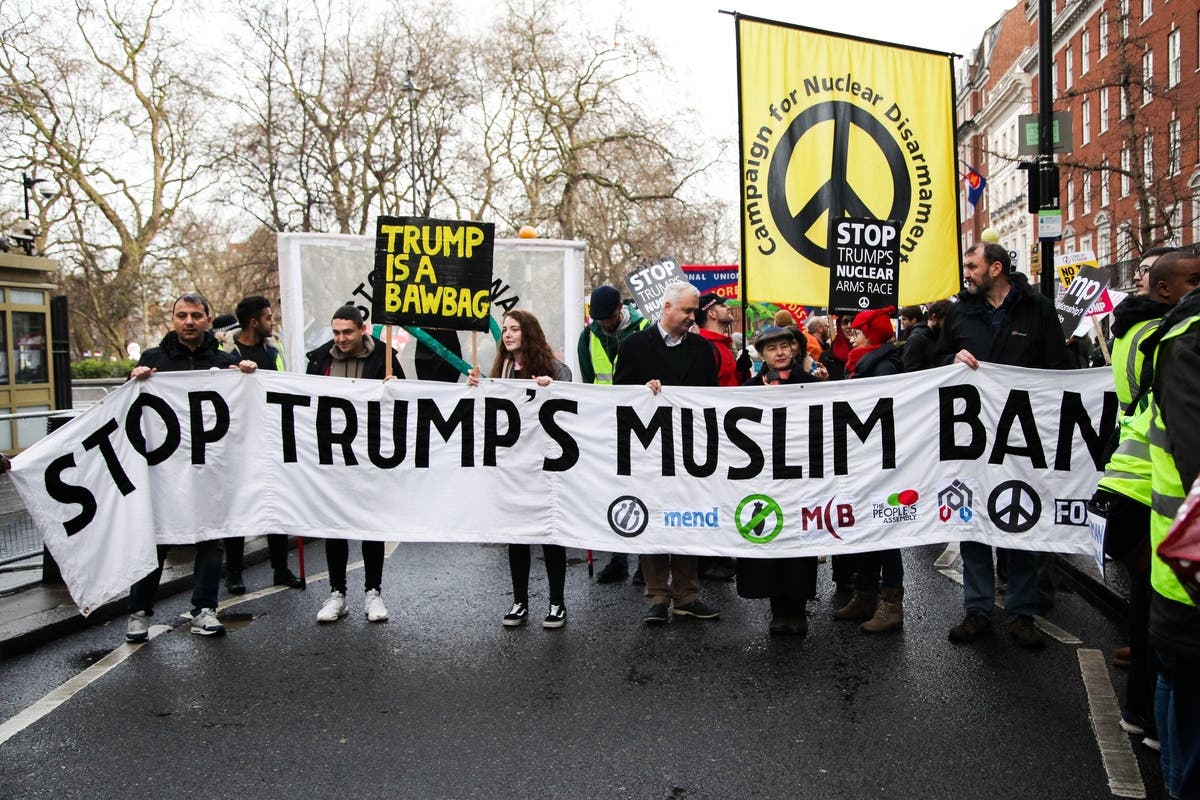
SEATTLE, WA - The U.S. Supreme Court on Tuesday in a 5-4 decision ruled that President Donald Trump's travel ban - where travelers from majority-Muslim countries are banned from entering the U.S. - is lawful, effectively overturning a win scored by Attorney General Bob Ferguson in 2017.
The ban upheld by the Supreme Court differs from the one Ferguson originally sued over. The Trump administration changed the rules of the ban three times since January 2017 as other states challenged the executive order. The latest version of the ban includes Syria, Libya, Yemen, Somalia, Iran, North Korea, and Venezuela.
The Tuesday ruling was the result of a case brought by the state of Hawaii seeking to block the ban.
Find out what's happening in Seattlefor free with the latest updates from Patch.
In early February 2017, Seattle U.S. District Court Judge James L. Robart granted Ferguson a temporary restraining order suspending Trump's executive order nationwide. The next day, the federal government asked the Ninth Circuit in San Francisco to stay Robart's decision. A Ninth Circuit three-judge panel assembled to handle the issue - including judges William C. Canby Jr., Michelle T. Friedland, and Richard R. Clifton - declined the government's request. Ferguson's suit was the first to block the ban.
The original ban, which went into effect in January 2017, threw air travel in the U.S. into chaos. Protesters flocked to airports - including Sea-Tac - as travelers from the named countries were turned away, even those with green cards.
Find out what's happening in Seattlefor free with the latest updates from Patch.
Justices Johns Roberts, Anthony Kennedy, Clarence Thomas, Samuel Alito, and Neil Gorsuch voted in the majority. Roberts found that Trump has the authority to ban travel from certain countries under the Immigration and Naturalization Act.
Justices Sonia Sotomayor and Stephen Breyer dissented. The waivers included in the ban were barely used for students and sick people with no reason given, according to the dissent written by Breyer.
"For example, one amicus identified a child with cerebral palsy in Yemen. The war had prevented her from receiving her medication, she could no longer move or speak, and her doctors said she would not survive in Yemen. Her visa application was denied. Her family received a form with a check mark in the box unambiguously confirming that 'a waiver will not be granted in your case,'" Breyer's dissent says.
Sotomayor wrote that the ban violates the First Amendment right to freedom of religion - and upholds an "anti-Muslim animus" expressed by Trump in speeches and tweets.
"Ultimately, what began as a policy explicitly 'calling for a total and complete shutdown of Muslims entering the United States' has since morphed into a 'Proclamation' putatively based on national-security concerns. But this new window dressing cannot conceal an unassailable fact: the words of the President and his advisers create the strong perception that the Proclamation is contaminated by impermissible discriminatory animus against Islam and its followers," Sotomayor wrote.
Image via Shutterstock
Get more local news delivered straight to your inbox. Sign up for free Patch newsletters and alerts.