Health & Fitness
They Escaped The Coronavirus At Monroe Prison, But Scars Remain
Two men released early from Monroe Correctional Complex are enjoying their newfound freedom, but remain bitter about what happened inside.


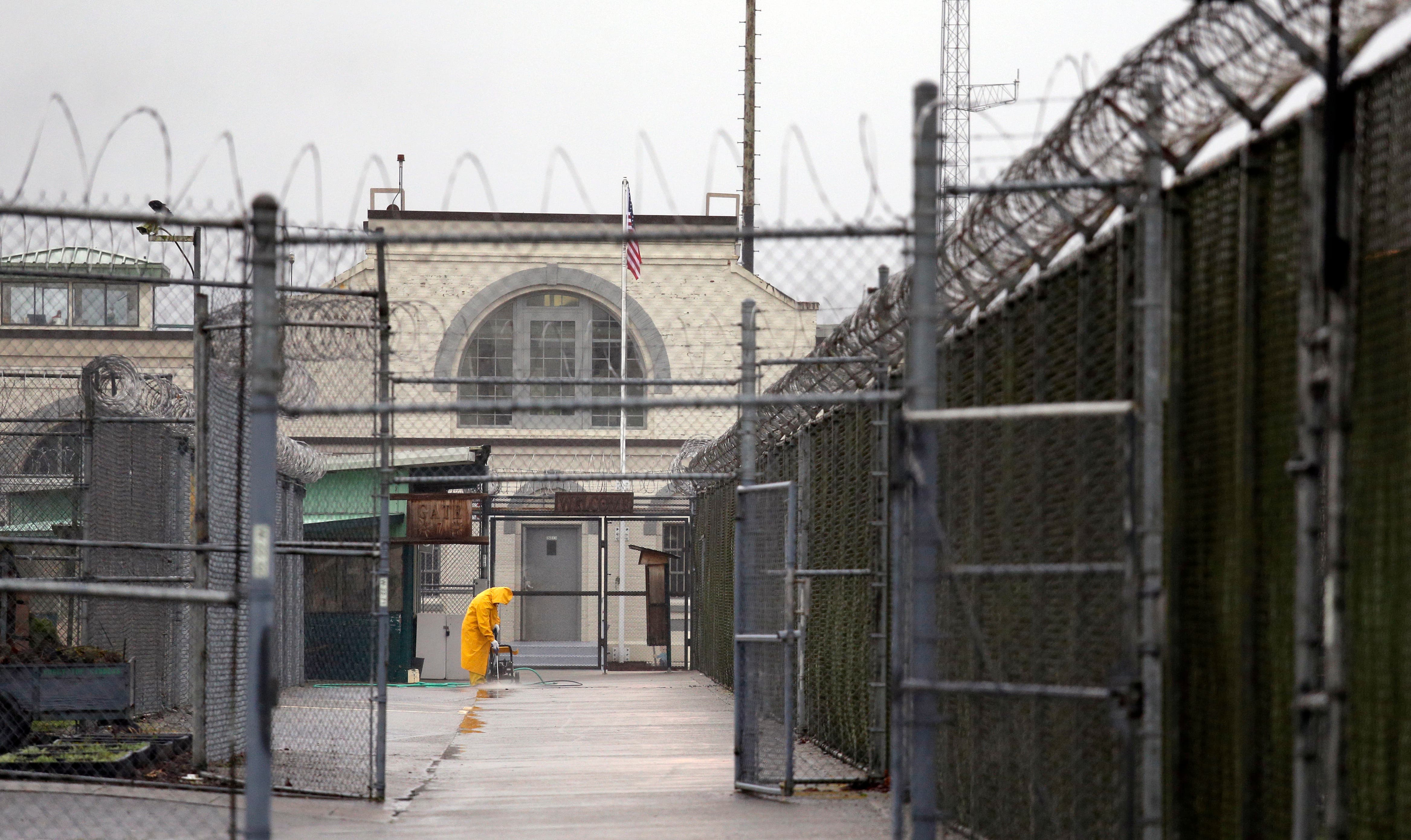
SNOHOMISH COUNTY, WA — In early April, as Puget Sound was beset by the coronavirus and much of the region hunkered down at home, Daniel Bernier and Colton Olson were stuck in the Monroe Correctional Complex, where the virus was beginning to take hold.
The facility, roughly 40 minutes northeast of Seattle, has seen the worst COVID-19 outbreak of any prison in the state, with 18 inmates and nine staff testing positive, according to the state. A guard there died May 17 from COVID-19 complications.
In mid-April, facing mounting pressure to ensure the safety of inmates kept in tight, sometimes unsanitary conditions, Gov. Jay Inslee allowed the early release of more than 1,100 nonviolent offenders from state prisons — including Bernier and Olson.
Find out what's happening in Seattlefor free with the latest updates from Patch.
Bernier, convicted of residential burglary, had his sentence commuted in April, while Olson, in prison since March 2019 for taking a motor vehicle without the owner’s permission, was let out this month through the state’s rapid reentry program.
Now, both men, who attributed their past crimes to heroin and methamphetamine use, say they are managing their addictions, focusing on their careers and feeling hopeful about the future.
Find out what's happening in Seattlefor free with the latest updates from Patch.
But they remain bitter about their ordeals inside Monroe’s low-security unit, where unsafe conditions sparked an uprising last month. Bernier likely contracted the coronavirus there, and tested positive shortly after he was released, while Olson, who has hepatitis — possibly elevating his risk of complications — developed many of the symptoms but never got tested.
"It was sickening," Olson told Patch.
“I don’t believe in that coronavirus crap”
Bernier, who was transferred to Monroe late last year from another facility, described an atmosphere of fear and disorder as the coronavirus took hold inside the prison.
Staff seemed unsure how to handle an infectious disease, he said, while prisoners with no training were asked to wipe down beds and scrub hallways.
Once Olson arrived at Monroe in early April, multiple positive cases had been confirmed. Social distancing measures were limited, he said, aside from reduced seating at the mess hall.
Worse, many inside Monroe refused to take the virus seriously — especially the prison guards, Olson said.
“A lot of the time the guards would just laugh and say it’s fake,” he said.
Bernier and Olson both described instances where maskless guards came by the inmates’ units to serve food, despite a state order requiring prison staff to wear N95 masks.
“I was like, where’s your mask?” Bernier asked one guard. “He was like, ‘Hey, if we’re gonna get it, we’re gonna get it.’”
When Olson challenged another unmasked guard, he got a similar response.
“I don’t believe in that coronavirus crap,” he recalled the guard saying. (The Department of Corrections did not respond to a request for comment for this story.)
Inmates, meanwhile, were only growing more afraid. Older men knew their age put them at greater risk of dying from COVID-19, while others, like Olson, were unsure whether their underlying health conditions would cause complications.
“A lot of the guys were really scared,” Olson said. “We only hear what’s on the news, and the news is making it out to be extremely terrifying.”
When Olson’s cellmate was quarantined after showing coronavirus symptoms, no staff came by to strip the man’s bedding or put away his belongings, so Olson had to do it himself. The man later tested positive, said Olson, who himself later developed chills and headaches, and briefly lost his senses of taste and smell.
Separately, Bernier and Olson filed grievances with the Department of Corrections, asking for coronavirus testing, masks and hand sanitizer. Frustrated by the inaction, and inflamed by a spate of confirmed cases, prisoners decided to protest the conditions by walking out into the yard.
“If everyone walks out, stands in line 6 feet apart, does not move, and demands that they do something, they’ll have to do something,” Olson recalled thinking, although he said he did not join the protest.
On April 8, the night before the protest, an assistant superintendent and several captains showed up in Olson’s wing and handed out bags of McDonald’s takeout to each inmate. Prison officials have said the goal was to encourage inmates to move to another dormitory in order to free up space; to Olson, it felt like a bribe intended to quell protest.
“They said, ‘This is a peace offering,’” Olson said.
The next day, walkouts in two nearby units turned violent after inmates were ordered back inside. When Olson’s unit lined up for their own walkout, prisoners were met at the door by four officers armed with riot guns and shotguns, who stayed stationed outside the unit for another 12 hours.
“It was scary,” Olson recalled. “In our experience, we don’t get the peaceful end of things.”
Still, the protest was a partial success: the next night, Olson said, prison staff distributed masks and cleaning supplies.
'It's just glorious'
Eager to escape his crowded living space, Olson, along with seven others, volunteered to relocate to the empty A-Unit, where he moved the day after the protest. To maintain distancing, the men were told they’d be locked in that tier — but would be given access to TVs, phones and a microwave.
The comfort was short-lived. After about a week, prison staff moved 20 more people into A-Unit, forcing Olson to relocate to the prison’s chapel, where staff had set up cots.
In the chapel, which lacked plumbing, the men went three days without bathing until staff jury-rigged a shower by hooking up a hose to a sink in the female staff bathroom, Olson said. Visits to the bathroom were limited to one at a time.
Bernier, meanwhile, was released April 19 — part of the first cohort to leave Monroe. The next day, while staying with his mother, he developed a headache and burning sinuses, and decided to get tested at a Monroe clinic. That Friday, the result came back: positive.
Within days, Bernier’s mother developed the same symptoms, he said, although she hasn’t been tested. Bernier said he wouldn’t have risked staying with his mother if he had been tested for the coronavirus while still in prison.
“In a perfect process, test me on my way out and then quarantine me for two weeks,” he said.

In the chapel, Olson, who knew he had been approved for early release, was cut off from his counselor, leaving him in the dark about his status. That disconnect became more troubling as administrative delays kept him locked up for nearly three weeks past April 19, his original release date.
When that date was pushed back to May 9, Olson, now in another unit, lay awake the night before, expecting another setback.
“I was told so many times, ‘You’re going to go home tomorrow,’” Olson said. “I didn’t believe it anymore.”
That morning, though, a transport team brought him from Monroe to a DOC office, where he was outfitted with an ankle bracelet and driven to his parents’ home in Tacoma. He surprised his five-year-old-son, who lives out of state, with a FaceTime call.
“He was super shy and couldn’t stop staring at the phone,” Olson recalled. “It took a while for him to get comfortable, but once he did, that kid was just off the walls.”
While this term had been Olson’s third stint in prison, it was by far the hardest on his family — especially his mother, who spent months fearing for his safety.
“This sentence has been a nightmare,” he said. “You just see the weight come off her shoulders — she was finally at ease knowing I’m safe again.”
Under Olson’s release terms, he is prohibited from leaving the house to look for a job — a maddening condition that leaves him feeling paralyzed. Eventually, Olson, trained as a heavy equipment operator, plans to work construction, and later go to school to train as a licensed surveyor.
For now, being stuck at home has an upside, he said: it gives him time to show gratitude to his parents, who visited him in prison every weekend until the virus struck.
“It makes you look back and say, alright, it’s time for me to start showing my appreciation back,” Olson said. “I could still be at Monroe, and anything could’ve happened.”
Bernier is now living in an addiction recovery house in North Seattle, attending Narcotics Anonymous and Alcoholics Anonymous meetings over Zoom, and working in landscaping.
Life on the outside has been an adjustment. But the new freedoms are worth what it took to get there, he said.
“Everything moves so fast out here,” he said. “In [prison], you’ve got to ask for something — whatever it is, you’ve got to wait.”
“Out here, if I want an ice cream sandwich, we’re gonna go buy me an ice cream sandwich. There’s no limits, and it’s just glorious.”
Get more local news delivered straight to your inbox. Sign up for free Patch newsletters and alerts.