Politics & Government
Thousands Attend 'Families Belong Together’ Rally In SeaTac
One of over 700 rallies against Trump's immigration policies took place in SeaTac on Saturday.


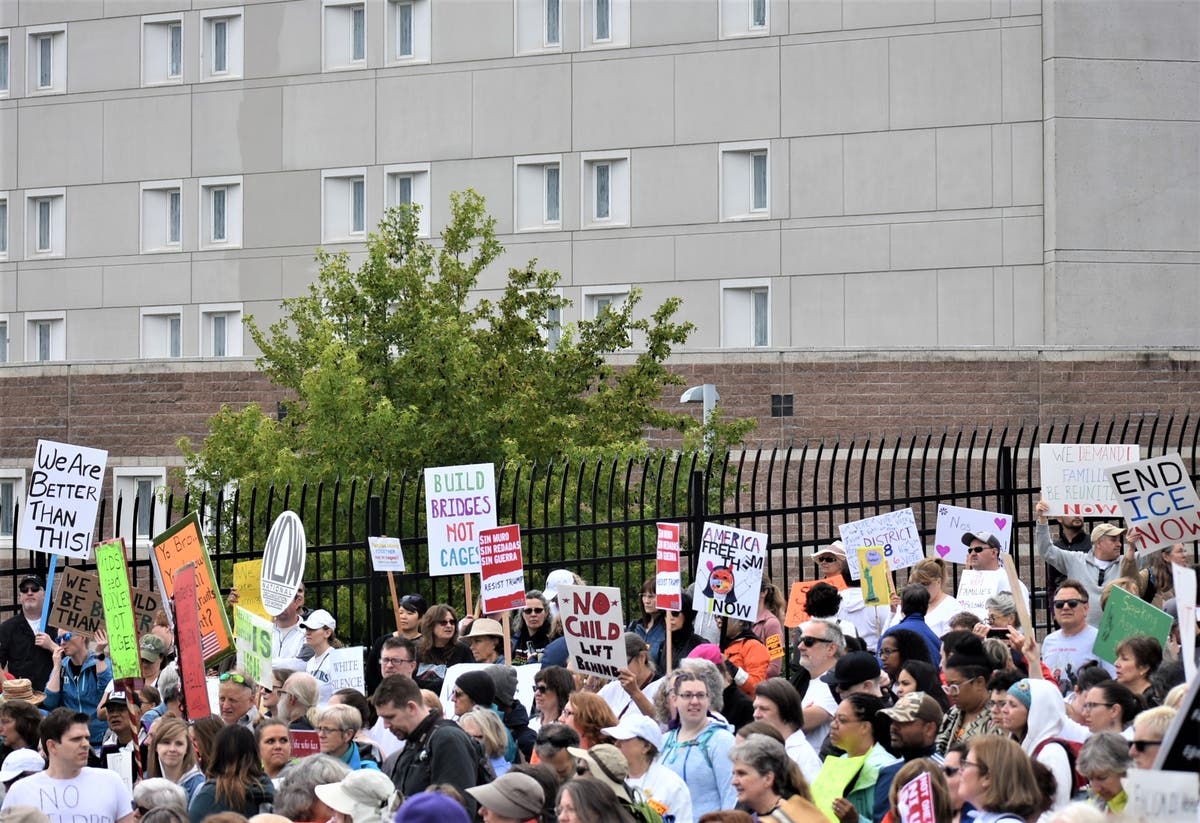
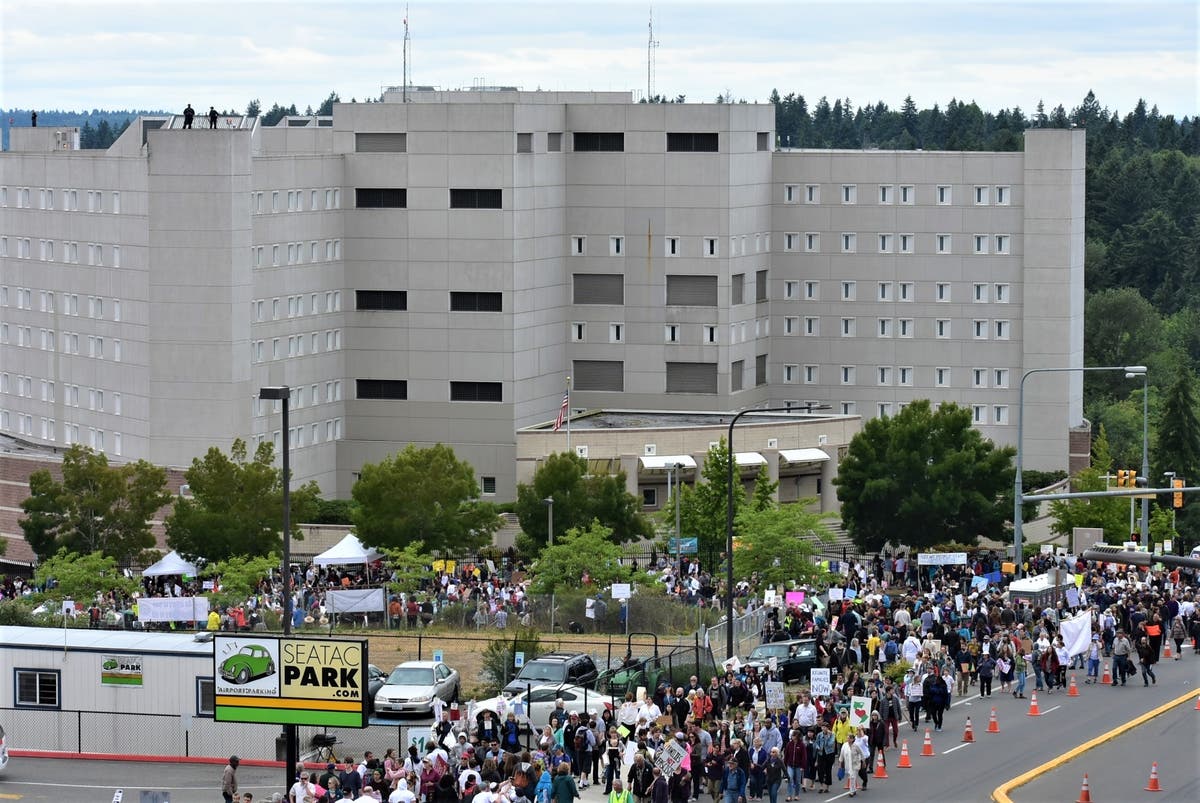
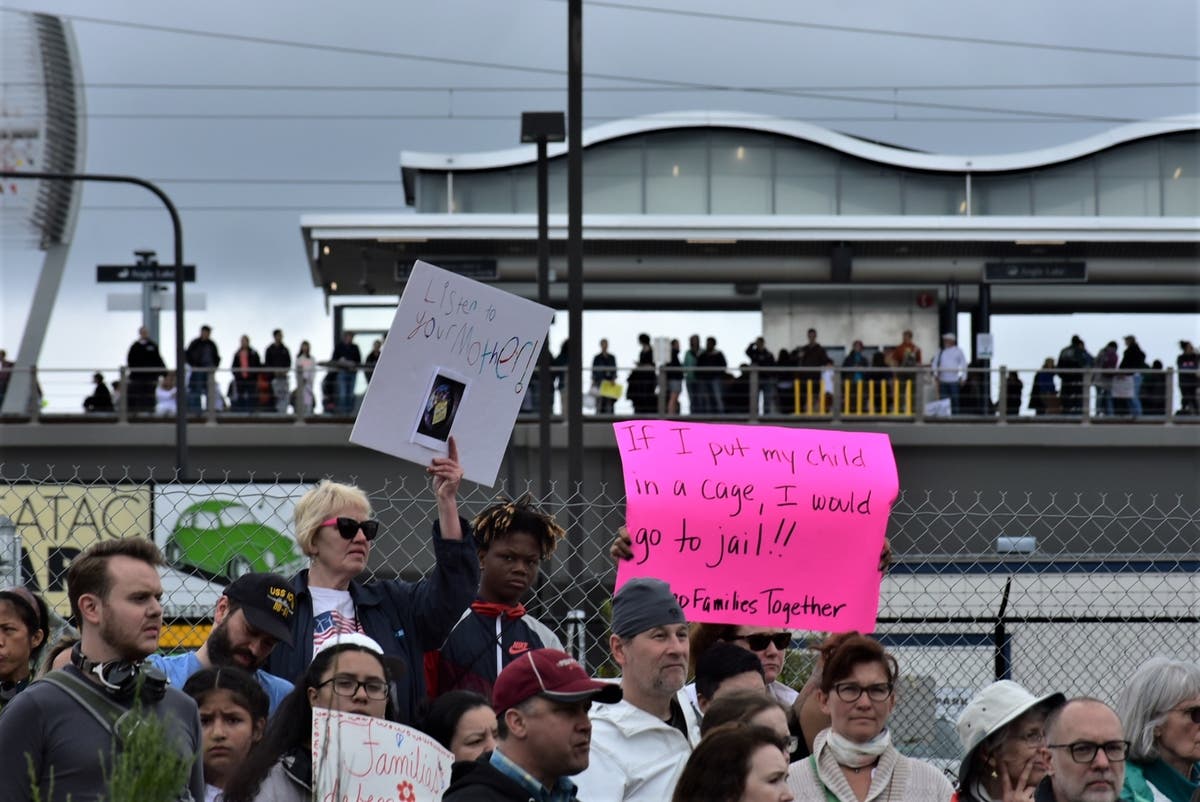
SEATAC, WA - One of hundreds of "families belong together" rallies was held in SeaTac Saturday, attracting more than 1,000 people who support rights for immigrants and refugees - and who oppose the Trump administration's "zero tolerance" immigration policies.
The backdrop for the event was the mammoth concrete federal detention center along South 200th Street, which was used as a holding facility for mothers separated from their chidlren at the U.S.-Mexico border. The detention center is just one block east of International Boulevard, a street home to dozens of small businesses owned and operated by migrants from around the world.
At the Las Delicias bakery, owner Alfredo Nieto was busy during the rally making delicate, sugary pastries. Originally from Mexico, Nieto said he was glad to be living in the Seattle area because he had faced racism when he lived in Florida and California. He's owned the bakery for four months, and is troubled by news of families being separated at the U.S.-Mexico border.
Find out what's happening in Seattlefor free with the latest updates from Patch.
Nieto, who lives in SeaTac, has three children, and it scares him to think his family could be broken up by the U.S. government. He doesn't notice much going on at the SeaTac detention center, but Nieto knew that over 100 people from Mexico and Central America were being held there.
Across International Boulevard from Las Delcias is Saran African Market. Owner Dieynaba Kouyate has owned the store since 2010. She hasn't noticed much activity at the detention center, but she planned to close down the store early to check out the big protest.
Find out what's happening in Seattlefor free with the latest updates from Patch.
She supports the protesters, she says, because she was once put in a detention facility and separated from her child.
In 2009, she was living in University Place and had just given birth. Late one night, immigration police came to her home and took her to the detention facility in Tacoma. She was held there for eight months while the government considered her for asylum. She came to the U.S. from Ivory Coast, which experienced two civil wars between 2002 and 2011.
The government threatened to take her child, she said, but she was able to arrange for the infant to live with friends in the area.
Okpodsou Mallriema from Togo and Alaji Yakubu from Ghana were also in the store. They shared similar stories. Mallriema came to the U.S. across the Mexico border two years ago. As soon as he got to Washington, he was thrown in the Tacoma detention center for one year. Yakuba was there for six months.
"They put you there and just waste your time," Yakuba said, noting that he lost a job because he was locked up.
There were similar stories at the protest. Zinthia Briceno, 37, of Kenmore, came to the U.S. from Guatemala as a child in the 1980s. Her parents came to the U.S. first, and the family was briefly separated during that time. She came to the rally with her 7-month-old daughter Mati to "fight for the kids" like her who are coming to the U.S. now to escape violence and oppression.
Catherine (she didn't want to give her last name), of West Seattle, came to the U.S. from Canada in 1999 to marry an American. Although she eventually earned a green card, she described a horrific process to get it - where government officials kept giving her conflicting information, putting her in danger of deportation.
"I have stomach-turning memories of the INS building in Sodo," she said. (INS no longer exists - it was rolled into the Department of Homeland Security in 2002.)
Kouyate said that she was eager to come to America and still loves it here. She learned in school growing up in the Ivory Coast that America is the "land of freedom." Still, she thinks it's important for Americans to be honest about how it treats immigrants and refugees. She came here to contribute, to be free, and she thinks there's plenty of room here for everyone.
"We just came here to work and have a better life," she said as she worked folding clothes for sale in the store.
Photos by Neal McNamara/Patch
Get more local news delivered straight to your inbox. Sign up for free Patch newsletters and alerts.