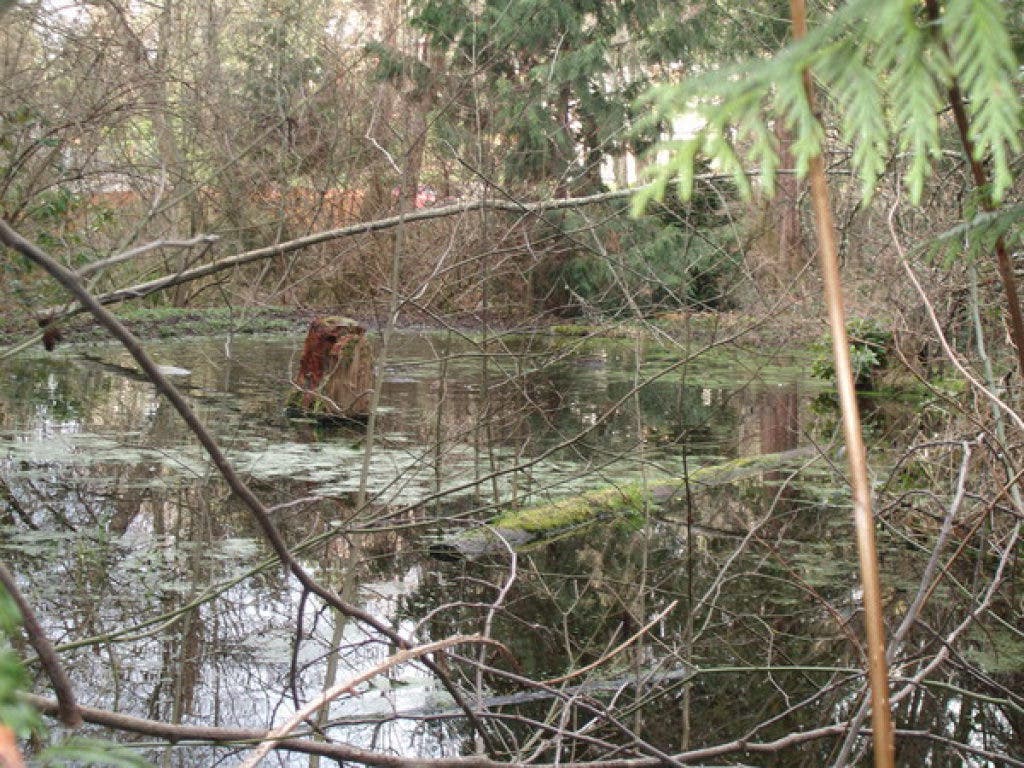


I wrote about the lush abundance of native flora and fauna in our area, and indeed, the richness is wondrous. That was all about the native species- those which grew here before, say, 1700. Most of aren’t native, but they don’t spread and take over whole landscapes without human help. Those which can have a special name: Alien Invasive Weeds (AIW).
Some AIWs are introduced by accident. An animal or a seed comes to us hidden in a cargo from somewhere else, or has just come along for the ride. The infamous Zebra Mussel came to the Great Lakes in ballast water discharged by a ship. Most Pacific islands got their Norway rats from passing ships. They’d crawl down anchor lines and make themselves at home. Innumerable native birds and other species were doomed by them or the pigs brought by sailors to grow for food.
Others were and are spread by gardeners. Many want something new and exciting, or which blooms at a particular time of year, or which has a particular form or color or whatever, and ignorantly or thoughtlessly plant something which will spread like brushfire, pushing out native species and displacing the animals which rely on those natives.
Find out what's happening in Shoreline-Lake Forest Parkfor free with the latest updates from Patch.
You’re familiar with dandelions? They came here on purpose as a medicinal plant, brought by Catherine Maynard, wife of Doc Maynard, Seattle’s first doctor.
And then there’s the “Himalayan” Blackberry, ubiquitous defiler of gardens and filler of jam jars, brought to the US by Luther Burbank (pioneer plant breeder and namesake of the park and former school on Mercer Island, and the town of Burbank, Wash.) in 1885 as a food plant. This AIW is so widespread King County, while recognizing its destructive nature and giving instructions as to its removal, pretty much acknowledges the impossibility of its complete elimination.
Find out what's happening in Shoreline-Lake Forest Parkfor free with the latest updates from Patch.
I don’t find that a reason to give up. Shoreline/Lk Forest Pk is much smaller and more compact than the County at large. I say start on public parks and rights-of-way, move, with property owners’ permission, onto adjacent tracts, and soon- over a ten year span- we’ll have done away with it. As we do it we start on the next invader- perhaps English Ivy, Japanese knotweed, or Scotch Broom. Each is best removed by different methods, but all can be taken out.
I’ll also suggest all cuttings/diggings be composted. Now, it is often said that one should not compost these plants because the seeds can survive and thereby be replanted in one’s garden in the compost you spread, and that’s true for your normal backyard compost pile, but if the cuttings are all thrown into a huge vat of passively solar-heated water it stews, breaks down, and rots the seeds, rendering them neutral. The resulting mess is then spread out, composted normally and can be used on all city properties, or even given or sold to the citizenry, like the Woodland Park Zoo’s famous “Zoo Doo”.