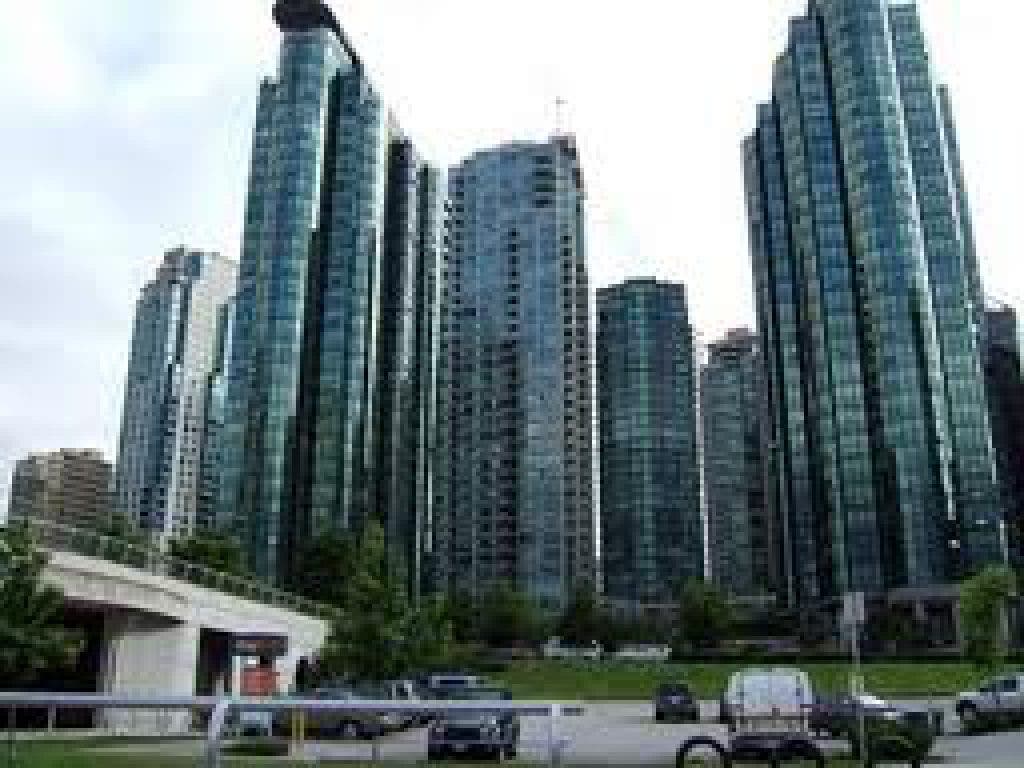
This is the season when- just look at the ads and store shelves- we’re surrounded by ghosties and ghoulies and other scary things, like….density!
Yes, ‘Density’ is the most frightening word in the language to some folks. Why is hard to say. They hear the word and start panicking about tenements and slums and congestion and all kinds of “undesirable people” (a suspect term if ever there was one). Where they get these wild ideas I don’t know. Or maybe I do.
It started in the nineteenth century, before modern plumbing, sanitation, and transportation, when even the richest cities could be pretty awful. London, for instance, was pretty much Capital of the World, yet most of its residents lived in conditions still called ‘Dickensian’. Yet that’s where people were because that’s where everything else was. That’s not as tautological as it sounds.
Find out what's happening in Shoreline-Lake Forest Parkfor free with the latest updates from Patch.
A natural port, for instance (think Seattle), is a huge asset for trade, so would gather people involved in it. Great gatherings of people led automatically to greater business opportunities, greater cultural opportunities, and vastly greater opportunities for the kinds of face-to-face contacts which led to creativity and innovation, and could become a center of power.
It could also happen in reverse (think London). Say a king chose a particularly defensible hill for his castle. Anyone who wanted or was required to be near the king would move in or set up around it, and those who needed to be near them would follow. The land thereabouts would be heavily farmed to feed them. Royal patronage would ensure a steady inflow of artists, engineers, musicians, and the like, and a city could be built out of the sheer magnetism of power.
Find out what's happening in Shoreline-Lake Forest Parkfor free with the latest updates from Patch.
Yet many people are convinced there’s something wrong with all that. Perhaps they’ve had bad experiences with the paper-thin walls in older apartments, or simply found the only place they could afford was way out on the periphery. Others have been gulled by the ‘Leave It To Beaver’ mythology and expectations or generations of developers’ ads- “Coming Soon: A New Community- Starting in the low $200s” and automobile ads- “Feel the freedom of the open road in the new…” and simply don’t reexamine the underlying assumptions or factual basis. There is often a sense of jealous ownership- (‘My piece! My place!’) or desperate refuge (From whom, exactly? From what?) or conscious segregation (nominally about income and implied social class, but in previous years expressly racist)
As Sir Peter Hall wrote in his wonderful book “Cities In Civilization, Innovation and Urban Order” (I paraphrase) cities are and have always been the great hotbeds of culture and creativity. He argues that all the important social, artistic and technological innovations in history have occurred because of the rich, chaotic, copious interactions true cities engender. It is in that way like nuclear fission: it takes a critical mass. You have to get enough atoms or people in one place and time for the brilliance to happen.
There are also great benefits from concentrating our resources and resource use.
What is that critical number? Sorry, no easy answer here. It depends on many factors. Among American cities the densest is actually a suburb! Guttenberg and Union City, New Jersey both claim to be the densest city or incorporated area in the US, at 52- 56,000 people per square mile (all of Shoreline in one square mile!) and they’re part of the New York City Metro Area, densest in the US at over 26,000 people/sq mi, in which Manhattan Borough tops 66,000/sq mi.
Seattle, on the other hand, has only 6717 people/sq mi (Belltown is 26,971/sq mi, Capitol Hill neighborhood is 18,819/sq mi. U District is 12,790/sq mi) and Shoreline only 4546/sq mi. I point out the neighborhoods because Seattle’s policy of Urban Villages offers a way to let us fulfill the requirements of the Growth Management Act while preserving what many locals expect of Shoreline.
No matter what, we are mandated to accommodate at least another 5000 residents by 2030. There are good ways to do it, if we choose well.