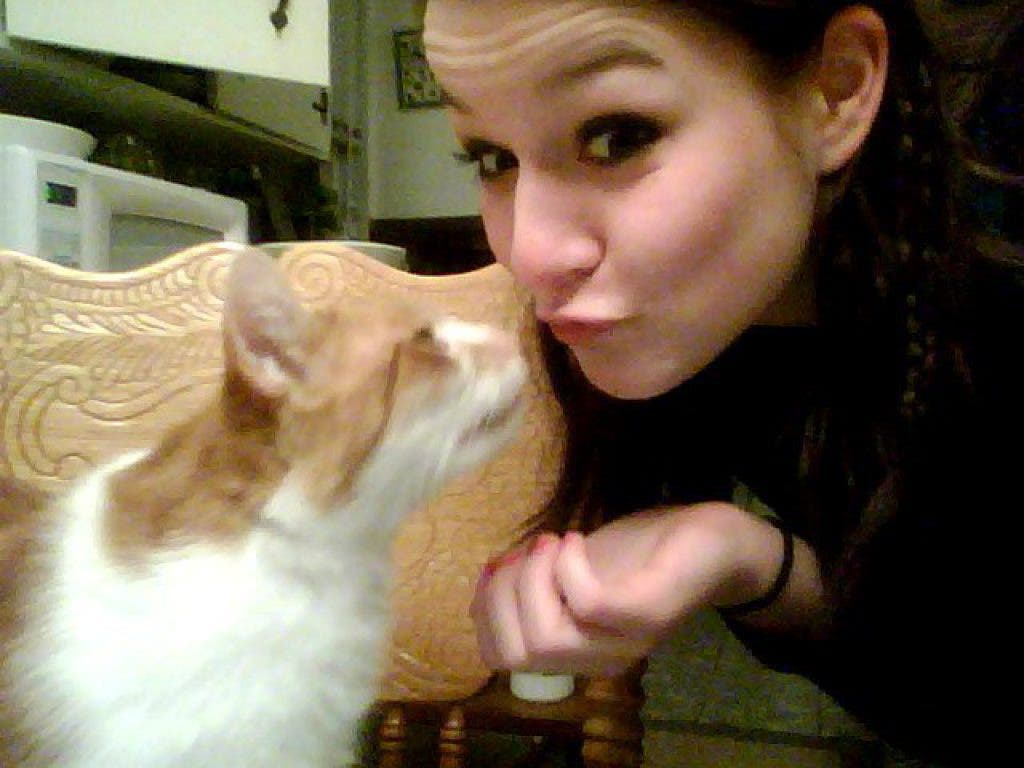
Ten years ago, I made a deal with my two young daughters, then 9 and 6. Leave your friends and life in California and come live in Washington. Do that, and I’ll promise you the pets that you’ve wanted for so long. (Of course, they had no choice in the matter, as I had secured a job here and my wife was on her way up with the girls.)
It didn’t take long. I came home from work one day to see two kittens frolicking on the couch. The orange tabby was Poppy. The mixed black-and-white, Lucy. Brother and sister.
From the start, they were yin and yang. Lucy, the lady, never raised her voice, waited patiently for her dinner and made an excellent hot water bottle. Poppy, not so much. While Lucy was content to be inside, Poppy soon made sport of ripping holes in the back-door screen, trying to get to the birdies on the grass.
Find out what's happening in Shoreline-Lake Forest Parkfor free with the latest updates from Patch.
There were moments, but the good outweighed the bad. The cats were good companions, they enjoyed lap naps, they entertained us with their horseplay. They were healthy, although both eventually dragged impressive pooches common to house cats.
Lucy stayed healthy, but a couple of years ago, Poppy was diagnosed with diabetes. It meant a changed diet and twice-daily insulin shots. The insulin costs added up quickly, but by this time Poppy was a member of the family. If you have or have had a pet, you know what I mean.
Find out what's happening in Shoreline-Lake Forest Parkfor free with the latest updates from Patch.
It eventually became apparent that the diabetes was taking its toll. Poppy drank water all the time. He ate like a pig, but never gained weight. In fact, he seemed to be getting skinnier each month. More tests, more money. Increased dosages.
But we lived with Poppy. We enjoyed his eccentricities, even if his midnight howls for food and his ability to clear a room with nuclear No. 2s tried our patience. We know people who have rid themselves of pets after one too many torn carpets or that last, this-is-it surprise on the floor. But how could I, as a dad, go back on my promise to the girls, even as I imagined how much easier life would be with just one happy, contented pet?
A couple of weeks ago, Pops took an obvious turn for the worse. His legs wobbled, and he couldn’t jump up to his favorite table. Still, my wife and I agreed that life was too precious to make rash decisions. The insulin had run out, but we were going to visit the pharmacy to pick up another bottle.
But Poppy made his own decision. He wet the bed, something he’d never done. He just didn’t have the strength to make it to the littler box. I picked him up and put him down, and he almost fell over. I placed him in front of the water bowl, and he lay down by it, trying to lift his head. He looked at me as if to say, “I'm sorry.”
Poppy died last week at , where we picked him and his sister up a decade ago as a promise to two young girls. I watched, along with my wife and mom, as the vet injected Poppy with a sedative. It was an emotional time, a year’s worth in one morning. Before the final injection, my wife left the room and I stayed with my mom. The vet shaved one of Poppy’s legs, looking for a vein. She found it, and slowly pushed the needle in. Poppy was already sleeping. His belly lifted up a few times, then stopped.
My oldest daughter, who claimed Poppy as her own, knew Poppy was near the end but was in school when we took him to the hospital. I thought it best that way. But after finally getting in touch with her, she raced over in her car—she’s 19 now—to say a heartbreaking goodbye. “Why do we love our pets so much?” she asked, stroking Poppy's head.
We just do. They’re family.
As I close out this column, I opened a letter than arrived in the mail from Westgate Veterinary Hospital. The entire staff signed it. The card said it better than I ever could:
“True friends leave pawprints on your heart.”