Business & Tech
Psychologist Works Hard to Maintain Mulitfaceted Practice in LFP
Kenneth Asher's background in academic science led him to evaluate the human mind
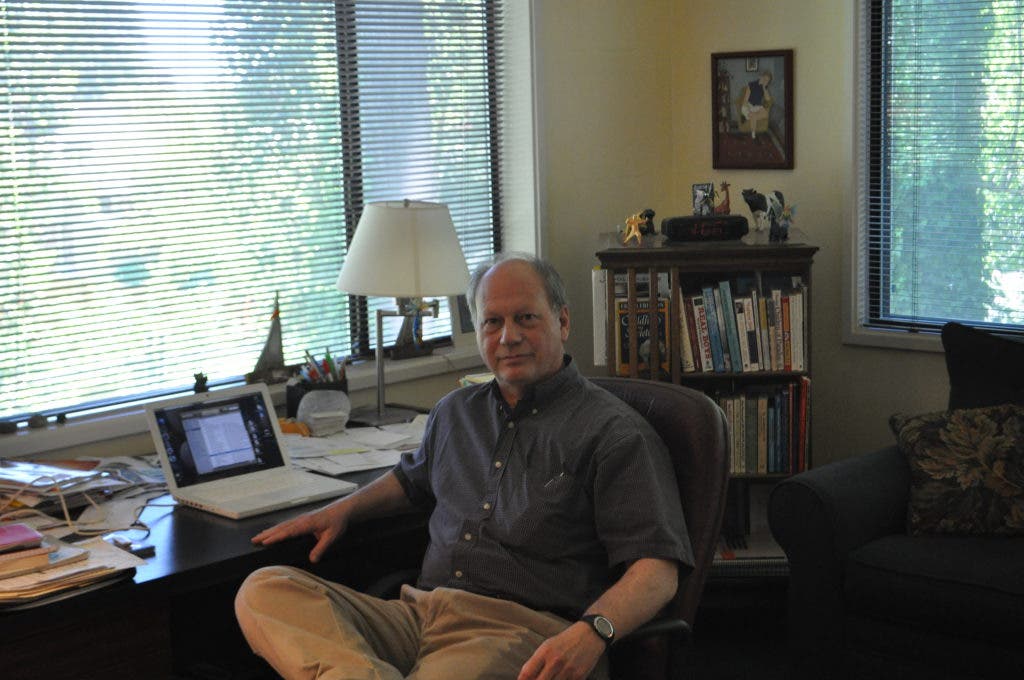


In October of 2010 Kenneth Asher moved his 22-year-old psychology practice from Capitol Hill to LFP.
He practiced with a group with his mentor and teacher, Albert Reichert, a highly-respected developmental pediatrician who specialized in developmental disabilities.
When Dr. Reichert died in early 2010, the building was sold, and Dr. Asher relocated to a site on Bothell Way close to Asher's home.
Find out what's happening in Shoreline-Lake Forest Parkfor free with the latest updates from Patch.
Asher’s own practice officially began in 1988 at Reichert’s home. During his time there Asher worked with disabled children younger then 12 and gradually grew his practice to include older adolescents and adults with disabilities.
“Working with people with severe mental disabilities, just following their lives and being their support is an honor,” Asher said.
Find out what's happening in Shoreline-Lake Forest Parkfor free with the latest updates from Patch.
Now, while some of his clientele has disabilities, his practice has expanded beyond those clients.
Although he loves the new location in Lake Forest Park, he admits that the less populated LFP makes it difficult to maintain a more traditional clinical practice. A lot of his long time clients from his Capitol Hill office didn’t make the move with him. Right now his main referral is for children and he hopes to add older adolescents and adults back into his clinical practice.
“One of the hardest things with running my business, or any business, is keeping the clinical referrals at a good level,” he said.
Fortunately, Asher has other disciplines that he can fall back on. In 1990 he started doing forensic work for juveniles who had gotten in trouble with the law. When he started working on the juvenile cases he also began work with their parents and eventually started doing parenting evaluations for the courts.
Most of the forensic cases he does now are evaluations of parents, called dependency cases.
“When parents come here I do tests, interview them, observe them with their children, use various tests, make a report and sometimes I testify in court,” Asher said.
At first Asher wasn’t that interested in taking on forensic cases but over time he realized that he enjoyed the research and learned a lot about parenting that he could implement into his clinical practice.
Even traditional psychological treatment begins with a certain amount of evaluation.
"Before I can really treat somebody or do something to change their lives, I have to get to know them," Asher said.
He thinks it’s only fair that they are as involved in the evaluation process as they wish or allow themselves to be. The sensitivity surrounding the matter can be extremely humbling and difficult for both Asher and the client.
Sometimes these people are in unusual circumstances and under a lot of stress. They often love their child or children and want to be a good parent, but have so many issues, mental or substance abuse, and they can’t be the parent they wish they could.
“People who come to a psychologist often are in unusual circumstances and under a lot of stress. If they are here for a court-ordered parenting evaluation, they love their children and want to be good parents, but may have such hard issues such as emotional problems or substance abuse, that they can't be the parents they wish they could," Asher said. "If I’m successful these people open up their lives to me in a very honest way, but sometimes people get really upset with me."
The sensitivity surrounding the matter can be extremely humbling and difficult for both the psychologist and the client. Sometimes when mental disabilities or substance is involved there is little Asher can do to intervene, but in those cases he feels as long as he's been as fair and objective as possible, he's done the right thing for these people.
Occasionally people aren’t willing or don’t know how to be honest or open with Asher. In those cases, he feels as long as he’s been as fair as possible he’s done the right thing for them.
“I’ve always found it interesting how the brain works,” he said.
Whatever he does in his life he has to have a lot of variety. Finding a balance is always a struggle for him. He admits that he has to be very careful about limiting his focus. He doesn’t want to compromise his mind because he’s stretched it in so many directions. Dr. Asher's other professional directions include teaching, consulting, some research and even designing a parenting game.
One of the more unusual things about Asher is that he began as an academic with a career in physics. While he was working with some very bright scientists he found himself really intrigued by how their mind worked and solved problems.
About a third of his clinical practice at his Capitol Hill office was with scientists or engineers with Aspergers or other disabilities and he hopes to attract more of those types of people to his LFP practice.
However gaining new clients has proven to be a struggle. He is the first to admit that he’s not a good businessman.
“I’m probably a little ADD, “ he joked.
He also places great importance on his own family and even though he’s devoted countless hours to his business he fully admits that his family is the most important part of his life:
“I really want to be there for my family and not be so scattered that I can’t think about them and be a good father," he said.