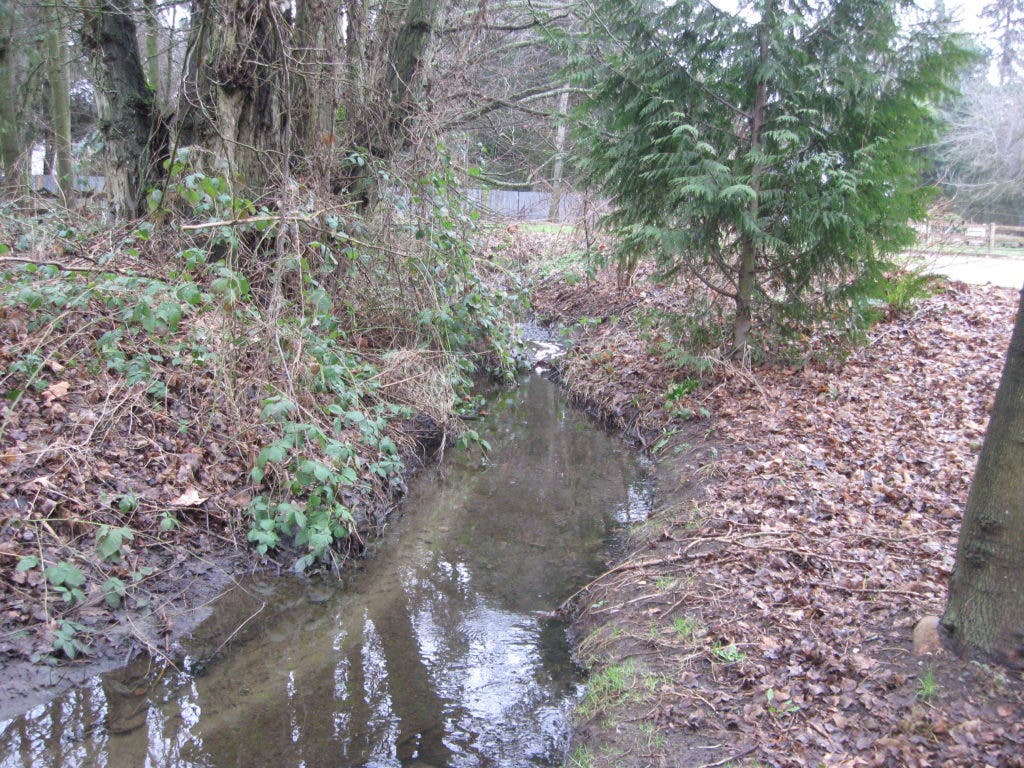

What do we call ourselves? Shoreliners? Shorelineans? Shorelites? Shore-you-betchas? How about Lakers? LFParkers? I don’t know, but I do know one thing: there are a lot more of us here than just the humans. It hasn’t been that long since we were wilderness, or nearly so. The Duwamish/Suquamish or their forebears showed up here maybe 14,000 years ago, the first American pioneers got here in the 1880s, followed by the Seattle, Lakeshore and Eastern Railway, the Great Northern Railway in the 1890s, the Interurban Railroad in the 1900s, and the North Trunk Road (Hwy 99) in the 1910s. Each brought logging, farming, clearing, filling, and building. The natural habitat suffered in predictable but initially unrecognized or unappreciated ways.
Still, animals and plants persevere all around us. Over 300 species of birds have been recorded in King County in the past 150 years, including Bald Eagles (nesting in Innis Arden), Pileated Woodpeckers (Paramount Park Natural Area), Ospreys (I saw one fishing on Ronald Bog Pond), and all kinds of songbirds, gulls, etc. More than forty species have been noted in Paramount Park Natural Area alone in the last twenty years.
Among the mammals, we’ve had a bear in 2009 that was reported from Magnolia and Ballard all the way to our Twin Ponds Park and a cougar in Innis Arden. Each was formerly common. Raccoons, coyotes, opossums, beavers, squirrels, and many small rodents are ubiquitous. River otters have been seen, and seal pups are fairly common on Richmond Beach. I’ve seen a Northern Flying Squirrel in the Llandover Woods a few feet from the city line.
Find out what's happening in Shoreline-Lake Forest Parkfor free with the latest updates from Patch.
Puget Sound is full of fish, though stressed by pollutants. A few salmonids still find their way up our mostly-obstructed streams, but other things might once have occupied our creeks- brook lampreys, for instance. Lake Washington has a fascinating collection of critters, too.
Reptiles and amphibians are represented as well. Salamanders, Pond Turtles, and Garter Snakes are around. The Pacific Tree Frog has been common, but is less and less so as subdivisions multiply. A few years ago an to Paramount Park Natural Area, but it failed for unknown reasons.
Find out what's happening in Shoreline-Lake Forest Parkfor free with the latest updates from Patch.
Insects are plentiful, too, but animals, of course, are only part of the environment. Plants, fungi, and microbes are the balance of the biosphere. We’re known for our tall trees (scrubby little second-growth saplings though they are) and 109 species of plants are documented in Carkeek Park, just south of Shoreline, though 23 were non-native invasive weeds.
We’ve managed to preserve over 380 acres of parkland in Shoreline, much of it fairly naturalistic, and an unknown additional area in Lake Forest Park (I couldn’t find any listing of LFP’s total parks acreage), but homeowners are a substantial part of any good solution. The City of Shoreline has recommendations for how to live with our wild compatriots. Sustainable Shoreline has another set of ideas for the city and individual homeowners as part of a truly comprehensive plan for the city and the wider society. Kruckeberg Garden has extraordinary natives and a careful selection of non-native plants. Camano Island’s climate is similar to ours and these lists may prove useful to gardeners. You can also take a tour of good wildlife garden habitats through “Where Our Wild Things Are”.
While we’ve waged a pretty-well-genocidal war against wildlife for most of our history, and we must be much better stewards of the land and its inhabitants than we have, there’s no question critters can sometimes be hard to live around. This is not an endorsement, as I’ve had no contact with this company, but if the wildlife is actually causing property damage, you might feel compelled to call out the cavalry, so to speak. Similarly, if you find injured wildlife, PAWS Wildlife Center is the licensed animal rehabilitator for this area.