Community Corner
The New Shorecrest and Shorewood: Two Sets of "Three Rs"
Our new high schools are shaping up.
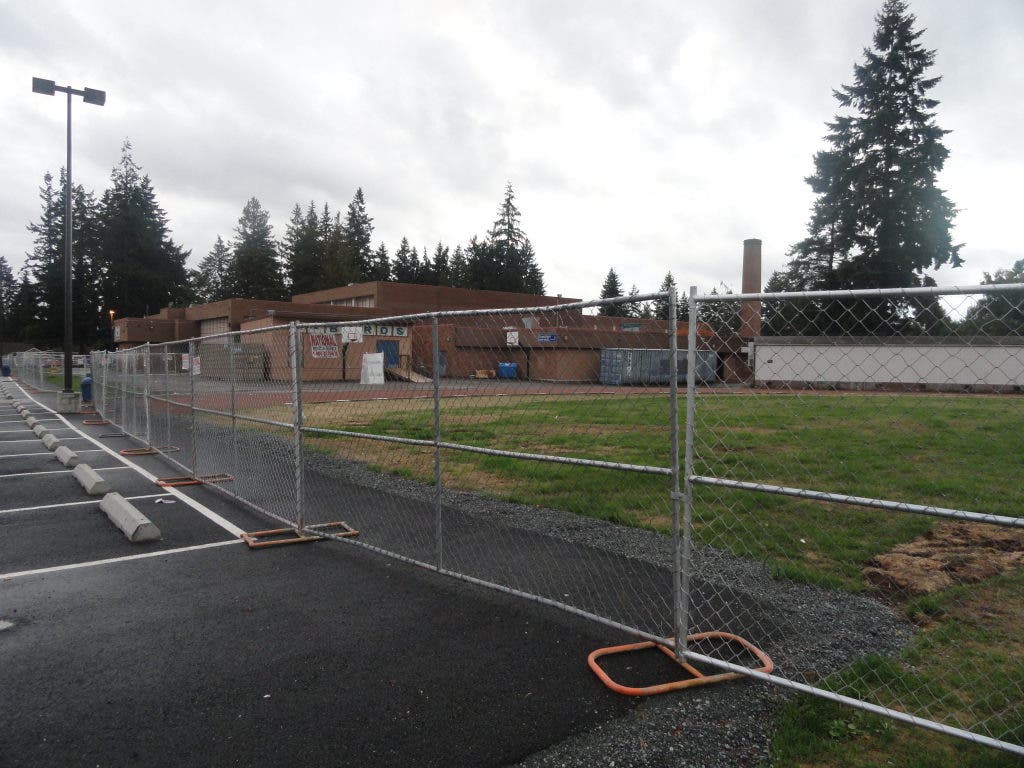


Shorewood and Shorecrest High Schools are being rebuilt. Craig Degginger, Public Information Officer for Shoreline School District, explains “Shorewood was never designed as a high school. It was just a combination- back in the 70s when the district was growing- of a junior high and an elementary school.”
Shorecrest has simply outgrown its home, portables taking up more and more space. We passed the planning bond in 2006 and the $150 million construction bond in 2010 and the big projects are under way.
The temporary “portable” buildings are up and ready to go at Shorecrest HS and Shorewood had its official groundbreaking October 17. Shorewood announced it this way: “Bayley Construction has been awarded the bid for construction of the new Shorewood. Building construction is expected to begin in November."
Find out what's happening in Shoreline-Lake Forest Parkfor free with the latest updates from Patch.
The District will receive more than $37.7 million from the state School Construction Assistance Program for the modernization/replacement of both Shorewood and Shorecrest high schools. The state funding will be combined with the $150 million bond issue approved by Shoreline School District voters in February 2010 for the rebuilding of Shorecrest and Shorewood.
Scheduled completion of both buildings is expected for the 2013-14 school year. To view the phasing plans and designs for both schools, visit the High School modernization page at www.shorelineschools.org/modernization.”
Find out what's happening in Shoreline-Lake Forest Parkfor free with the latest updates from Patch.
Now make no mistake, I’m 100 percent behind high-quality public education, and I’m delighted to see our facilities improved, but it’s not just for the present I’m concerned, but the future. Just how ‘green’ is this whole thing? ‘Reduce, Reuse, Recycle’ all sort of runs together in this case. ‘Reduce’ might mean building only what you need and keeping those facilities in good shape so even if the use must change the building needn’t, ‘reuse’ would then mean making sure whatever you can no longer use is put to another built use and ‘recycle’ means what must be torn down is put to some use other than landfill. So what do we see here?
The portables at Shorecrest will be demolished over the summer. They’ve already put up new ones for the next year’s use, so we know they needed portables. What about the ones they already had? They are portable, right? They can’t be moved and reused? They’ve been worn all the way through?
I haven’t had any answers about the portables, but Degginger says much of the current structures will be repurposed, like the bleachers at Shorecrest, which will be part of the new school. Almost all the buildings will be knocked down in the end. Will any of the broken material be used for the new construction? Yes, some, apparently. Much of the Kingdome was reused as fill for the foundation of Profligate Waste Memorial Stadium(Seahawks/Qwest/Century Link Field), and likewise the dirt dug up in these projects will be used onsite as fill.
Eight portables at Shorewood are to be relocated and used during construction. Who knows what happens to them after construction is completed in August 2013? At Shorewood the old Ronald School will be reused as an arts facility, but it was already serving as the Shoreline Historical Museum, an educational and cultural institution started for the nation’s Bicentennial, so that’s a wash in a ‘green’ sense. Shorecrest’s theater will remain and become the centerpiece of their new Performing Arts Building. The entire rest of the school will be demolished.
is something I’ve written about before, and there’s certainly a lot of it going on here, but in all honesty the new buildings will be much greener than those they replace. They comply with the 2006 Washington State Sustainable Schools Protocol, a state program intended to ensure our schools are of the highest quality.
The Overview states, with my italics:
“The Protocol addresses the multiple facets of high performance schools by providing credits in the environmental categories of energy efficiency, water efficiency, site planning, materials and indoor environmental quality. In addition, it offers an “extra credit” section that emphasizes comprehensive planning and evaluation actions that cross the environmental categories, as well as innovative actions that go above and beyond what is described in existing credits offered within the environmental categories.
For each of the environmental categories, the Protocol comprises both required and optional credits. A number of points are assigned to each
optional credit. For a school to achieve certification a school must meet all of the required credits and earn at least 40 points. At least 4 points must be from the Energy Performance Credit (E1.1) and no more than 5 points (of the 40) can be derived from the Extra Credit category. The Washington
Sustainable Schools Protocol is pass/fail. However, school district planners are encouraged to earn as many points possible and appropriate for a given project above the required threshold. In other words, Protocol users should treat the 40 point threshold as a minimum to beat.”
I note 350 parking spaces in the final Shorewood design, which seems an awful lot. I mean, are we teaching the kids to rely on cars? I haven't been able to find out whether the pavement in all that acreage will be pervious or just old-fashioned concrete or asphalt, but one can hope.
Marcia Harris, Deputy Superintendent, tells me each school will occupy a much smaller footprint than its predecessor, their compact designs allowing a much more efficient and less time-consuming transit from class to class and proportionately lower energy use. She also points out Shorewood will include "finger wells", which foster better rainwater recharge of the natural water table, so runoff isn’t wasted in storm sewers. She concludes “If we’d had a bigger budget we could have been much greener, but we’ve done a lot with what we have.”
Shoreline High School, our original, was closed back in 1986 and has gone on to a continuously productive life as district headquarters, community center, public playfields, and offices for many organizations. In another sense, though, this is inevitably a loss. Any former student coming back to the ol’ alma mater will find almost nothing recognizable but the school colors. Future students, though, like my son, will inhabit a much better place as as a result of all this effort and investment.