Health & Fitness
McNeil Island's Secret Beauty
McNeil Island offers more than natural beauty surrounding a prison, blogger writes. Hidden inside the prison's silent chambers, old murals of scenic vistas, await discovery of their secreted beauty.


Beauty is in the eye of the beholder, more than skin deep and it is what’s on the inside that counts. The same can be said for McNeil Island. When glancing across Puget Sound at McNeil, does one see a massive prison industrial complex sitting on a rock? Far from that, when viewing McNeil, one sees teeming wildlife, lush greenery bounded by mountain vistas and an abundance of natural beauty.
Surprisingly for many, the beauty of McNeil is not just on the outside. Hidden within the ancient prison, beautiful artwork abides, waiting to astonish. Gigantic murals amaze by their mere presence and that amazement quickly turns to appreciating the excellent artistry existing in such a forbidding place.
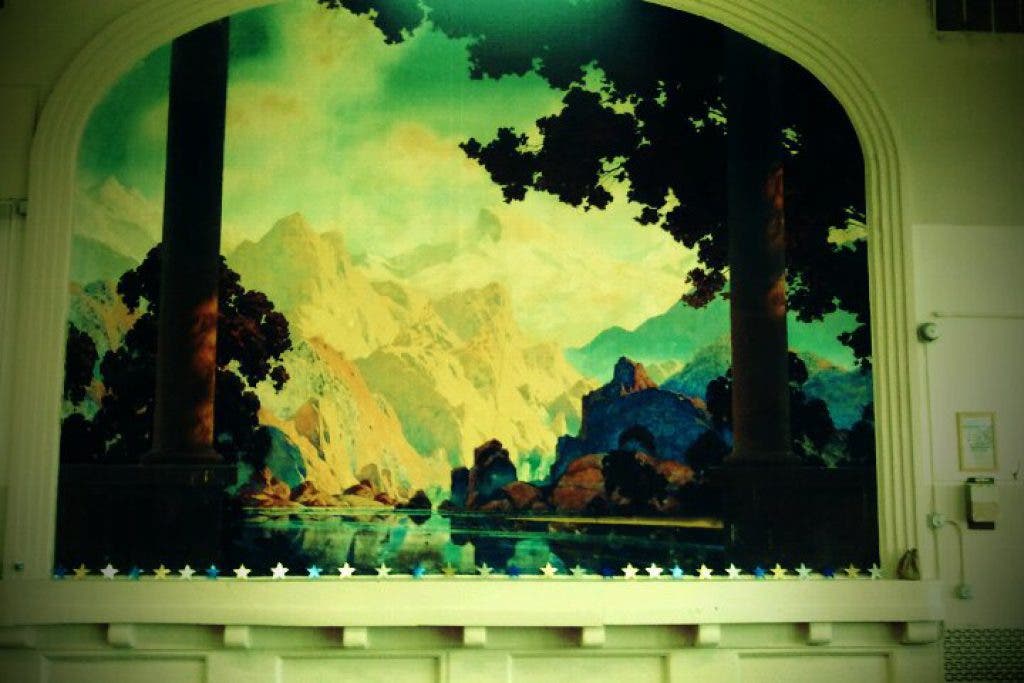
The old Federal Mess Hall, designed as a multipurpose auditorium in 1938 by the Tacoma Architectural firm of Heath, Gove and Bell (of Stadium H.S. and Paradise Lodge fame), secretly hosts a treasure. In 1955 the Mess Hall stage was sealed off during renovation, creating a blank slate begging for embellishment. An inmate volunteer obliged by creating a grand mural that filled the void.
Find out what's happening in University Placefor free with the latest updates from Patch.
The inmate who stepped forward, Clifford Vernon Vincent covered the stage wall with his version of "Daybreak," a 1922 oil on board mural, by Maxfield Parrish "Daybeak" ran in a calendar series in the 1920s, becoming so popular it was one of the most copied works of the 20th century - looks like Vincent liked it too!
Having personally viewed the mural a few times, I can attest to its impressive brushwork, color and technique. Vincent’s painted perspective imparts lifelike depth to the image, via hi-lighted distant peaks and deeply color saturated shadows. On the formerly blank wall a majestic mountain vista now recedes into the distance. Of course, owing to it’s location amongst convicted felons, Vincent had to leave out the nude nymphs, central to Parrish’s painting. Strangely enough this makes the image even more fitting for its environment because as viewed from the inmates dining hall seats, they looked upward through the opening in the pillars, into the free wide open spaces of the mountains; surely something they aspired to.
Find out what's happening in University Placefor free with the latest updates from Patch.
Besides removing the nymphs, Vincent also reduced the hanging branches, giving a better view of the mountains. As it happens, Mt. Rainier is the actual view out the east Mess Hall window, so the inmates were surrounded by beauty and apparently appreciated it too. In fact the mural is intact today despite having endured a food strike and at least 3 riots at McNeil since its 1955 installation. The unprotected artworks’ unharmed existence inside a prison speaks to the human love of beauty, creativity and artistry.
Vincent, a struggling California artist, studied at Manual Arts High School in Los Angeles and used his artistic talents for forgery, resulting in his conviction. While at McNeil he seems to have been a model prisoner who uplifted others with his artistry as Vincent also painted a farm scene mural on an auditorium wall in 1956. That work, much like WPA style art, celebrated the labors of the common man and still adorns an auditorium wall inside the shuttered prison. Vincent’s two 1950s murals survived their creator who passed in Alaska in 1998. That such artistry still embellishes a former Federal and State Prison is truly amazing and illustrates that despite appearances there is good in all of us and true beauty is on the inside.