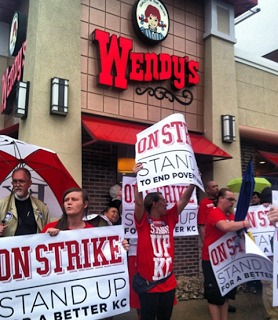
As strikes by fast food worker spread across the nation, it is important to know that it isn’t just young workers not satisfied with their paychecks. Fast food workers have every justification not to be satisfied, but here is some background. First, fast food offers some of the lowest paychecks in the entire nation. In addition, between 2009 and 2012, real wages fell by 2.8% for all of us, according to an analysis by the national Employment Law Project, an advocacy group for low-wage workers. But food preparation workers saw their real wages drop almost twice that amount, 5.2%. For workers with family wage jobs and benefits, the 2.8% has certainly been felt, but can be handled by most family budgets. A 5.2% decrease in real wages for the fast food worker is felt every day as they live on the edge. The fast food industry tells us the average employee makes well over $18,000 a year. Of course that is based on 40 hours of work each week, which seldom happens. Employers keep schedules to fewer hours to avoid complying with certain labor laws that apply only to full-time workers. In addition, few fast food workers get any health care benefit, nor sick leave or vacation time. It is especially a problem during our flu season when employees report for work when they should be home in bed for a couple of days. They don’t have that option because they are already living on the edge of the cliff. So now it is not only an issue of fairness, but one of public health.
Many people think that fast food jobs are primarily occupied by teenagers, but that's no longer the case. The average age of a person in a fast food establishment is now 29.5. About 70% of them are women and a large percentage of those over the age of 23 are trying to support a family. They only survive because they qualify for public assistance such as food stamps, ADC funds, subsidized rent, health care and child care.
Then you have to ask yourself who you are subsidizing, the worker or the corporation. I think it’s an easy answer. It has been estimated that if a hamburger costs just about 25-cents more, the employees could be paid a wage high enough to at least eliminate some of the public assistance. In the long run, it would benefit all of us.
Find out what's happening in University Placefor free with the latest updates from Patch.