Business & Tech
Bill the Butcher: Old-Style Market With a Modern Twist
The shop offers locally grown natural meats and expert advice on how to prepare them.
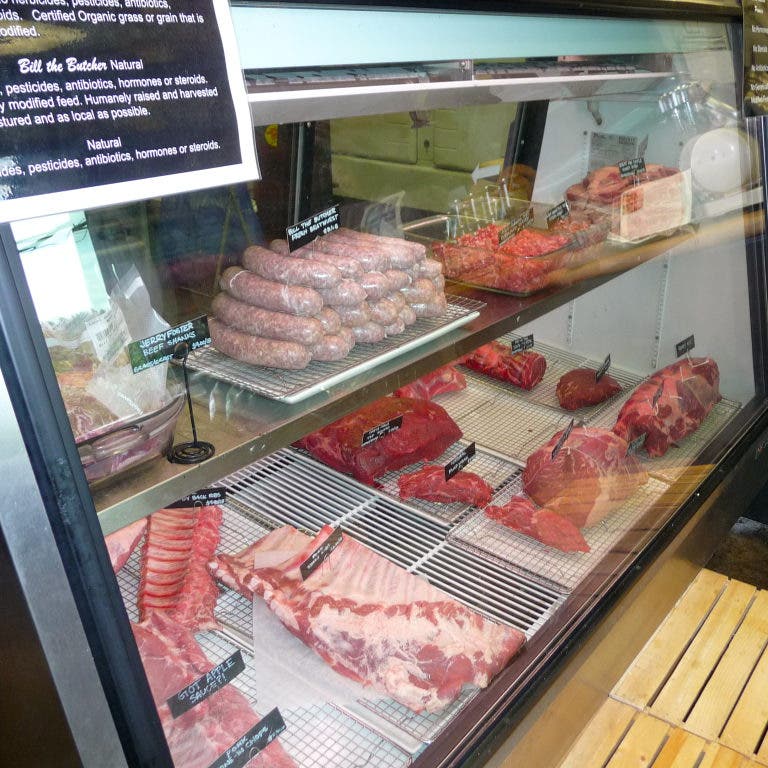


Time for a confession: Although I have flirted with vegetarianism several times in my life, the truth is, I like to eat meat. Don’t get me wrong—I enjoy my fruits and veggies, especially since I joined the Root Connection a few years ago and started getting regular deliveries of freshly picked produce.
But several times a week, I like to cook and eat meat. The simpler the recipe the better, which means the meat has to be good.
That would seem to make me an ideal customer for . According to Kevin Sarbora, head butcher at the Woodinville location, the chain aims to sell a higher quality product. It wants customers to “eat better meat, not more meat,” he says.
Find out what's happening in Woodinvillefor free with the latest updates from Patch.
Founders J’Amy Owens and William von Schneidau are “bringing the butcher shop back to the neighborhood,” says Sarbora. They opened the Woodinville location—their first—in September 2009. Since then, they have added five more shops, with one in Edmonds scheduled to open its doors this summer. The company went public early last year.
Bill the Butcher shops specialize in meat that is free of hormones, antibiotics and steroids; much of it is organic. They buy from Pacific Northwest ranchers who raise their stock in a sustainable way, says Sarbora, which leads to meat that tastes better and is healthier both for you and for the planet.
Find out what's happening in Woodinvillefor free with the latest updates from Patch.
What exactly does that mean? The ranchers who provide Bill the Butcher’s meats practice “management intensive” grazing, he explains. The animals (say, cattle, pigs, lambs) are rotated from field to field, just like a farmer might rotate crops. Since different animals eat different things, the grasses have a chance to grow back, leading to a more nutritious diet for the animals and better quality meat for you.
Grass-fed and -finished animals are gentler on the environment, as well, says Sarbora. Because their manure is worked back into the pasture and acts as fertilizer, they don’t produce large, concentrated amounts of methane gas like feedlot animals do.
“We want to change the world one steak at a time,” says Sarbora.
While beef, pork, poultry and lamb account for most of Bill the Butcher’s sales, the shops have also carried goat, buffalo and some game birds, says Sarbora. You can pre-order your holiday turkey there. Each shop makes it own sausages; you can even get custom ones, if you’d like.
Sarbora, who has a culinary background, “knew nothing about the beef industry” and had no formal training in butchery before he joined Bill the Butcher. He read a lot, talked to people and watched videos on the Internet to learn his new trade. On-the-job training helped, too, as did his knowledge of what’s what in the kitchen.
“I know what a pork chop looks like,” he says. “If I screw up (the cut), it goes into sausage,” he laughs.
In fact, says Sarbora, most of the butchers who work for Bill the Butcher are experienced chefs. “They can talk to you about how to cook the meat,” he explains, which is one of the trademarks of the chain. Every second or third customer wants that advice, says Sarbora. “They come in without a plan (and) ask ‘What’s for dinner tonight?’”
This can be especially helpful, as Bill the Butcher sells the whole animal, which means they may have cuts of meat that are unfamiliar to the average shopper. The store also features marinades and spice rubs you can use with the meats you purchase, as well as condiments like sauces and pickles.
And yes, the meat costs more than it does at the supermarket. Why should you be willing to pay extra? “My meat’s just better,” says Sarbora, quoting a customer who described it as “twice as expensive (and) four times as good.”
It’s healthier, he explains, the quality is “superb,” and buying it supports small ranchers and keeps your grocery dollars in the state and the region. And, he adds, customers get to shop in a “fun, cheery atmosphere.”
Sounds like the best of all worlds to me.