Politics & Government
Public Data Ferret Reviews the City's Options for the Old Woodinville Schoolhouse
Five options for the fate of of the city landmark are analyzed.
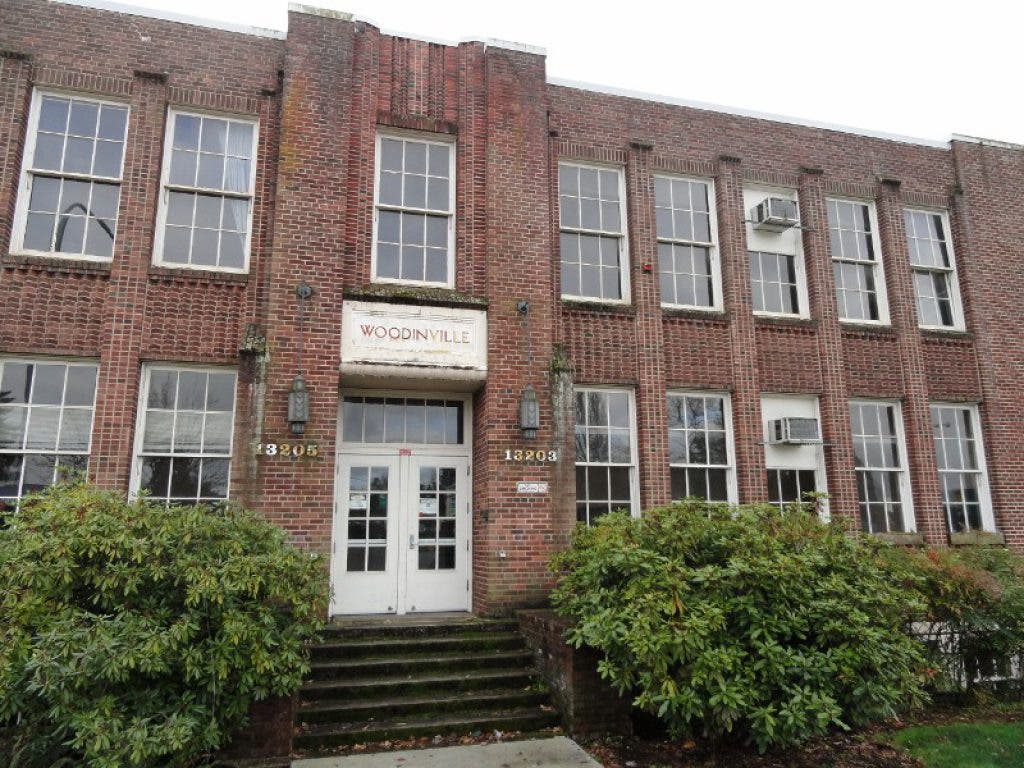
Editor’s note: The future of the Old Woodinville Schoolhouse has been in debate since the city relocated city hall to a new location in 2001. A building assessment report presented to the city council in early February revealed renovations to the vacant brick building could run as high as $3.5 million, and upwards of $5 million if 110 parking spaces are added. The city does not have the money to make the needed repairs and is considering whether the building could be rented or leased.
Matt Rosenberg did an analysis of the five options for the building based on the consultant’s report commissioned by the city, and wrote the summary below. Rosenberg is founder and executive director of Public Eye Northwest, and founder and editor of the news and knowledge base project Public Data Ferret. This analysis first appeared on Social Capital Review.
SUMMARY: A consultant team’s study for the City of Woodinville reports that the cost of redeveloping the city’s Old Woodinville Schoolhouse property, which dates to 1909 and served as city hall from 1993 to 2001, would range from $4 million to $5.5 million and that annual rents could reach $189,804. Calculations directly based on the study show that minus operating costs, best-case net annual income would equal $171,739 and return on investment would take 23 to 32 years – not including any interest paid on funds which might need to be borrowed to help pay for construction. Tenants could include a restaurant, wine-tasting room, retail stores and other uses. The difficult economy and slow commercial property market add risk to any redevelopment plan. Another option is demolishing the building, if King County landmark officials can be persuaded redevelopment doesn’t pencil out. Another strategy is to sell or lease the property as-is, to a private for-profit or non-profit entity which would then redevelop it and market it to tenants. Public meetings on the site’s future and the current study are coming in March and a decision by the City Council is expected this summer.
Find out what's happening in Woodinvillefor free with the latest updates from Patch.
BACKGROUND: The Old Woodinville Schoolhouse is a brick masonry building dating to 1909. It was expanded in 1936 and 1948 and served as City Hall from 1993 to 2001, when it suffered structural damage in the Nisqually Earthquake. It has been empty since then. Of the 18,435 square feet, 14,303 are leasable. A consultant study for the city by SHKS Architects – drawing in part on earlier expert analyses including a real estate market assessment of the property – was recently released. The new report details different redevelopment options. The city’s goals have been to preserve a property with historical resonance, upgrade it at low initial redevelopment costs and see that it is successfully marketed to tenants.
KEY LINK: Old Woodinville Schoolhouse Feasibility/Renovation Study, Report to City Council, 1/27/11
Find out what's happening in Woodinvillefor free with the latest updates from Patch.
KEY FINDINGS:
- Four redevelopment options have been identified at total estimated costs ranging from $3.96 million to $5.55 million. Total costs include three sub-categories. They are 1) construction; 2) soft costs such as design, engineering, permits, sales taxes, testing and project management; and 3) parking lot expansion to add 110 more spaces, which are considered essential in order to maximize rent potential by attracting restaurant and retail tenants.
- Several different types of tenants could occupy different parts of the building. Permitted uses include eating and drinking establishments; food, drug and liquor stores; a building, garden materials or hardware store; professional or government offices; a school, conference center, theater, library, or museum.
- Against the $4 million to $5.5 million redevelopment costs, annual rent income potential is as high as $189,804 combined for the basement, first and second floors.
- Calculations based on the consultant study show that minus annual operating costs of $18,435, best-case net yearly income from the property would be $171,739 and return on investment (ROI) would take anywhere from 23 years (Option A, $3.96 million) to 32 years (Option D – $5.55 million). Any interest paid on funds which might need to be borrowed to help pay for construction would add to the ROI timeframe.
- The “demolish” option would cost $208,600 and include filling in the basement and paving over the property with more parking for the civic campus until a future development proposal emerges. The King County Landmarks Commission would have to approve, and the city would probably have to demonstrate renovation isn’t economically feasible.
- The study notes that capital is tight, commercial property vacancy rates high and rents low in many locales including Woodinville, and that until unemployment or the threat of it decreases and consumer confidence grows, the market for commercial property will remain weak. One exception is warehouse-like spaces being rented to “small boutique wine production and distribution facilities, many with retail outlet/tasting rooms and plentiful parking.”
- If the city decides to redevelop the property there are several different management and ownership scenarios. The city could manage the property in-house or hire a real estate management firm to get tenants and run the building. The city could sell or lease the property as-is to a private entity, either for-profit or non-profit, which could then renovate, manage and operate the facility – and which could take advantage of funding sources not available to public bodies.
City of Woodinville
Old Woodinville Schoolhouse Renovation Study
Council Report
*Operating costs do not include leasing/management fees paid by landlord or direct utility charges and other typical NNN costs that are paid by tenants as part of lease rates.
from Old Woodinville Schoolhouse Feasibility/Renovation Study