Crime & Safety
After 31 Years In Prison For A Crime Committed At Age 15, Wisconsin Man Seeks A Commutation
In June 1995, Maldonado was sentenced for first-degree intentional homicide for the killing of Ruben Borchardt.

August 20, 2026
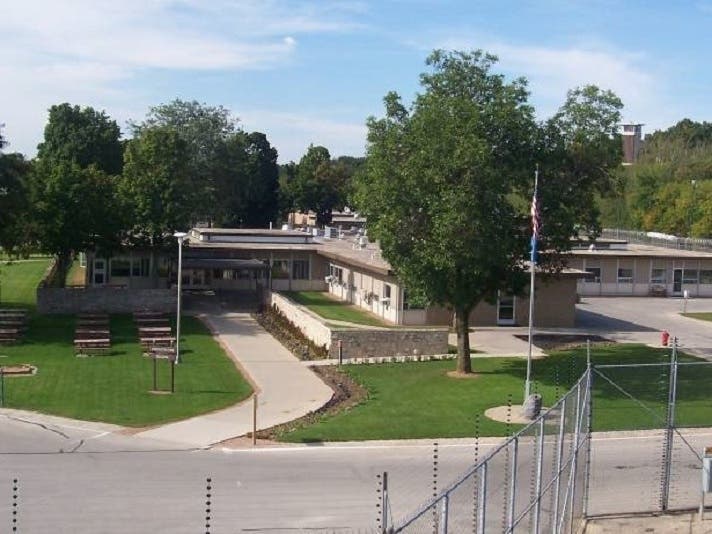
This Friday, Michael Maldonado, 47, a resident of the Kettle Moraine Correctional Institute who has been incarcerated for 31 years for a crime he committed when he was 15, will be one of 12 applicants considered by Wisconsin Gov. Tony Evers’ Commutation Advisory Board.
Find out what's happening in Across Wisconsinfor free with the latest updates from Patch.
Maldonado’s supporters believe he has served more than enough time for his offense and should be released from prison to enter community supervision.
In June 1995, Maldonado was sentenced for first-degree intentional homicide
Find out what's happening in Across Wisconsinfor free with the latest updates from Patch.
In June 1995, Maldonado was sentenced for first-degree intentional homicide in Jefferson County for the April 3, 1994 killing of Ruben Borchardt as part of a plot inspired by his wife, Diane Borchardt, a substitute teacher. Diane Borchardt offered a $600 reward, along with other promised gifts, for killing her husband to Doug E. Vest Jr., 16, a student at Jefferson High School, who recruited Maldonado, Vest’s younger cousin, and another student named Josh Yanke.
Maldonado claimed his role was procuring a sawed-off shotgun used in the killing, but the other two boys testified that Maldonado was also the shooter.
Maldonado was given a life sentence with the first opportunity for parole on April 3, 2044.
Both Vest and Yanke received lighter sentences on homicide charges. Vest got 25 years for first-degree homicide and Yanke got 18 years for second-degree homicide.
After both Vest and Yanke were paroled from prison, Vest acknowledged via letter that, in fact, he was the shooter and not Maldonado.
On October 9, 2025, Maldonado received a sentence modification, largely due to Vest’s letter, and became eligible for earlier parole; his first parole hearing was in March 2026, where he was given a deferment of 18 months before another hearing.
Maldonado is the only one of three youths who conspired to kill Borchardt who is still incarcerated.
Through a records request to the governor’s office, the Wisconsin Examiner found out in April that Maldonado was one of two individuals the WISDOM Commutation Group, the advocacy group that has been promoting commutations by Gov. Tony Evers since 2023, had identified for consideration. Commutation is a form of executive clemency involving a reduction or modification of a sentence.
The Examiner reached out to Maldonado for an interview, but he declined, citing what he called the “delicate process” of the commutation application and not wanting to “ruin any chances I might have.”
The WISDOM presentation said Maldonado and a second man who was also involved in a crime when he was young, “need a second chance because they received disproportionately long sentences for crimes they committed in their youth, back in the 1990s. They deserve a second chance because they have already served so much time and demonstrated so much maturity and good character that they would have qualified for parole before now if the length of their sentence had not ruled out that remedy.”
During his Oct. 9 sentence modification hearing, Robert Henak, the attorney representing Maldonado, made a similar argument before Jefferson County Circuit Judge William V. Gruber:
“Back in 1994, Wisconsin law provided that the first-degree intentional homicide sentence could be as little as 13 years, 4 months before parole eligibility. That is somebody who intentionally takes another life. Not even, you know, necessarily as a party to a crime.”
Henak noted that Vest received twice the minimum sentence at 25 years and Maldonado nearly four times the minimum at 50 years, when he would first become eligible for parole.
The WISDOM Commutation team also noted that for Wisconsin governors through the 1970s and 80s it was “common practice” to commute or reduce “the sentences of prisoners who had been convicted of serious crimes (including first-degree murder), when their behavior behind bars suggested sufficient rehabilitation to return to society as responsible, job-ready, citizens.”
In 2023, Maldonado wrote of his contrition over the crime:
“I was young and foolish, but that is no excuse for my behavior, and I am remorseful for my actions. Throughout my growth and self-identity, I have learned that freedom is a responsibility. Although I did not understand this in my youth, today I take full responsibility for my actions, and I have great appreciation for humanity.”
Maldonado provided his juvenile life sentence commutation application to the Jefferson County Clerk of Court, which the Examiner then obtained via a records request.
The application includes an 11-page memorandum prepared by Zoe Engberg of the University of Wisconsin Law School.
“Based on the erroneous belief that Mr. Maldonado was the shooter, the judge sentenced Mr. Maldonado to a significantly longer sentence than his other teenage co-defendants,” Engberg wrote. “Mr. Maldonado’s sentence was later modified in light of new evidence indicating that Douglas Vest, not Michael Maldonado, was the shooter.”
In the Oct. 9, 2025 transcript of the sentence modification, Judge William Gruber said he also believed sentencing Judge Jacqueline Erwin issued a harsher sentence for Maldonado because she perceived him as the shooter.
“Isn’t that as plain as day that Judge Erwin lengthened the period of ineligibility to parole with respect to Mr. Maldonado because her impression, based upon her exposure over the course of those trials (Vest, Yanke and Diane Borchardt), was that he’s the one who pulled the trigger?” Gruber said.
Engberg summarized Maldonado’s progress and maturation while in prison, where he took advantage of educational opportunities, worked responsibly, and volunteered.
“Mr. Maldonado has spent his time in prison productively,” wrote Engberg. “He has received extensive praise from Dept. of Corrections staff for his work, including multiple commendations and promotions in a variety of employment positions. He has earned numerous degrees, including his HSED (High School Equivalency Diploma) , multiple vocational degrees, and his associate’s degree. He has also become deeply involved in volunteer pursuits – including building houses for Wisconsin families with Habitat for Humanity, speaking with at-risk youth and training service dogs for Wisconsin community members.”
Judge Gruber, at the sentence modification hearing in 2025, also noted that Maldonado’s “rehabilitative promise is high and I think that’s exceptional.”
Engberg noted that Maldonado had his first parole hearing in March 2026, and she contended that, under normal circumstances, denial of release at the first hearing is typical; she also contended that Maldonado would probably have to appear before the parole board several more times before being released.
“It will probably be many years before Mr. Maldonado completes the requirements imposed by the Parole Board – not because of his lack of effort or because he poses a risk if released – but because of the administrative barriers that stand in his way,” she said. “By the Parole Commission’s own admission, his conduct, program participation, and re-entry plan are all satisfactory for release. The DOC’s risk assessment places him at the lowest possible risk level. Nevertheless, it will likely be years before he is released on parole.”
Engberg also noted that Maldonado’s re-entry plan includes several housing offers, a job offer, and support from the Remington Center, part of the law school.
“Mr Maldonado’s extensive support network is a huge asset to his successful transition back to the community,” wrote Engberg.
Concerning the death of Ruben Borchardt, Maldonado wrote in his application: “Even though I didn’t personally shoot Mr. Borchardt, I am the reason that he died. If I hadn’t given Doug the gun, he wouldn’t have been able to carry out his plan. I am the reason that Mr. Borchardt is dead, just as much as if I had personally pulled the trigger.”
Maldonado recounts that after his 2025 sentence modification hearing, he met with members of the Borchardt family.
“Some of my biggest takeaways from that meeting were how much the Borchardt family continues to struggle with the very real hardships of having their loved one, Ruben (their father, son, brother, uncle, and friend), senselessly taken away from them,” he said. “I could see the sadness and heartache on their faces, and their anger was evident and justified.”
During that Oct. 9 hearing, a victim who is not named in the transcript, who identified as one of Ruben’s children, challenged Maldonado that he hadn’t publicly acknowledged the pain he had caused:
“Even today, as you stand here seeking early release, there has been no complete acknowledgment of the pain that you have caused or the life that you took. Without honesty and accountability, there can be no real healing for you, for us, or for anyone,” and the victim later added, “Your release should not come before repentance.”
The victim asked the court not to approve an early release, but to “let the sentence stand as a reminder that actions have consequences.”
Later in the same hearing, Maldonado apologized to the family and asked for forgiveness.
Asked for reasons he should be given a commutation, Maldonado wrote in his application that as a 47-year-old who has been reflecting on what he did when he was 15, he had matured into a man who is “reliable, responsible, disciplined, caring and loving.”
“Relief from a commutation would allow me to return to the community, family, and friends as a stable, employable, and fully rehabilitated adult who is prepared to contribute to the workforce and society,” he wrote. “My strongest impact will be through consistent employment and the public safety benefits that come from a structured, well-supported, planned re-entry.”
Maldonado added that he understood the “severity of his crime” and his role, but he also believed that justice had been served and would be further realized if he was given the opportunity “to further prove myself and my rehabilitative nature through being granted relief and having my sentence commuted by Governor Evers.”
The Examiner reached out to the Jefferson County District Attorney’s victim witness program for a statement on Maldonado’s commutation application and also requested help with contacting victims who might want to make a statement. A spokesperson for the DA responded that its policy is not to issue statements to the press or reveal third-party information.
Maldonado’s application includes extensive documentation of his education, his volunteer work, and work history while in prison and offers specific details on his re-entry plan, including housing available and a job that is available in Milwaukee
His application also includes 23 letters of support, many from family members, as well as from others who worked with Maldonado in prison or met him while visiting relatives.
Two letters are from parents, Mary Ann and Spriggie Hensley Sr. whose son was also incarcerated, and who got to know Maldonado over the years.
The package includes a letter from Adan Castellano of Waukegan, Illinois, who spent two years as Maldonado’s cellmate and says he has seen him accept his circumstances and make decisions to make the best of his life.
There’s also a letter from the WISDOM Commutations Committee, including Beverly Walker, Sherry Reames, Tanya McMahon and Amanda Johnson.
“As the U.S Supreme Court and other authorities have noted, it is unjust to treat juveniles as if they were mature adults with fully developed brains and impulse control,” the WISDOM members write. “The Vera Institute of Justice argues that 15 years is usually long enough for a young offender to grow into a responsible adult. Michael has now spent over 30 years in prison — twice as long as his entire life before incarceration. We believe that he has already demonstrated his readiness for release by working hard, educating and improving himself, and making positive contributions to the community.”
A nurse at Kettle Moraine, Nicole Schwaller, who has worked with Maldonado for eight years and at the health services unit for four, said he “was always willing to tackle any tasks that were delegated to him and was trusted to work in our area because of his good conduct and work ethic.”
He also received support from a former correctional officer, Tina Bleich, who worked at Columbia Correctional Institution while Maldonado was there working in the print shop. “It is my opinion that if Michael Maldonado was released into the community, that he would not be a hazard,” she wrote. “I believe he would be a productive member of society.”
Wendy Heredia, a member of the advocacy group Justice Forward Wisconsin, said she’s known Maldonado for about eight years. She has helped him stay in touch with the outside world, including assisting with communication with his family.
“He’s not the type of person to say, ‘I did this,’ or ‘I did that,’ or ‘Why can’t I get my second chance?” Heredia said. “He always tries to better himself in prison, because he said that if God’s plan was for me to stay here for the rest of my life, then that’s God’s plan, and I have to walk with that. But I want to do it the best way I can, so I can help others in their path, in their rehabilitation, so they can be successful community members.”
Heredia said her husband was once incarcerated with Maldonado. She thinks that many juveniles with life sentences who started their time in prison stuck together.
“All the children deserve this in Wisconsin,” Heredia said. “They deserve a second chance, a second look.”
Tom Denk, who was released from prison in 2022, told the Examiner that he met Maldonado at Kettle Moraine Correctional Institution, where they lived in the same unit of the prison for about eight months and talked on a few occasions while walking to work in the prison. Denk is the co-president of ESTHER, an advocacy group in northeast Wisconsin that works on criminal justice issues.
While he didn’t get to know Maldonado in depth, Denk said Maldonado was soft-spoken and did not try to intimidate others or ask for special treatment, and he got the impression that other incarcerated people went to Maldonado for advice.
“If I would choose a poster boy for commutations for people that committed a crime when they were young and now deserve a chance to move on with their life, I would say that person is Mike,” Denk said.
The Wisconsin Examiner, a nonpartisan, nonprofit news site, offers a fresh perspective on state politics and policy through investigative reporting and daily coverage dedicated to the public interest. The Examiner is part of States Newsroom, a national 501(c)(3) nonprofit supported by grants and a coalition of donors and readers.