Community Corner
Department Of Corrections, Contractor Pursue Reform, Advocates Want A Bigger Say
The report gave Wisconsin's adult prison system advice about better healthcare and addressed a persistent understaffing problem.

July 7, 2026
Earlier this year, the Wisconsin Department of Corrections entered into a contract to put a series of reform proposals into practice.
Find out what's happening in Across Wisconsinfor free with the latest updates from Patch.
DOC Secretary Jared Hoy signed the contract with Falcon Correctional and Community Services, Inc, a consulting and management firm that produced a report and made recommendations in partnership with the DOC.
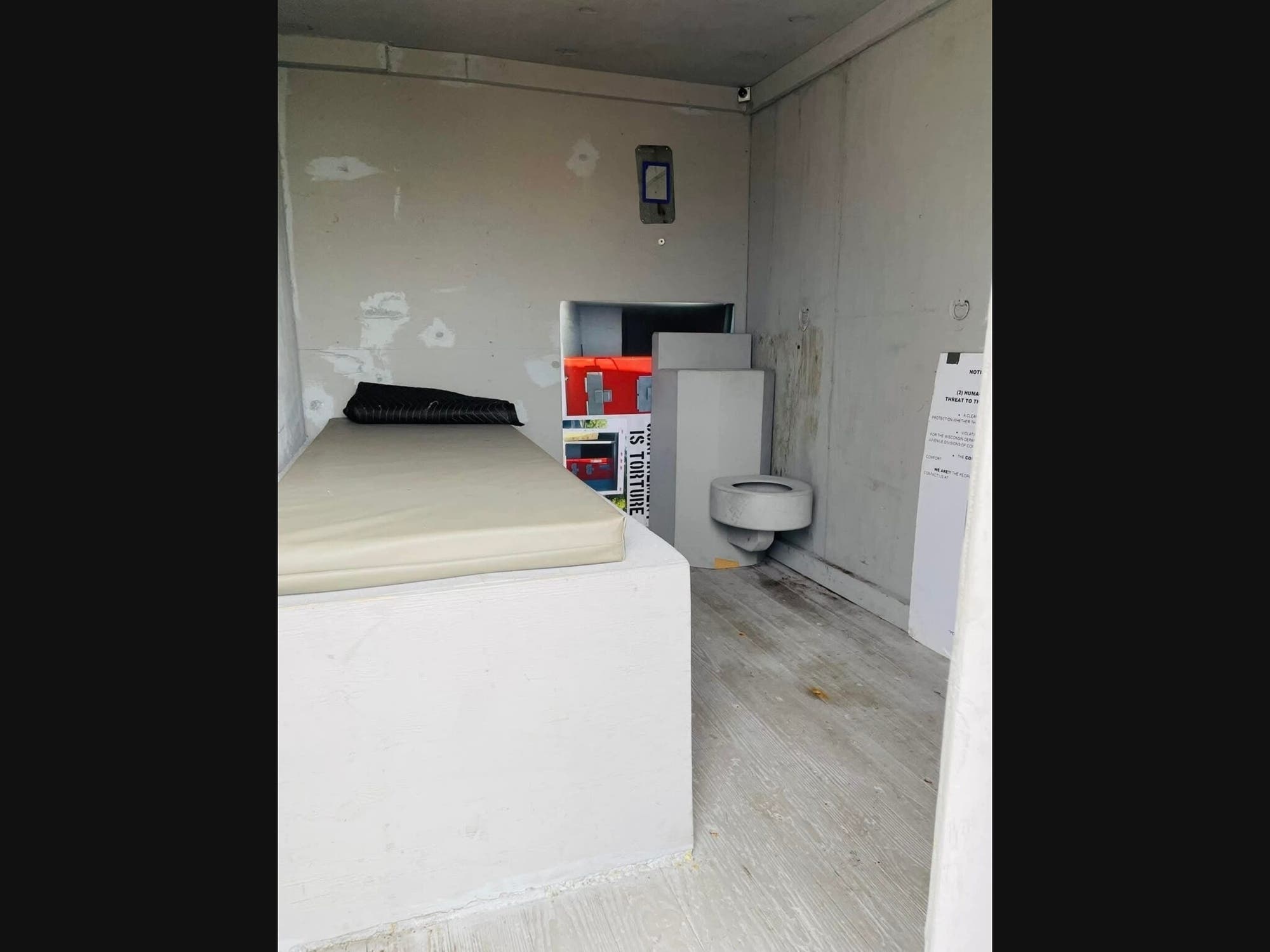
The report gave Wisconsin’s adult prison system advice on how to provide incarcerated people with better healthcare, reduce prisons’ use of solitary confinement and address a persistent understaffing problem. It found a significant number of staff were hired during or after the COVID-19 pandemic, and that newer staff had limitations because they were trained while normal operations were suspended due to the pandemic.
Find out what's happening in Across Wisconsinfor free with the latest updates from Patch.
The report also found a “general lack of uniformity” across facilities, creating problems with monitoring, oversight and accountability. Facilities needed a standard approach to basic security practices, incident reporting, investigations and hiring practices, the report recommended.
In the contract documents, the DOC and Falcon plan to implement recommendations from the report, though the report stated that the majority of recommendations will require funding from the state. Susan Franzen of the prison reform advocacy group Ladies of SCI expressed concern about whether overcrowding and staffing shortages will affect the agency’s ability to effectively carry out the recommendations, and called for action from the state Legislature.
Contract documents obtained by the Examiner in May show that “Phase 1” of the partnership involves Falcon helping the department turn recommendations into plans for action, visiting facilities, providing mentorship and coaching and helping prepare prisons to maintain the new changes after the partnership is over.
The Department of Corrections didn’t respond to the Examiner’s requests for comment about whether any changes have been made to the contract’s status or the documents since the Examiner received them from the department on May 13.
According to the documents, “Phase 1” focuses on six prisons, including the often-scrutinized Green Bay and Waupun Correctional Institutions.
The other prisons included in this phase are Taycheedah Correctional Institution, which houses women, the maximum-security Columbia Correctional Institution and the medium-security Redgranite and Stanley Correctional Institutions.
DOC will follow recommendations from various priorities in the Falcon report, which include sections on solitary confinement, medical and mental health practices and human resources and staffing, according to the contract documents.
Franzen of the Ladies of SCI said in a May interview that she thinks the Department of Corrections leadership in Madison wants to improve the system. She expressed concern about whether the change in approach will be carried out at the level of individual correctional officers working in particular units in the prison system.
Some efforts may happen at a system-wide level when appropriate, according to the contract documents. This includes Falcon working with the DOC to train staff throughout the department’s division of adult prisons in two areas: “security back-to-basics” and building a culture of dignity and respect.
For Franzen, the partnership raises the question of what metrics will be used to determine whether the department is succeeding at creating this culture.
“I want to hear things from family members [of incarcerated people] that are different,” Franzen said.
The department also planned a review of its adult prison policies to begin in March 2026. The goal is to fix gaps and redundancies and to have the policies match the new reforms.
Under the contract, the project cost can’t go above $500,000 without prior approval from the DOC, with Falcon receiving payment in four installments after completion of tasks.
Site visits
The contract lists plans for two Falcon site visits, along with a third that would happen later in the phase if the DOC decides it is necessary.
The first visit and a DOC/Falcon leadership summit were scheduled for early March 2026. It’s unclear whether the second visit has happened yet; the documents say it will take place partway through the process of implementing reforms.
The second visit aims to provide mentoring, identify problems and review how the reforms are being put into practice, the contract documents say. The visit will be “strategically targeted” based on information gathered through remote monitoring and Department of Corrections oversight.
The third visit, if the department holds it, would focus on sustaining improvements, leadership readiness and reform in the long term.
“There’s only so much you can tell from a video call,” Franzen said. “…I would hope that they take advantage of that [potential third visit], because I think that’s going to be a really good way to help reinforce things, and making sure that things have changed.”
Advocates want more oversight
The Department of Corrections has held friends and family forums for loved ones of people who are incarcerated or on active community supervision, and Franzen said advocates participated in a virtual workshop for the Falcon report last year. But Franzen wishes the Falcon report had dug deeper, and she also wants to see Wisconsin create an independent ombudsman’s office with oversight over the DOC.
“I appreciate that they’re doing this, but yes… this is money that also could’ve been put towards an ombuds for someone that’s in it for the long haul,” Franzen said. “And also not someone who’s depending on a paycheck from the DOC.”
Mark Rice, criminal justice campaign coordinator for the advocacy organization WISDOM, wants to see people impacted by the prison system having a central role in the process.
Rice took issue with one of the contract documents, which states Falcon cannot employ a person who is on active probation, parole or extended supervision for any position where their primary duties involve working with incarcerated people or involves access to the records or funds of incarcerated people.
“I feel that’s a lost opportunity,” Rice said. “Some of the people who would be the best and most informed people to be a part of this as paid staff are people currently under supervision.”
The Wisconsin Examiner, a nonpartisan, nonprofit news site, offers a fresh perspective on state politics and policy through investigative reporting and daily coverage dedicated to the public interest. The Examiner is part of States Newsroom, a national 501(c)(3) nonprofit supported by grants and a coalition of donors and readers.