Schools
Nicolet Teacher Takes Learning Outdoors
John Rhude is raising funds for an outdoor, environmental learning center at Nicolet.


For more than seven years, teacher John Rhude has found his most valuable teaching tools not in the classroom, but behind the school in the the Nicolet Woods, an area just under five acres along the Milwaukee River. In the forest, students take water samples, identify trees, maintain prairies, and start to develop an understanding of their place in an ecosystem.
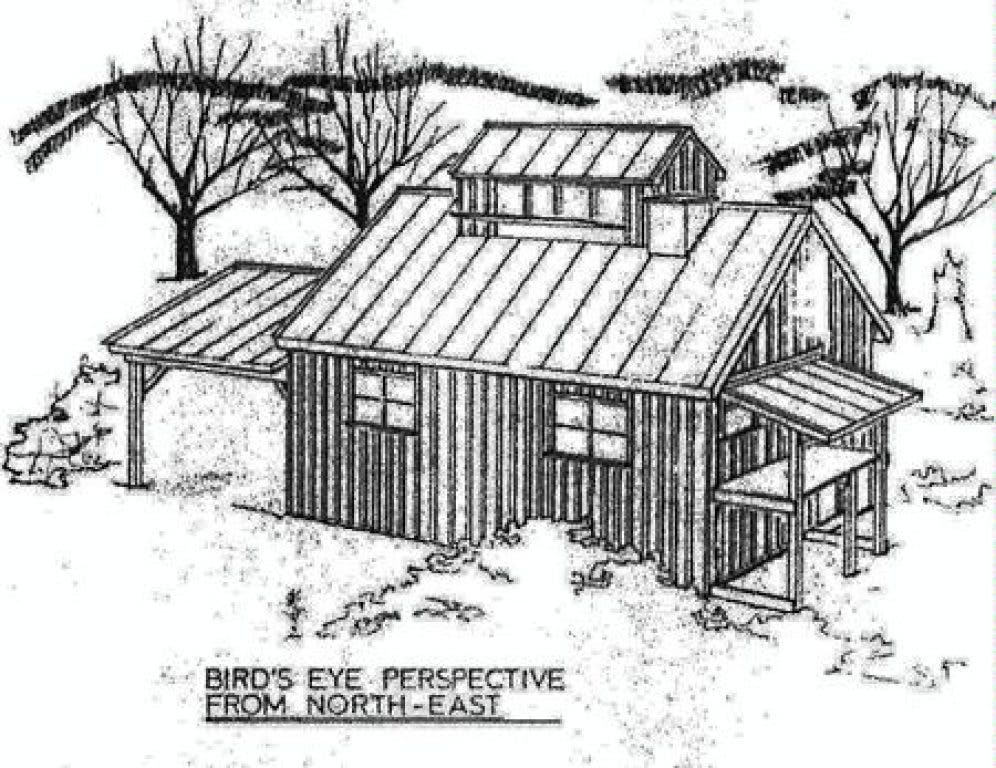
In an effort to get more students outside, and for longer periods of time, Rhude is raising funds and gathering volunteers to construct an Environmental Learning Center to serve as a classroom for many disciplines within the learning environment of the forest.
The building plans, modeled after Vermont-style sugar shacks, have been approved by the City of Glendale and the Nicolet School Board.
Find out what's happening in Fox Point-Baysidefor free with the latest updates from Patch.
"The school board was very excited about it because it certainly enhances learning and it’s going to involve many types of students," School Board President Marilyn Franklin said. "This is the kind of thing that makes Nicolet special. It really shows creative thinking."
With a team of volunteers, Rhude plans to lay a concrete foundation "when the snow melts," and begin building in June. He estimates a total budget for materials to be between $10,000 and $15,000, depending on donations.
Find out what's happening in Fox Point-Baysidefor free with the latest updates from Patch.
So far, Rhude has secured one private donation from a friend for $2,000. He has applied for grants from Kohler, Lowe's, and the Natural Resources Conservation Service. Additionally, the Nicolet Foundation has expressed support and may be willing to donate depending on grant support.
Learning in the Forest
In the Nicolet Woods, signs of student activity are already popping up.
Erected blue tubes sprout up from restored prairie areas, protecting and stabilizing dozens of young trees provided by the state Department of Natural Resources forestry education program, Learning Experiences and Activities in Forestry (LEAF). And two older trees that fell during last year's storms are chopped up and ready to be remastered into benches.
"They're out there, getting in the water with waders," Rhude said. "I think the best way to learn is to be outdoors."
Rhude said he first felt the need for a building in the woods in order to house the evaporator he uses from the forest. In the courtyard where the evaporator is currently housed, it will eventually rust from inclement weather.
In the new classroom, Rhude said students will be able to participate in that process and other class projects even beyond the science department. Students in art, photography, and special education classes will also likely take advantage of the space.
"Hands-on learning is always more effective for many kids," Rhude said. "It's another differentiated way to teach."
For his dedication to environmental education, Rhude was one of two Wisconsin teachers to be awarded a LEAF School Forest Award in December.
"I was pleased to get the award, and more importantly, I think it’s just important to get kids outside so I work really hard to do that," Rhude said at a December school board meeting.
Taking Care of the Forest
Like many natural spaces in Wisconsin, the school's forest is full of non-native invasive species like burdock, buckthorn and garlic mustard, which choke out other plants and limit diversity.
"With a forest, you can just let it be on its own, or you can actively try to manage it," Rhude said.
Rhude said some students volunteer after school and on Saturdays to help him with restoration projects like pulling invasive species.
"There are kids who just like doing that," he said.
Rhude hopes he can accomplish his goal of managing and restoring the forest alongside academic lessons, with the idea that students will learn more effectively and come away with an environmental ethic.
"We have a large urban student body; they don't have a lot of parks and open spaces to enjoy," Rhude said. "These woods are pretty unique in terms of feeling like you're away from the city."
Anyone interested in donating to the project should contact Nicolet High School. Donors will likely be listed on a plaque outside the building.