Health & Fitness
Addiction's Doorstep: A Special Report on Wisconsin's Opioid Epidemic
Wisconsin's opioid epidemic starts in the medicine cabinet. What happens when one person's suffering becomes a community-wide problem?


Wisconsin’s opioid epidemic could also be termed: What happens when one person’s suffering becomes a community-wide problem?
Addiction spreads its web in ways that impact the entire community. It cripples police department manpower, exhausts first responders and ultimately spreads fear into neighborhoods in the form of burglaries, robberies and assaults. One way or another, opioid addiction — and its costs — land right on your doorstep.
Opioid addiction rates have skyrocketed nearly 500 percent in the past seven years as prescription pills have poured into the medicine cabinets of Wisconsin residents. Four out of five people in Wisconsin who become addicted to heroin started by abusing prescription painkillers according to the Wisconsin Department of Health Services. The Center for Disease Control says doctors in Wisconsin write about 7 prescriptions for opioid pain relievers for every ten adult residents.
Find out what's happening in Greenfieldfor free with the latest updates from Patch.
A Problem That Can Affect Anyone
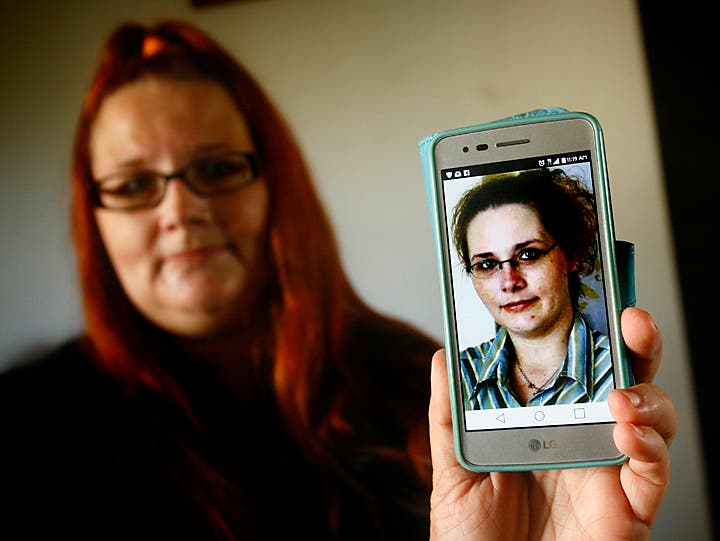
The story of Carrie Mitchell illustrates just how pervasive Wisconsin's opioid epidemic is: regardless of race, class, age, sex or wealth, everyone is at risk.
Find out what's happening in Greenfieldfor free with the latest updates from Patch.
Mitchell, a mother of three, owned her own house, her own vehicle, and wore a suit to her full-time job at M&I bank. A surgery to fix her knee was supposed to help her live that life. Instead, it led to her loss of it.
What began as pain management would grow into a fierce addiction that would eventually leave her broke, desperate, and out of options.
After surgery, Mitchell was issued a morphine pump to help ease her pain. When the morphine wore off, she used pain medications that were prescribed by her doctor. When the pills ran out, her doctor prescribed more.
The combination of pills and drip morphine gave Mitchell a hollow security - one that permitted her to function while on them, while also causing her to be anxious, distracted and unable to cope day-to-day when their effects wore off.
When the prescriptions ran out, she started buying pills off the street. The effects of a hydrocodone pill last for between four to six hours, but at about $10 a pill, the cost added up quickly. Her tactical choice was to find something cheaper, more long-lasting to feed her addiction.
That led her to heroin.
Mitchell is not alone. A majority of heroin users’ addictions began with an addiction to legal prescription opioids. People are 40 times more likely to be addicted to heroin if they are addicted to prescription painkillers.
"One of the Lucky Ones"
Once she was hooked, Mitchell’s life quickly spiraled downhill. She was picked up for minor crimes that helped feed her habit. Some of those charges included theft of movable property between $5,000 and $10,000 in May 2013, and retail theft - less than $2,500, in March 2012. She was out of work, out of the house and sleeping on couches. Mitchell tried detox three times. She relapsed every time.
She lost custody of her children, and the next day child protective services searched her house. “During the court hearing, the judge asked me to take a hair follicle test [for drugs], and I knew I couldn’t do it,” she said. “After I lost custody of the girls, I hit a low point.”
Mitchell was cited for receiving stolen property in May 2016, and brought to jail on a parole violation. High on heroin at the time of her arrest, she would go down incarceration’s rough road one more time.
Sitting in jail, facing a lengthy incarceration period, out of options and without a recovery plan, Mitchell’s parole officer gave her a choice: start an in-patient program at the Addiction Resource Council in Milwaukee, or face hard time at the Thetaycheedah women's prison in Fond du Lac.
At first, she didn’t want to do in-patient treatment, but the longer she sat in jail, the more she thought she should go. “I was one of the lucky ones, she said. “I could have landed myself in prison for many years.”
Her decision to go would end up making all the difference.
In the beginning, she had no privileges whatsoever - no visitors and no contact with the outside world. She was administered a monthly shot of Vivitrol, an agent that blocks the effects of opiates. It gave her the space to open up, free from her symptoms, to begin working toward longer-lasting strategies.
Intensive group therapy, individual therapy, independent work and chores were all part of her routine at the start.
After two months, she realized the passage of time coupled with therapy were starting to make a difference. “I journaled the entire time, going back and reading that now, some of the things I was upset about just seemed so minimal today,” she said. “I started seeing things change.”
During her graduation ceremony, she stood before the people who witnessed the four most difficult months of her recovery, and said it’s time to come home. The fog of heroin addiction was lifting, and by the end of her time at ARC, the warmth of Mitchell’s life was returning.
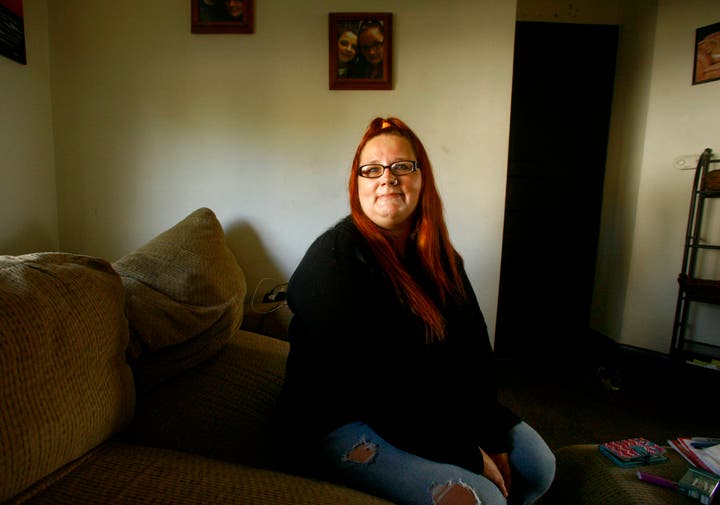
Today, Mitchell is happily married, and enjoys the company of her 23-year-old son, and her 12-and-16-year-old daughters. As she sat in the living room of her Milwaukee-area apartment, she reflected on her role as a busy parent, and her life free from the grip of addiction.
“My hope every day is to just stay clean, and remind myself of where I’m at and what's working,” she said.

Addiction and the Brain
Addiction experts say it can take the human brain up to two years to recover from opioid addiction, yet the most critical stage of recovery comes in the first 90 days.
“It takes awhile to establish a solid foundation," Mike Miller, a leading expert on addiction treatment, said. "There has been some major research in the addiction field that recommends 90 days of professional contact either through a partial hospitalization program or an intensive outpatient therapy.”
But what happens inside the brain over those 90 days, and why does it take two years for the brain to heal? Even experts like Miller don’t know. “The neurobiology of recovery is the next frontier we need to get a handle on," he said.
Miller is the Medical Director of Rogers Memorial Hospital’s residential Herrington Recovery Center, a 20-bed facility in Oconomowoc, Wisconsin that provides a comprehensive addiction treatment program that lasts about 30 days.
Modern addiction treatment considers a person’s mental health needs and addiction issues as inseparable. An untreated mental disorder that negatively impacts a person's life is treated right along with the addictions that fuel that imbalance.
“We treat addiction as a unitary co-condition,” he said. “Rogers specializes in intensive treatment through our adult co-ed residential treatment program. Through dual diagnosis treatment, we treat mental health and addiction at the same time.”
According to the National Alliance on Mental Illness, a dual diagnosis is treated in several steps, beginning with detoxification, in-patient rehabilitation, supportive housing, psychotherapy, medications and continuing on with participation in support groups.
Miller cites the development of medication-assisted treatment as one of the most significant advances in treatment over the last decade. An opiate blocker such as suboxone can be administered to assist a patient with the initial symptoms of withdrawal, while monthly shots of Vivitrol effectively helps a patient combat opiate cravings by blocking the effect of an opiate high.
As much as opiate blockers help a patient combat addiction symptoms, Miller says medicine is only a small part of the overall treatment picture.
“One of the interesting aspects of this is addiction and impulse control,” he said. “People go to immediate gratification. We teach people how to delay gratification, put up stop signs, and challenge automatic thoughts. Once somebody realizes what a craving is, they can see that it rises and subsides like a wave in the ocean."
Addiction’s Cost
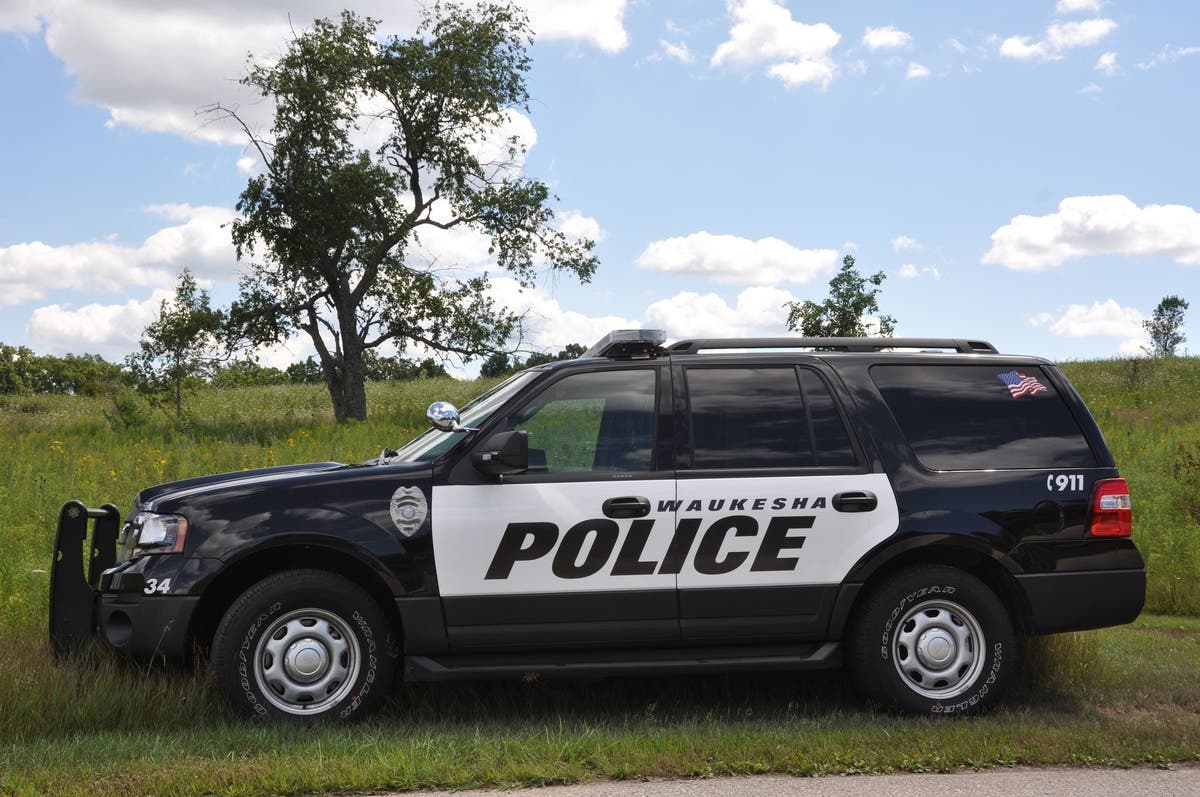
Captain Dan Bauman of the Waukesha police department said addiction's cost to the community starts with an increased police call volume for small property crimes. “The addict’s mentality is often ‘I’m going to start stealing stuff from somebody and start pawning it off. Scrap, golf clubs, bikes, anything that I can take to a retail or second-hand store and turn around for cash,” he said. “When it comes to burglaries, you find people looking for things like gold, or going through someone’s medicine cabinet - it’s a direct nexus of the heroin epidemic.”
When it comes to an apparent overdose case, a single police call can cripple a small-to-midsize police department’s manpower for hours on any given night. “There’s no less than a three-officer response coupled with the fire department. Three-to-five officers are going to be securing the scene, looking for evidence, taking statements and accompanying the fire department to the hospital with the patient,” Bauman said.
Taking into account death investigators, and narcotics officers, and the demand for manpower escalates even higher.
“It’s a huge tax on the medical field and on law enforcement because it’s something we’re not used to. When we plan for Memorial Day weekend where we know we’re going to have a high volume of traffic, so we are going to deploy our resources where they community needs are,” Bauman said. “The community doesn’t know when the heroin is going to come. We don’t know when we are going to get four, five or six overdoses on any given weekend.”
In Waukesha, officials recognize they can’t arrest their way out of the problem. When a user is arrested and put on bail conditions it’s not going to stop someone from drinking or from using.
"When we introduce them into the criminal justice system, it allows people who want to get help to get help," Bauman said. "We realize we can’t force anybody to treatment. We can force them to jail.”
Heat of the Moment
In the initial moments of an overdose call, Dennis Graf, Division Chief of Training at the Waukesha Fire Department says his department’s first responders have to be aware of the needs of the patient as a potentially unstable scene unfolds around them.
“That’s a huge component, how safe is the environment,” Graff Said. “Sometimes we arrive at the scene before law enforcement, but we certainly lean on police to make sure they get eyes on the environment so there’s nothing overly suspicious when we’re coming in to help the patient.”
Bauman said officers often have to size up a situation within 30 seconds of them arriving.
“We’re about life safety and scene stabilization,” Bauman said. “Are people going to be running, are there going to be any secondary casualties? How many people are we looking at?”
Graff said the Waukesha department has seen a lot: between several apparent overdose cases each month, first responders will see people overdosing on opiates, benzodiazepines and people who have a literal drug cocktail coursing through their veins as help arrives. “Oftentimes, people have the same general presentation where they have an altered level of consciousness or decreased respirations. You’ve got to come in with thinking caps on what to rule in and rule out in that moment.”
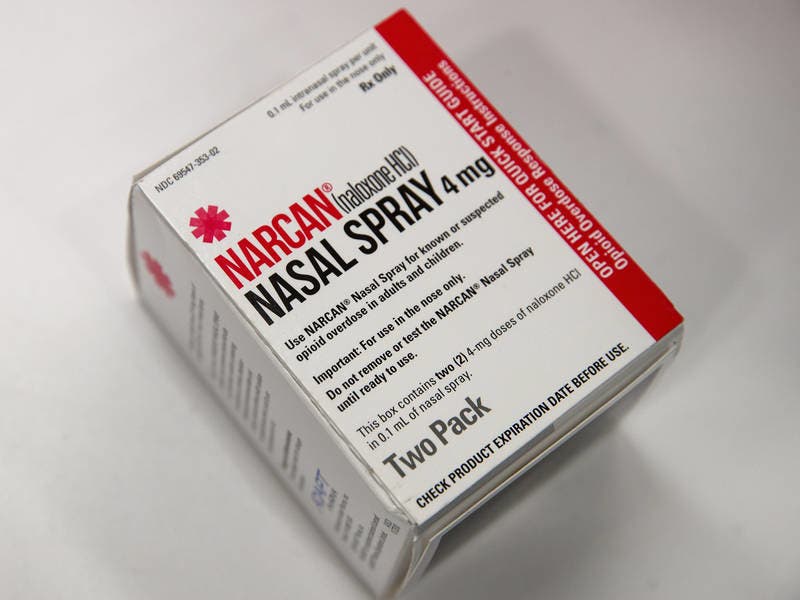
Like many other departments in Wisconsin, first responders in Waukesha carry Narcan, a powerful and fast-acting opiate reversal agent that counteracts the symptoms of an overdose.
Narcan is often credited with reviving and saving the lives of many who are met by first responders in their critical near-death moments.
Often, officers will find a heroin kit on the scene. Cotton balls, chore boy scouring pads, tourniquets and a spoon with some residue in it are dead giveaways of a potential user - and lead to likely drug paraphernalia charges. In some cases, if a patient does not consent to an evidentiary blood draw, law enforcement will seek out a court-ordered search warrant to facilitate the draw.
Narcan Image by Drew Angerer/Getty Images
Police Image Via Waukesha Police Department
Brain Image Via Pixabay Public Domain Images
Carrie Mitchell Images By Scott Anderson/Patch.com
Lead Image Via Pixabay Public Domain Images
Get more local news delivered straight to your inbox. Sign up for free Patch newsletters and alerts.