Neighbor News
March is National Athletic Training Month!
March is National Athletic Training Month! Get out there and thank your local Athletic Trainer for all their hard work!

Have you ever noticed that person who runs out onto the field when an athlete gets hurt? These medical professionals are known as Athletic Trainers.
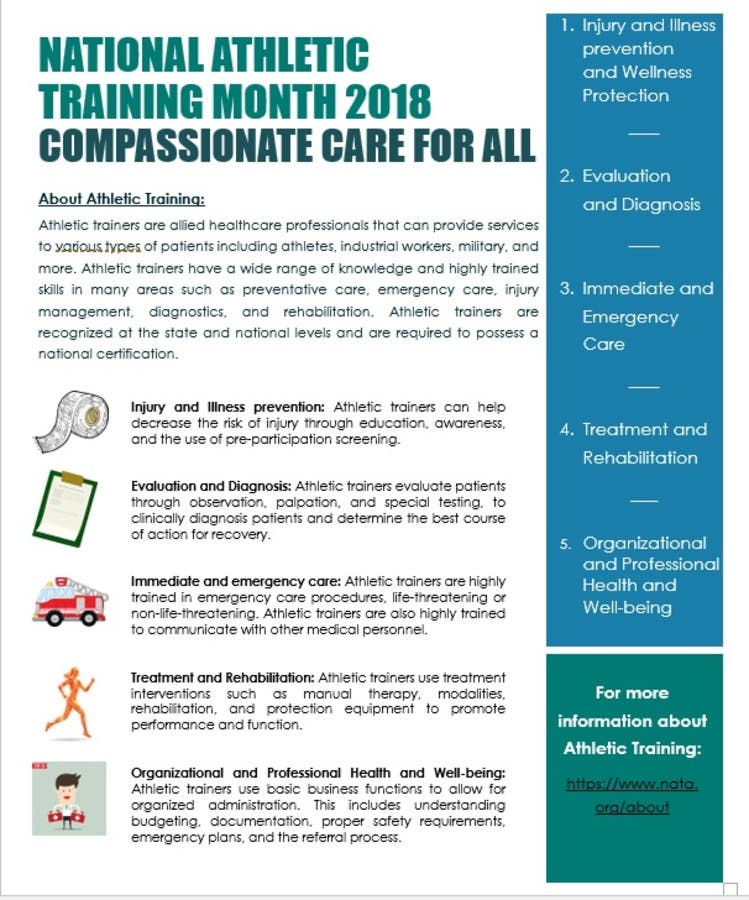
Athletic trainers are allied healthcare professionals that can provide services to the physically active population including athletes, industrial workers, military members, police officers, firefighters, and more. Athletic trainers have a wide range of knowledge and highly trained skills in many areas such as preventative care, emergency care, injury management, diagnostics, and rehabilitation. Athletic trainers are recognized at the state and national levels and are required to possess a national certification. The duties of the Athletic Trainer are outlined below.
Injury and Illness prevention: Athletic trainers can help decrease the risk of injury through education, awareness, and the use of pre-participation screening.
Find out what's happening in Greenfieldfor free with the latest updates from Patch.
Evaluation and Diagnosis: Athletic trainers evaluate patients through observation, palpation, and special testing, to clinically diagnosis patients and determine the best course of action for recovery.
Immediate and emergency care: Athletic trainers are highly trained in emergency care procedures, life-threatening or non-life-threatening. Athletic trainers are also highly trained to communicate with other medical personnel.
Find out what's happening in Greenfieldfor free with the latest updates from Patch.
Treatment and Rehabilitation: Athletic trainers use treatment interventions such as manual therapy, modalities, rehabilitation, and protection equipment to promote performance and function.
Organizational and Professional Health and Well-being: Athletic trainers use basic business functions to allow for organized administration. This includes understanding budgeting, documentation, proper safety requirements, emergency plans, and the referral process.
Don't forget to take a moment to thank your local Athletic Trainer! They deserve it!
For more information regarding Athletic Trainers and their profession please visit https://www.nata. org/about.