Politics & Government
Shackled Childbirth Trial Spotlights Milwaukee Sheriff David Clarke
A civil rights lawsuit raises questions about a policy to shackle inmates during childbirth and Milwaukee Sheriff David Clarke's jail.


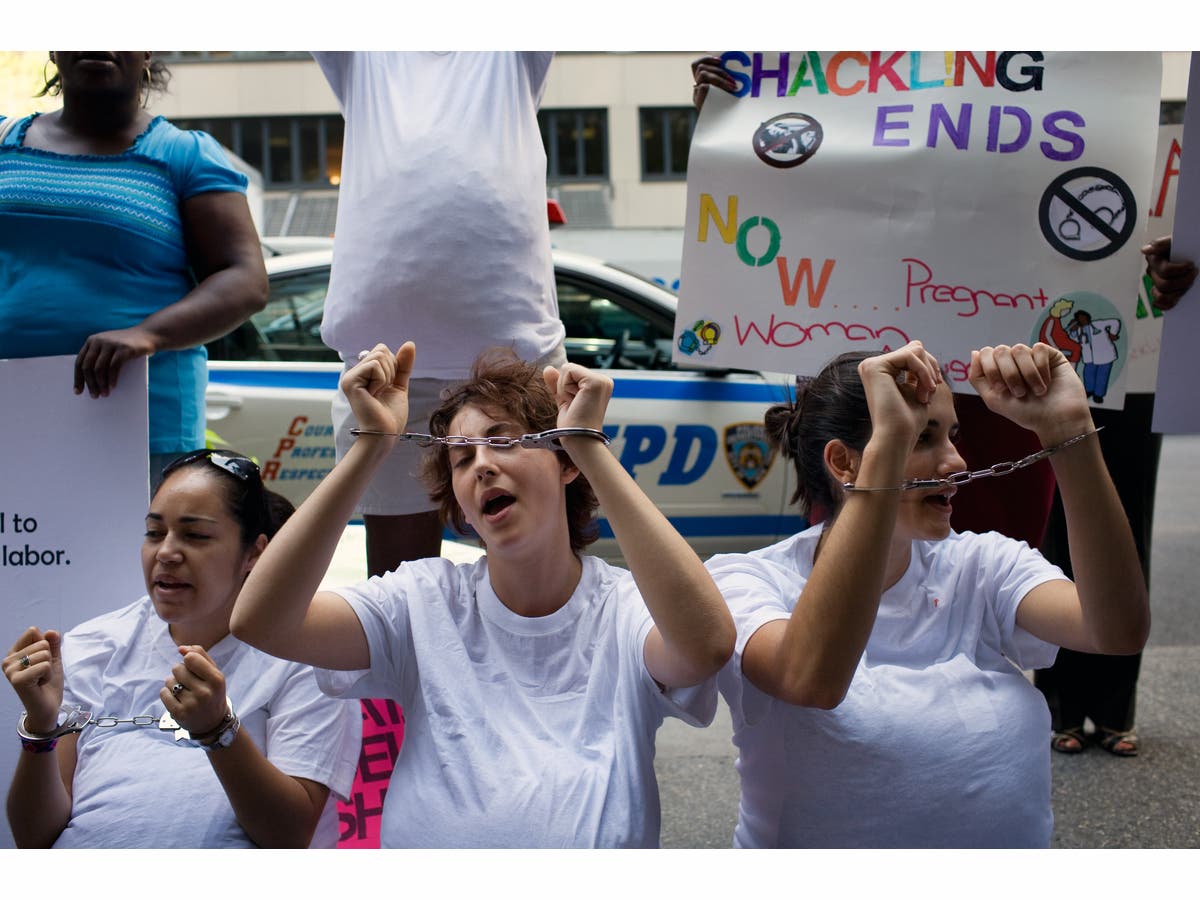
MILWAUKEE, WI — In testimony Monday in a federal civil rights lawsuit against the Milwaukee County Jail, a 19-year-old inmate described how she was raped by a guard in 2013 and later forced to give birth while she was shackled to a hospital bed, unable to move to the natural rhythms of childbirth.
The trial casts a critical spotlight on both controversial Milwaukee County Sheriff David Clarke, whose administration is under a cloud of scrutiny after a string of in-custody deaths, and the practice of shackling pregnant inmates during prenatal, labor and delivery, and postpartum care. The practice has been criticized by medical groups as a danger to both mothers and newborns and by civil rights groups as unconstitutional. (For more local news, click here to sign up for real-time news alerts and newsletters from Milwaukee Patch, like us on Facebook, follow us on Twitter, and click here to find your local Wisconsin Patch. If you have an iPhone, click here to get the free Patch iPhone app.)
Clarke, who is not on the witness list and who is not named in the lawsuit, said in a sworn statement that the woman was restrained only by a leg iron when she was taken to the hospital and that the ankle cuffs were removed and replaced with handcuffs when she went into active labor, according to media reports. She gave birth to a healthy baby girl 20 hours after she was admitted to Aurora Sinai Medical Center.
Find out what's happening in Milwaukeefor free with the latest updates from Patch.
The handcuffs were necessary, Clarke said in court documents, to protect the hospital staff, but the woman testified she was only allowed to shift positions a few times, couldn’t hold on to the hand rails of the bed during contractions and had to be careful after her daughter was born not to injure her with the handcuffs.
The woman was pregnant when she was booked at the jail on an armed robbery charge in 2013, and she said the rapes by the corrections officer — Xavier Thicklen — began shortly after she was placed in custody at various places in the jail, the Milwaukee Journal Sentinel reported. Thicklen, who was fired by the sheriff’s office, was charged with sexual assault and pleaded no contest to one felony count of misconduct in public office. He was sentenced to and given credit for three days in the House of Correction and fined $200 and court costs.
Find out what's happening in Milwaukeefor free with the latest updates from Patch.
“He used his keys, his power, his authority to get in these places and rape me,” the woman testified.
Though he is not a party in the lawsuit, the action is an important footnote on the record of Milwaukee County's law-and-order sheriff, frequent Fox News commentator and high-profile surrogate for President Trump during the 2016 presidential campaign. Clarke said last month that he accepted a Homeland Security position as assistant secretary to the Office of Partnership and Engagement. The appointment isn't official, though, and has not been formally announced by the U.S. Department of Homeland Security. Clarke is also under the cloud of allegations that he plagiarized parts of his master’s thesis in 2013, a scandal Clarke has speculated could cost him the appointment.
Class Action Suit Could Represent 40 Woman
Clarke could face a larger storm over the practice in his jail to shackle inmates during pregnancy care. In March, 27-year-old Melissa Hall filed a lawsuit, and her attorneys hope to establish a class to represent the interests of about 40 pregnant inmates who were shackled for prenatal care, labor and postpartum treatment since 2011, the petition alleges.
Hall said in the lawsuit that a “belly chain” was wrapped around her waist when she needed to use the restroom. The restraints included leg irons, as well as wrist cuffs attached at the waist. “The shackling and its consequences caused emotional and physical pain and suffering, discomfort, left marks on Plaintiff’s body, and exposed her to unreasonable risks of harm,” the lawsuit states.
The lawsuit also claims pregnant women are restrained during medical visits as part of a “blanket shackling policy,” rather than one that assesses security risks.
The U.S. Marshals Field Service, Federal Bureau of Prisons and U.S. Immigration and Customs Enforcement bar shackling except in extreme circumstances, when the woman presents an immediate and serious threat to herself or others. Nationally, 13 states have no restrictions on shackling of pregnant women, and 37 states and the District of Columbia either prohibit or strictly limit shackling during pregnancy, labor, childbirth and recovery. Wisconsin falls in the latter group.
The American Psychological Association, among other organizations, said shackling not only poses dangers to both the mother and child but also that the practice disproportionately affects women of color due to some racial disparities in the criminal and juvenile justice systems.
“Justice-involved women and girls are among the most vulnerable in our society,” the APA said. “Many incarcerated women’s backgrounds include domestic and sexual violence, trauma, and mental health and substance use problems. Girls in juvenile justice facilities have more unmet physical and mental health needs than nearly any other adolescent population. Shackling during pregnancy, labor, and recovery presents this group with an additional, unnecessary risk.”
And, the group said, the data doesn’t back up objections that unshackled pregnant women pose flight and public safety risks. The APA didn’t find any instances where an unshackled pregnant woman escaped during labor.
The American Civil Liberties Union calls the practice “barbaric,” saying that pregnant inmates not only have a constitutionally protected right to appropriate medical care but also may not belong in prison to begin with.
“A pregnant woman suffering from drug addiction or other substance abuse and health conditions needs medical care, not incarceration,” the ACLU said on its website. “In recent years, we have seen numerous instances where states have detained and incarcerated a drug-dependent pregnant woman or have used the threat of jail time or removal of her children to force a pregnant woman into medical care against her will. Such punitive approaches to treating pregnant women are not only unlawful, but they also deter women from seeking needed medical care and social services.”
4 In-Custody Jail Deaths
The Milwaukee County Sheriff’s office was also named in an $8.5 million lawsuit filed by a former inmate, Shadé Swayzer, who said corrections officers laughed when she said she was in labor and ignored her requests for medical help, which she claims led to the newborn’s death in her cell in July 2016. The baby was stillborn, according to a the medical staff under contract at the jail, the Milwaukee Journal Sentinel reported.
In a statement after the baby’s death, Clarke said Swayzer never told jail staff that she was in labor but said there would be no further comment from sheriff’s office.
Swayzer’s baby is among four in-custody deaths that have occurred under Clarke’s watch in the past year. Last month, a prosecutor’s inquest jury recommended charges against seven members of Clarke’s staff in the dehydration death of Terrill Thomas a year ago. Charges were not recommended against Clarke.
Thomas, a 38-year-old inmate with a bipolar disorder, was held in solitary confinement for seven days and was deprived of both water and a mattress during that time. He died of “profound dehydration,” according to a medical examiner’s report.
Two other inmates died in Clarke’s jail in 2016 — Kristina Fiebrink and Michael Madden — but the sheriff’s office has not publicly commented on the contributing factors, the Journal Sentinel said.
Photo: In this 2009 file photo, women in a New York prison called on the governor to sign an Anti-Shackling Bill that would largely end the use of restraints during inmate childbirth. Thirteen U.S. states nationally have no restraints on the use of shackles in childbirth and other inmate pregnancy care. (AP Photo/Yanina Manolova, File)
Get more local news delivered straight to your inbox. Sign up for free Patch newsletters and alerts.