Health & Fitness
Spring Walleye Basics
Basic spring walleye information to get you started off on the right foot this season.



Anglers beginning their fishing careers ask a lot of questions about how to best maximize their fishing success.
They’re typically chomping at the bit to begin the open water fishing season with some quality fish.
I hope the highlights of this post are able to put you on the right track towards hooking up with a few nice walleyes to start this 2013 fishing season.
Find out what's happening in Muskegofor free with the latest updates from Patch.
What is a walleye “run” and When does it occur?
The term “Walleye run” refers to the period of the early spring when one of the country's top game fish species make their migration towards the spawning areas of the lakes or rivers in order to reproduce.
Find out what's happening in Muskegofor free with the latest updates from Patch.
This time of the year is popular amongst Northern anglers as it's not only the chance to land a trophy walleye over 10lbs, but it also symbolizes the official start to the open water fishing period for many anglers following a long season of ice fishing.
Where do walleyes migrate to spawn?
Seek out rocky and wavy areas on the body of water you’re intending to fish. Walleyes instinctively seek places that have a rocky or gravel-like bottom substrates that receive sufficient and continuous wave action. This combination of wave turbulence and hard bottom enables the walleyes to successfully reproduce and drop their eggs in an environment that will provide sufficient oxygen while offering protection from being silted in and buried. Local bait shops are a great source of information in regards to where walleyes on a given body of water will congregate each spring.
On a river, walleyes will often migrate very long distances (up to 100 miles one way on the nation’s largest systems) in order to spawn near and below the system’s dams or in the tributary creeks off the main channel. River walleyes are the most predictable as they typically migrate upstream to these dam areas in large concentrations.
On a lake, rocky mid-lake humps tend to attract most of the spawning walleyes. Wind current from this non-protected area of the lake is rather consistent when it comes to generating the oxygination needed for the fish’s eggs. The bottom content also is condusive here as well for successful reproduction. Using online mapping technologies such as Angling Technologies or topographic paper maps will give you accurate data when it comes to finding productive areas this time of year.
On both types of systems, the male walleyes will typically arrive before the larger female fish by about a week on average. If you’ve visited a body of water and caught a large majority of males on a given day, it may be well worth the investment in resources to try and get back at least one more time in the next seven days in order to increase your chances at landing a trophy.
What’s the Best Water Temperature to Target Spring Walleyes?
The spawn typically begins when water temps reach 40 degrees with 43-45 degrees being a great window. The period is can be short, especially on shallow river systems which can quickly warm into the low 50's after ice out in a matter of weeks! Then, the run will be over. Again, this is a window of temperatures, that will give you the most success, however there are always exceptions each year based on the photoperiod (amount of daylight), moon phases, as well as amounts of local precipitation as more rain and melting snow runoff can have a large impact on the activities levels of fish on a given day.
When is the best time of day to target them?
Many anglers won’t even target walleyes unless it’s during that low-light period before and during the sunrise and sunset until about an hour or two after dark. This "rule" holds true around the time of the spring spawn as well.
There are a lot of sources out there that indicate walleyes spawn for a period of about 4 hours! That’s it...then they’re done! Some fish will come in on a single night and spawn for that duration, while others will return on consecutive nights and spend a shorter window of time in the spawning area--still collectively spending about 4 hours total time spawning. As a general rule, getting set up slightly before dark--whether casting from a rip-rap shoreline or setting up a few drifts with the boat to dial in a milk run drift before dark--and then fishing until about midnight will give you the best chance at landing both numerous and larger fish.
What’s the Best Way to fish for them?
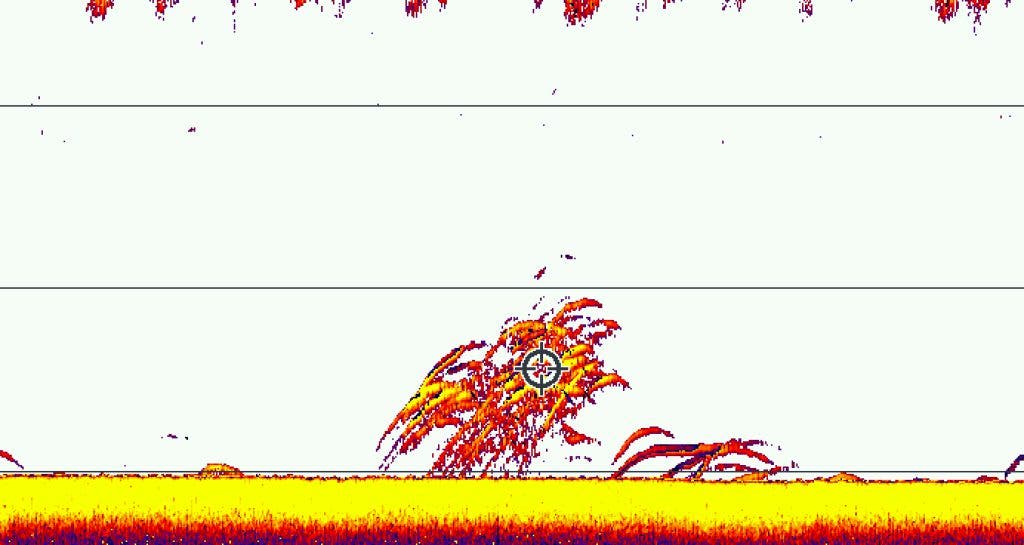
If you’re fishing from a boat rigged with electronics, walleyes are commonly indicated on the graph as arches located a foot or two off the bottom.
On a lake, vertical jigging often gets the nod. Using the lightest jig you can get away with that still allows for the angler to feel the bottom while maintaining a line without any bow from the wind will give you the best presentation. Depending on depth, a 1/4oz to 3/8oz jig tipped with a large fathead minnow or a plastic that excels in cold water (i.e. Moxi) will serve you well. Experiemnting with colors throughout your trip will help you determine the hot jig for the night. Generally pink, chartreuse, and orange (or a combination of these colors) will work as a great starting point.
As a secondary lake tactic, using a live-bait, or Lindy rig, as a tactic that can help you narrow down the best presentation on a given day or body of water. A small sucker on a live-bait rig that trails 75-125 yards behind the boat will entice walleyes into biting as it moves through the strike zone in a horizontal fashion versus a vertical one like jigging. Again, utilizing both tactics will let the fish tell you what they want. As a bonus tip, keep in mind that when livebait rigging at this time of the year, it will increase your hookup ratio if you give them a 10-20 count before sweep setting the hook.
Often we’ll hang live-bait rigs off the front of the boat while slip drifting with the bow mount trolling motor facing into the wind for better boat control. We’ll then utilize the middle and back half of the boat for our vertical jigging.
Shore anglers routinely do equally well with aggressive and passive techniques. A combination is always recommended and here are the basic two to get you started.
The first is by casting using a suspending jerkbait with a tight wobble to entice fish into biting in this cold water. The retrieve on a given day can be painfully slow and steady to get walleyes to eat, and on other days they want the jerkbait erratically jerked down into the strike zone and then allowed to deliberately pause (sometimes up to 30 seconds) to trigger a reaction strike.
The more 'laid-back' approach from the bank (specifically used on rivers) is by casting a 3-way rig slightly downstream from the spawning areas. Fish will continuously be moving in and out of the spawning areas near the dam and won't pass up an easy meal on the way to or from the headwaters. In Wisconsin, where 3 lines per angler are allowed, casting out two rods with 3-way rigs and using one rod dedicated to casting gives a shore angler an increased chance at landing a few spring walleyes this season.
I hope this basic overview of walleye behavior during the spring spawning period gets you headed in the right direction when it comes to experiencing success when targeting ol' "Marble Eyes". Keep in mind that selective harvest is encouraged as the practice of catching-photographing-and releasing the larger female walleyes will no doubt improve the chances of maintaining a quality fishing location for future generations to enjoy!
You're invited to contribute in the comments below regarding your own successful techniques and tactics!
What's your go-to bait for targeting spring walleyes?
AND...without getting "TOO" specific, where do you like to fish in the spring for 'eyes?