Community Corner
Muskego's Big Lake: All Creatures Great and Small
The reclusive nature of the lake allows for an abundance of wildlife, below, on and far above the water's surface.







This is the last in a series of articles of our tour on Muskego's least-understood lake. Not easy to see from any vantage point on land, its secrets are revealed only when you meet it face to face.
A rustle in the reeds. The whorl on the water. A cry far overhead.
Signs of life are everywhere on Big Muskego Lake.
Find out what's happening in Muskegofor free with the latest updates from Patch.
Between 1995 and 1997 a nationally-recognized lake restoration effort was undertaken on Big Muskego Lake and Bass Bay, and it was these small signs that planners set out to preserve. Previously, carp had dominated the waters, leaving the water turbid (cloudy) and bereft of habitat for desirable fish.
The project involved a full-year drawdown of the lake and a carp kill that yielded surprising amounts of the invasive fish. It also resulted in dramatically improved water quality and enhanced fish and wildlife habitat.
Find out what's happening in Muskegofor free with the latest updates from Patch.
Clear water now provides a perfect environment for native species of sight-feeding fish. It also draws the birds which feed on them to the area, and these days they are the main attraction.
Along the south end of the lake, a dead tree stands with a massive nest residing in its center, the work of five years by a family of bald eagles, the first in Waukesha county in about 50 years. A closer inspection could be had, however the tree stands on private property and conservationist prefer to keep its access point equally private.
Luckily, our group was allowed a closer look and it was worth the wrath of multitudes of mosquitos to peer at them through a high powered lens. Tom Zagar, Conservation Coordinator for Muskego, is concerned the weight of the nest will eventually break the dead branches that currently support it.
"They will just keep building on, and building on - it's about 10 feet high right now, and about 12 feet across," he explained.
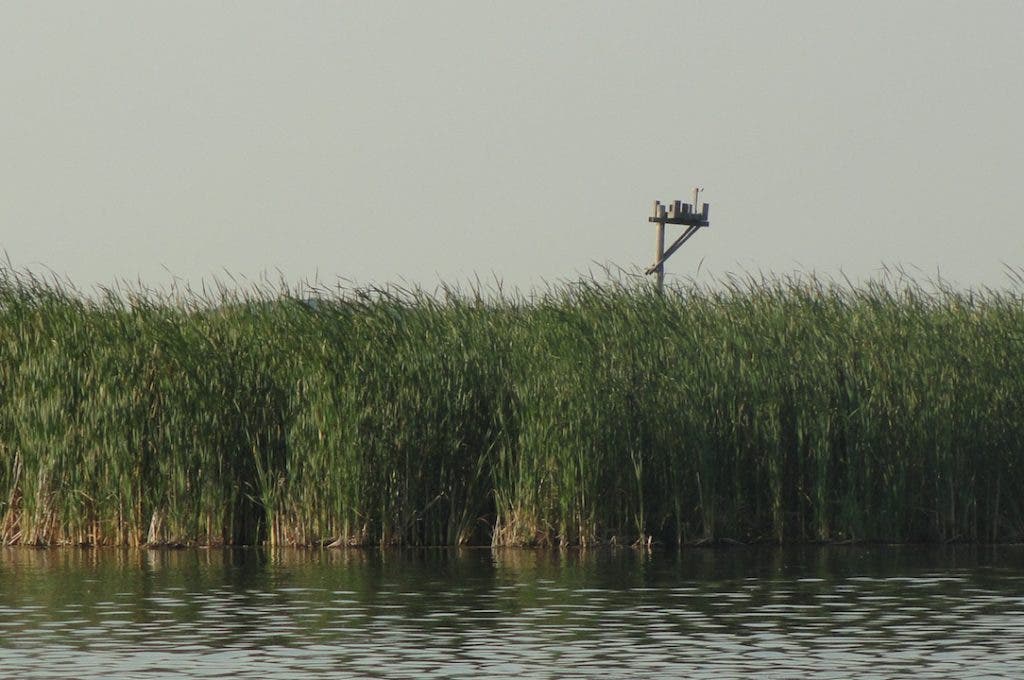
In addition, six towers were built to entice osprey to next and flourish here, and the progress has been slow. This year's pair were unsuccessful in raising offspring, with the first hatch seemingly aborted, and a second hatch dying after a few weeks.
The theory is the 'parents' were young, and not good providers to support their young. The nest now appears empty, and it's getting late in the year for any more young to be produced.
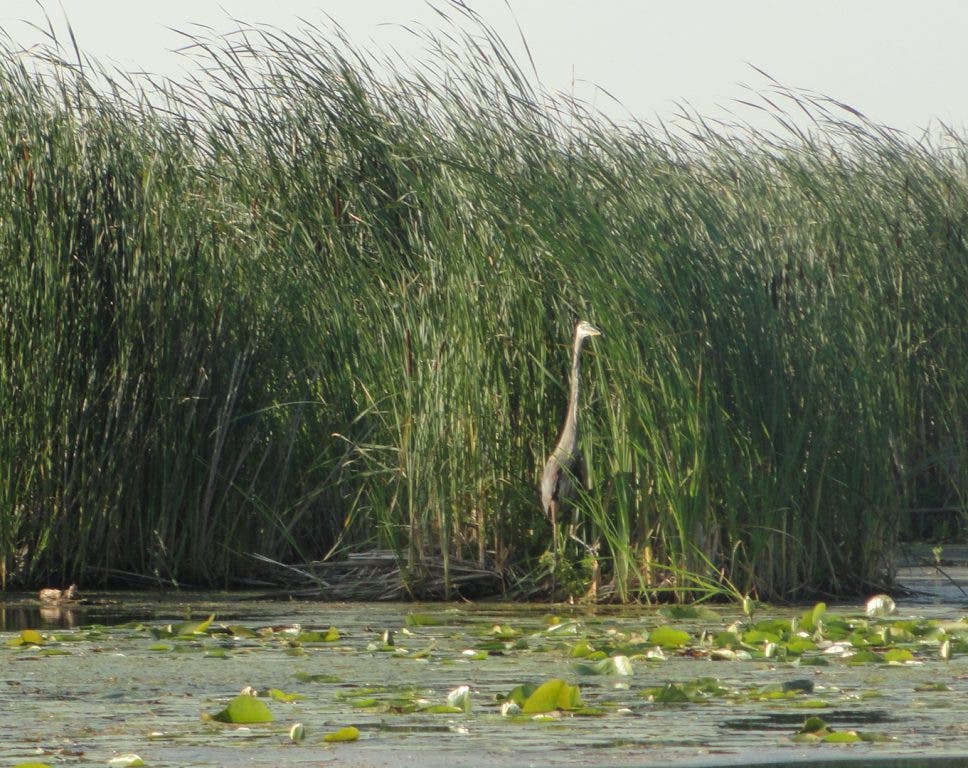
Along the edge of the cattails, an astute observer can spot heron standing sentinel, and occasionally catch them as they take off to other places. They are abundant here, along with sand hill crane, dozens of varieties of waterfowl and more than that of marsh birds, like Forster's tern (an endangered species) as well as furry critters that call the lake home.
Three large beavers' lodges can be found along the lake, and muskrat populations here are also thriving. Zagar said both of these can be trapped for their fur, and last season he met two gentlemen who were harvesting muskrat, with great results.
"They use them for their fur, which is highly prized. It's similar to mink," he said. "These guys in particular were selling the pelts to China and Russia."
Beneath the water's surface the fishing has also returned. Within two years of the restoration, anglers were catching legal fish on the lake. Northern pike is the largest of the fish found in the lake, which currently has its limits set at 40", so catch and release is the norm here.
We had missed the flocks of white pelican that had taken up residence for a few weeks on the water, but every time of the year has its share of visitors. Migratory birds like the pelican have begun to use the area, which has been recognized by the Audobon Society as an Important Birding Area in the United States.
Notably absent on this particular day were the Forster's tern, which are an endangered species and nest in a handful of lakes in Wisconsin, Big Muskego included. Although Zagar could hear their song, he was surprised they weren't as visible, as he said the bird is fairly aggressive, especially if they feel their nests are threatened.
All the more reason to come back to the lake, another day, to view what else resides on Muskego's big lake.
Get more local news delivered straight to your inbox. Sign up for free Patch newsletters and alerts.