Business & Tech
Parkland Mall: An Early Merchant Development
Developers saw an opportunity to provide a more competitive environment for business where shoppers could browse indoors.



Parkland Mall was built in the early 1970s by developer Raich-Lawent. A document, which can only be described as an invitation to businesses to lease space in the mall, listed the size of the mall at 148,000 square feet, although other documents would state 154,000 as its footprint. Jerome Drugs had already occupied a building on that site, and the mall was built around it.
KRL Corporation, which was listed as a leasing agent, described their goals, stating, "Our plan is to create an aggressive, departmentalized association of merchants under one roof, in an attractive, climate-controlled environment to serve a fast-growing strong community that at this time has no retail services of any substance for its population and its trade area."
Permits and calls for occupants are on record in 1972 and 1973, with the completion of the mall and a grand opening featured in March of 1974. The initial tenants were Jerome Drugs, which had moved to a larger 12,000 square foot space in the mall, Ben Franklin Department Store and Spurgeon's which was a retail department store with 56 locations in the Midwest.
Find out what's happening in Muskegofor free with the latest updates from Patch.
In addition, the "Parkland Twin" theatres were part of the mall, featuring second-run movies on two screens.
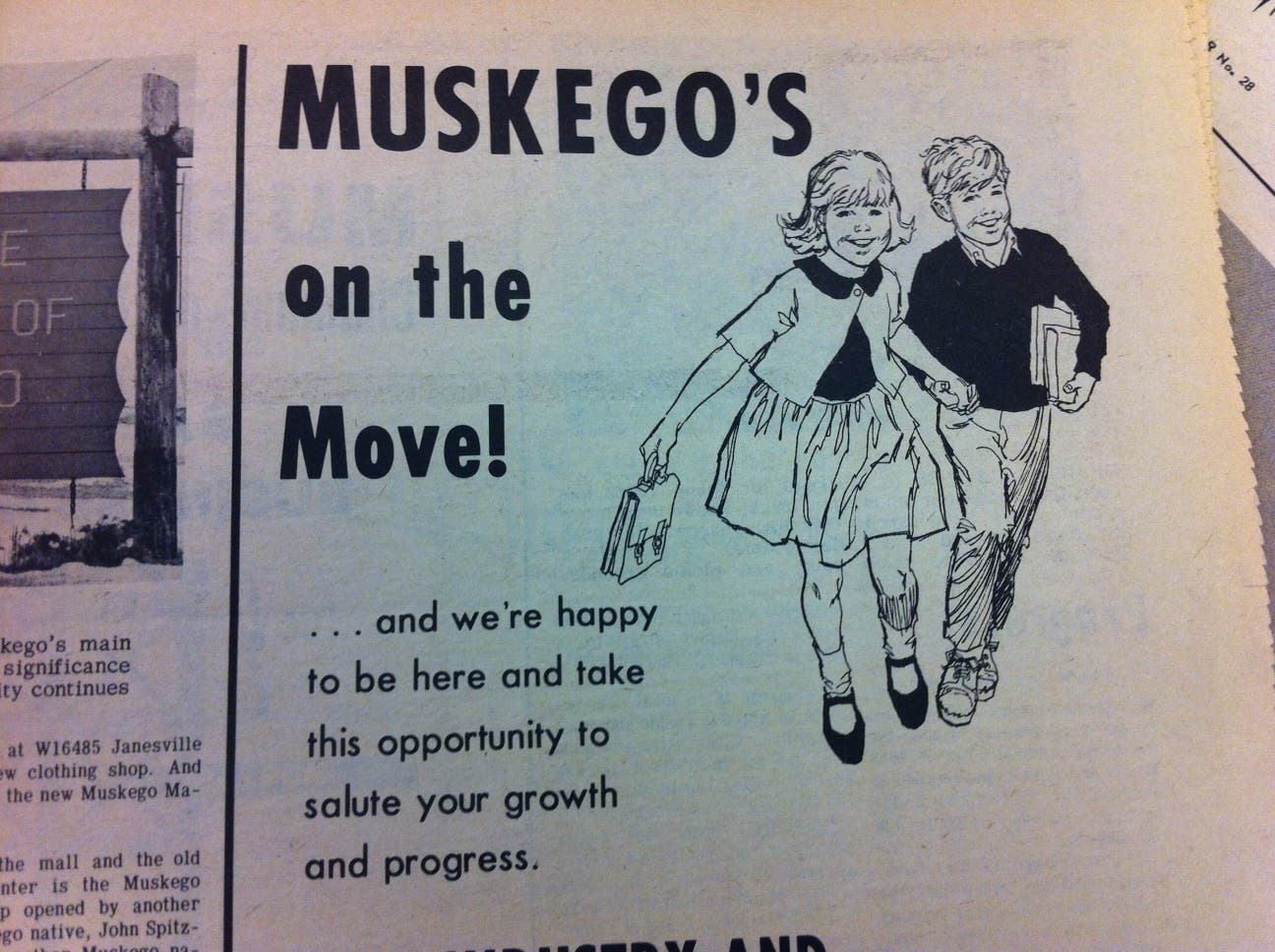
The opening of the mall was part of a boon in Muskego commercial development, accompanied by the opening of the Muskego industrial park off of Racine Avenue and Janesville Road, and the building of a new City Hall, Library and Police Station along Racine Avenue in 1972.
Find out what's happening in Muskegofor free with the latest updates from Patch.
Downtown, the liquor store had expanded its footprint, and A&P grocery store and Coast to Coast were also recently opened.
"Muskego is a good balance with controlled growth," said Willard Masterson, president of the Chamber of Commerce. "We have hopes now of the development of the new industrial park to give Muskego identity, and a real well-rounded community to live in."
Installation of sewers also fueled residential growth in the 1970s, creating a higher demand for retail businesses closer to home. The mall was the right idea for the time, it would seem.
During its tenure, however, the mall would struggle, with the loss of Ben Franklin (replaced later by a similar retailer, Value Village) and later Spurgeons. Smaller businesses would also come and go, and names like Seasons and Reasons, Winston's Smoke Shop and Cricket's Corner might ring a bell with long-term residents.
With a thriving Southridge Mall and additional developments further east on Janesville toward Hales Corners, and in New Berlin to the north, the business the mall's owners expected was never realized.
The mall's business continued to dwindle into the 1990s, and by 1997, it was sold to developer Art Dwyer for $850,000, which was $50,000 more than the assessed value and what the City of Muskego had bid on the property. Soon after, discussions would ensue on whether it was worth the money to retain the structure, which would require $3 million in repairs, or to tear the structure down.
Get more local news delivered straight to your inbox. Sign up for free Patch newsletters and alerts.