Politics & Government
Paul Ryan Pushes 'Path to Prosperity' To Friendly Crowd in Muskego
Ryan warned of a looming debt crisis and fielded a question about cuts to food stamps and welfare reform.
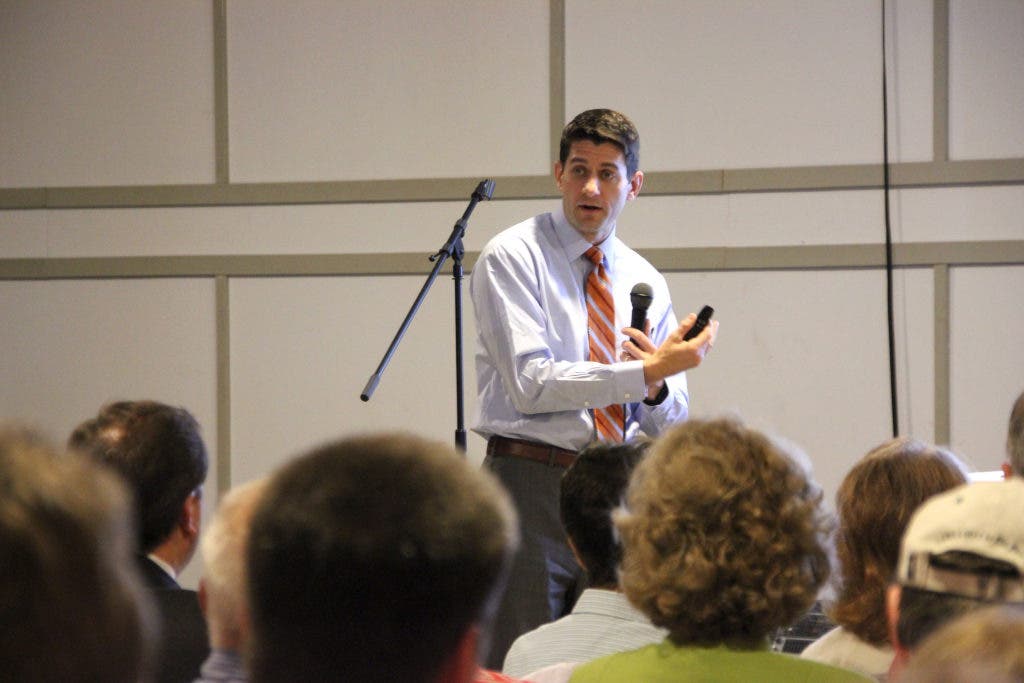
Though his brainchild "Path to Prosperity" budget proposal failed to pass Congress, Wisconsin’s 1st District Congressman Paul Ryan used those words as a headline for his presentation Thursday in Muskego, speaking with a fresh urgency about reducing U.S. debt. The message seemed to resonate with the crowd of more than 100 people at
“He’s been bold and brave enough to stand up for several years,” Bill Kuter, who came from West Allis, said of Ryan. “If you keep knocking on the door, someone’s listening, and someone’s going to answer.”
Ryan spoke for about fifteen minutes about the threat of debt crisis and his ideas to reduce government regulations and spending, before fielding questions from a favorable audience at the first of six listening sessions he will host Thursday and Friday in Wisconsin.
Find out what's happening in Muskegofor free with the latest updates from Patch.
Displaying a graph of U.S. debt projected to increase eight-fold by the end of the century, Ryan said the government needs to swiftly cut spending to avoid “European-style debt crisis.”
“Our total debt has exceeded the size of our entire economy,” Ryan said. “Every year we go down the path of racking up this debt … is another year we go deeper in the hole. And that means the kind of things we need to do to get our country back on track are that much more sudden, that much more urgent, and that much more disruptive.”
Find out what's happening in Muskegofor free with the latest updates from Patch.
Kuter said he hoped other members of Congress would follow Ryan's lead.
“I’ll be 63 on Saturday; I’ve done a lot of living and voting, and a lot of listening,” Kuter said. “It’s very evident the direction the country is going in is not where we need to go, and we could end up in a European type of economy and situation. Something has to be done.”
Ryan pointed to welfare and food stamps Thursday as places to make cuts that he said would make a more efficient safety net. He praised welfare reforms of 1996, saying it pushed people to get jobs and leave welfare.
“We propose to replicate that success,” Ryan said.
Ryan discussed a farm and food bill, which he said will be written later this year, that would cut food stamps by $13 billion per year, according to the Associated Press. Ryan originally supported these cuts as part of the budget that passed the House in March, but opposition in the Senate blocked them.
However, Julie Frahmann, director of the brought up concerns that the bill's cuts would make it harder to attain food stamps, and therefore drive up need at food pantries.
Ryan defended the bill’s intent, saying the stricter qualifications for food stamps would ensure that the benefits were going to those who really need them. He cited a recent audit of FoodShare benefits that showed 447 state prison inmates were receiving the benefits though they were ineligible.
"It's gotten to the point where you no longer have to be eligible for food stamps to receive food stamps," Ryan said. "I think it's hardly draconian to suggest these things."
Frahmann, though concerned some people would have more difficulty accessing affordable food, said she agreed with Ryan and thought the reform would be effective.
“I thought his response was very insightful,” Frahmann said. “I think there may be more people coming to the food pantry, because their food stamps are lower, but do I think that’s a bad thing? Not if it makes the system more accountable.”
After almost an hour of questions, Ryan wrapped up the listening session and headed to Elkhorn for the next one. A list of the sessions Thursday and Friday is on his website.