Politics & Government
More Women Marching Into Wisconsin Politics: Tipping Point Near?
Women across the U.S. are marching into politics at record numbers. What does it mean for Wisconsin and your area?


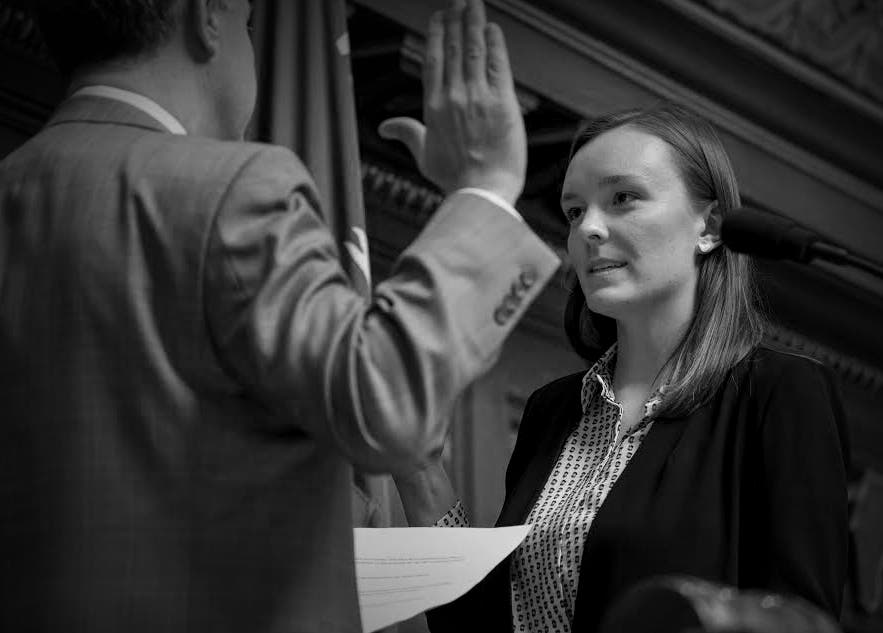
26-year-old Greta Neubauer had been a Wisconsin State Representative for all of 48 hours before she was featured on the cover of Time Magazine as a member of the up-and-coming wave of female political leaders.
That article, "The Avengers: A Year Ago They Marched, Now They're Running" reported on an unprecedented surge of first-time female candidates running for office at every level of government, from the U.S. Senate and state legislatures to local school boards.
"I am running for State Assembly because we need the next generation of leaders to stand up to the powerful special interests that buy our politicians and corrupt our democracy," Neubauer, a Democrat, said during her campaign through Racine and Kenosha counties.
Find out what's happening in Oak Creekfor free with the latest updates from Patch.
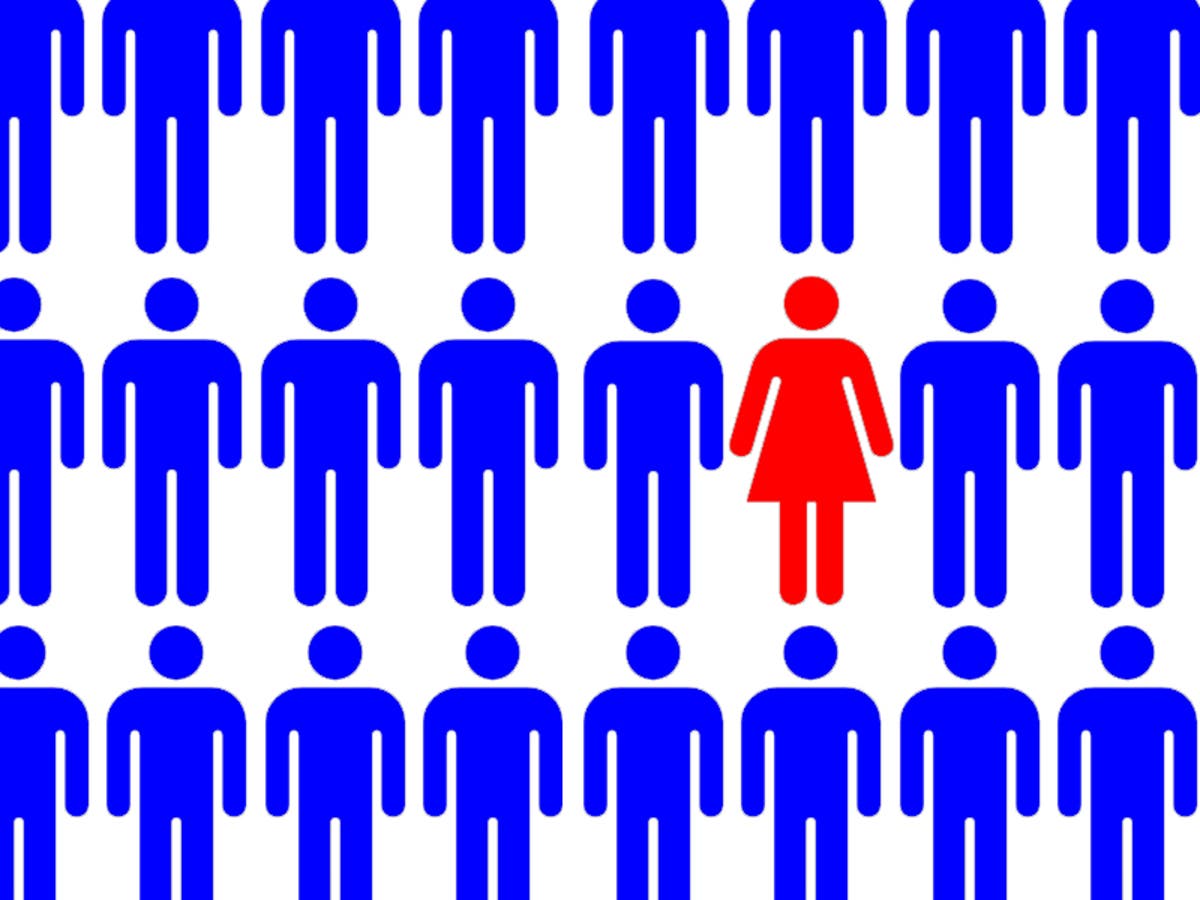
In Wisconsin, 1 in 5 elected offices are held by women, and women remain a minority of office-holders at all levels of state and local government. Will this new surge of politically-active women push us toward a new tipping point where female officeholders influence the lion's share of social and policy issues?
When Does Change Take Place?
Nilofer Merchant, a self-described innovation expert and author of The Power of Onlyness, has studied group dynamics. Minority membership must grow to a certain level, she said in a Time magazine article, before there will be a shift in how the group - like a governing body - functions.
Find out what's happening in Oak Creekfor free with the latest updates from Patch.
In the article, which investigates when female leaders become the norm, she said "research has shown that at least 30 percent of a group has to consist of nonconformists before the ‘other’ label is abandoned and each member is valued for him- or herself."
In the Wisconsin State Legislature, we may not be all that far off from reaching Merchant's theoretical tipping point.
At the state level, 32 women hold elected office positions, which amounts to 24.1 percent - or nearly one out of every four representatives. That figure is just below the national average of 25.4 percent. 23 women serve in the 99-member Wisconsin State Assembly. Of those 23 female legislators, 14 identify as Democrats, and 9 as Republican. A total of nine women serve in the Wisconsin State Senate. Of those nine female legislators, seven identify as Democrats, and two as Republicans in the 33-seat governing body.
When compared with other states, Wisconsin's female representation is a little bit below average. States like Arizona and New Hampshire have women making up exactly 40 percent of their state legislatures, while others like Wyoming, Mississippi and Oklahoma range between 10 to 15 percent.
And women aren't just filling one party's ranks, either. According to national figures from the National Conference of State Legislatures, 61 percent identify as Democrats, 37 percent as Republicans and 4 percent as third-party candidates.
'Small But Widespread Progress'
Moving WI Forward, a partnership between the Wisconsin Women's Council and Alverno College Research Center for Women and Girls, compiled information on nearly 14,000 elected offices across state and local governments in Wisconsin, including the state legislature, state courts, and county, city, village, town, and school boards. Here are some of their findings:

Thumbs Up
Small but widespread progress.
- Over the past decade, most levels of government in Wisconsin saw an increase of at least 2% to 3% in the share of elected offices held by women.
- Moving toward parity. In 2015, women account for 71 percent of Wisconsin Supreme Court Justices and nearly 40 percent of Court of Appeals Judges and Wisconsin School Board Members.
- Leadership. Women make up an estimated 14% of leadership positions across levels of government up from an estimated 10% in 2005.

Thumbs Down
There are still no women on many local governing boards, including:
- 75 percent of Town Boards
- 25 percent of Village Boards
- 16 percent of City Councils
- 4 percent of School Boards
Why Don't More Women Run?
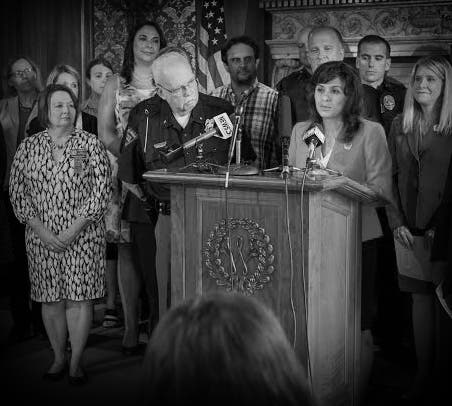
Jessie Rodriguez, a Republican State Assembly representative, has represented constituents in Oak Creek, South Milwaukee and Franklin for the past five years. She won her seat by defeating four male challengers in the Republican primary and a female Democratic challenger in the Nov. 2013 special election to replace Rep. Mark Honadel who left for a private sector job.
Candidates planning to run in a special election have to scramble to get signatures, funding, volunteers and community support. Rodriguez said it wasn't her will to run — she was asked to by her husband and her cousin.
"I never thought of running before, and I only had about seven days to decide," she told Patch.com. As she got to meet other women in the assembly, she learned something new: her path was a relatively common one.
"I've learned through getting to meet other female legislators that a lot of them are asked to run for office," she said. "We don't see a lot of female legislators, and because we don't see as many female legislators, we don't consider it."
Rodriguez said she was fortunate that her husband and cousin were able to lay the groundwork for her successful campaign. For other women who may think about running for elected office who may not have such a support system, Rodriguez said it's important to start locally.
"Try to serve at the local level — it's easier to learn how the government works," she said. "Be involved in the community in whatever way that you can. The best way to get support is to be known in the community. That by far is the most important thing."
Rodriguez said her time serving on a local nonprofit was invaluable. She had the chance to talk with local legislators and formulated opinions on which policy changes would be needed to help the population she served.
"Volunteering helps you know what issues are important in the community," she said. "If you're not in tune, your message is going to fall on deaf ears."
Rodriguez' recommendation isn't just based on theory. U.S Senator Tammy Baldwin defeated former Republican Governor Tommy Thompson in 2012 in a tightly-contested Senate race. Baldwin started her political career as an intern working on pay equity for women on the local level.
"As a college intern in the Governor’s office working on pay equity … I was asked to monitor meetings of all sorts -- city council meetings, county board meetings, committee meetings, and the like. By attending all of these meetings, watching and listening to the proceedings over a period of time, I came to understand the political process. It was de-mystified for me. What had previously seemed so complicated was now understandable and I gradually began to think, 'Hey, I can do that,'" she said.
Where Are Women Serving?
On Tuesday, April 3, female candidates will appear on ballots in every Wisconsin community, representing many levels of public office in hopes of joining the already 3,100 female officeholders currently serving on various boards, councils and governing bodies across the state. That number is of female elected officials is 10 percent higher when compared with ten years ago. Those candidates include Rebecca Dallet for Wisconsin Supreme Court justice, Laura Lau is running for Waukesha County Circuit Court.
This November, Cathy Myers, an at-large member of the Janesville Board of Education is hoping to take on Speaker Paul Ryan (R-Janesville) for Wisconsin's First Congressional District seat. She takes on fellow Democrat Randy Bryce in the Aug. 14 Democratic primary. Two female officeholders are also hoping to advance in the Aug. 14 primary to become the next Democratic candidate to run against Scott Walker for Governor. Those candidates are former State Rep. Kelda Roys and Wisconsin State Senator Kathleen Vinehout.
For More Information:

To find out who is on your local ballot, visit My Vote Wisconsin to learn which statewide races, local races and special ballot measures are on your ballot.
According to recent data provided through a study of women in elected office in Wisconsin conducted by Wisconsin Women’s Council Alverno College Research Center for Women and Girls, here is where women are most likely to serve in public office following a successful campaign:
2 in 5
School boards remain the level of government where women are most likely to serve. Women hold 40 percent of School Board seats, up from 37% in 2005. Women make up 29% of School Board Presidents.
1 in 4
Overall, the share of women in the Wisconsin State Legislature is largely unchanged over the past decade.
1 in 4
31 Wisconsin cities have no women on the city council - representing more than 400,000 people.
1 in 5
Wisconsin has 72 counties, each with a board. That makes more than 1,600 county board seats across the state. Women hold 19 percent of those seats.
1 in 6
Wisconsin has six executive officers: Governor, Lieutenant Governor, Attorney General, Secretary of State, State Treasurer and Superintendent of Public Instruction.
1 in 8
Wisconsin has 190 cities and 181 mayors. Only 4 percent of cities over 30,000 in population have female mayors.
Patch.com Graphic By Scott Anderson
Get more local news delivered straight to your inbox. Sign up for free Patch newsletters and alerts.