Crime & Safety
Riding with Saukville's Finest
Patch gets an inside look of what it's like to be a local police officer.
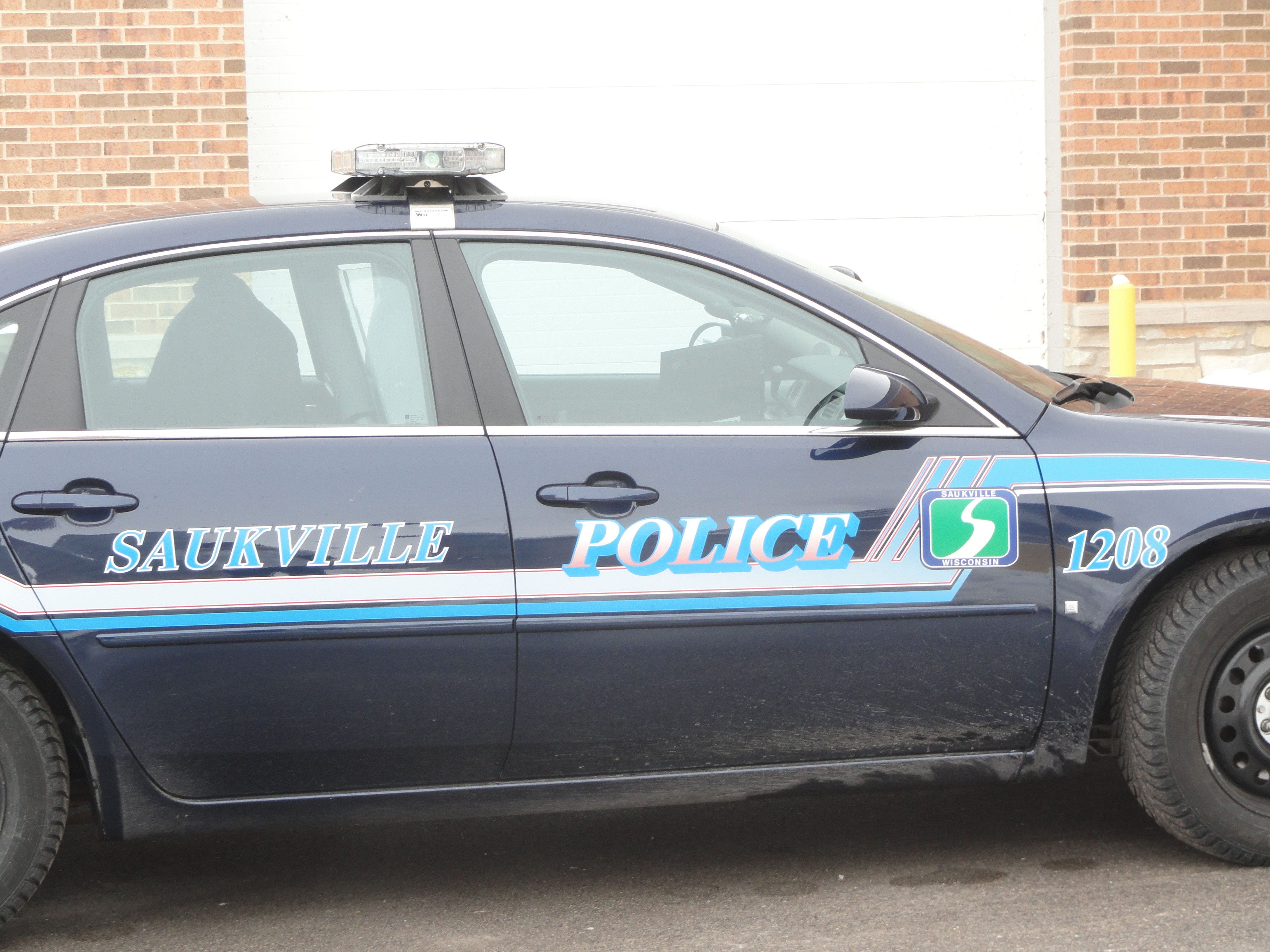

Saukville Police Officer Emily Neese was kind enough to let Patch in on what an average Friday night is like for local authorities. The following is a rough timeline of the events that occurred.
Previously, my editor Lyssa Beyer got to , however you’ll see you our nights were very different. But like Neese told me, no day is the same.
Here’s my story:
Find out what's happening in Port Washington-Saukvillefor free with the latest updates from Patch.
6:55 p.m.
I arrive at the Saukville police station. All seems quiet except for the sound of a muffled video in the training room off the lobby. As I’m about to take a seat to wait for Neese, the room erupts with noise. The video turns loud with the sound of gunshots. It’s fake, but I was definitely startled. I’m not quite sure now if I’m ready to follow an officer for a night.
7:05 p.m.
Neese comes to the lobby to greet me. We’ve talked on the phone before, and it’s nice to be able to finally put a face with the voice. She takes me back with her at the station and out to her car.
Find out what's happening in Port Washington-Saukvillefor free with the latest updates from Patch.
Although she doesn’t have a set routine when she goes out on the streets — “routine is bad,” she told me — Neese said that before she gets out to her car in the evening she does have a few tasks she always takes care of before leaving the station. One is prepping the squad car, including testing her radar for accuracy.
I’ve never been inside a cop car before, so Neese explains the equipment that takes up most of the front seat: the different radios, the computer used for reports and running plates among other things, the rifle — which scared me at first, never having been in close proximity to firearms before — and the ever temperamental printer, a piece of equipment that Neese is not too fond of.
7:19 p.m.
After Neese has thoroughly prepped for the evening, she begins her patrol. She takes me through the streets of Saukville. All seems to be quiet, and she explains that the weather contributes to the lack of activity.
“Criminals don’t like the cold anymore than we do,” she said.
So it appears like it will be a fairly slow evening.
7:47 p.m.
After checking out some flooding on Highway W, Neese receives notification of a suspected drunk driver: a caller reported a car swerving on its way into Saukville. We pull into a parking lot and wait for the car to pass.
Neese tells me that just because she received a call, she can’t necessarily pull a car over. Instead, she has to find probable cause of her own. Neese sees that the rear license plate is falling off, so she puts on her lights.
7:49 p.m.
It’s the first stop of the evening. Neese approaches the car, and is very friendly with the driver. She doesn’t come off as a one of the gruff cops from the movies, although she told me she’s tough when it counts.
Neese recognizes the people in the car, and based on past experience she thinks that drugs could be involved. The drug dog from Cedarburg is brought in while Neese is printing out a warning and a citation for lack of insurance.
She notes that this was a good night for me to come as it’s not common to bring in the dog.
8:13 p.m.
The dog arrives and begins sniffing the exterior of the car. He finds nothing. The driver allows the dog inside, and it comes out clean.
After making small talk with the driver and passengers, Neese says they can be on their way.
8:44 p.m.
After filling out some paperwork, Neese tells me there’s a firearms training session being held back at the station, and asks if I’d like to drop by. I’m a little nervous about the sound of it, but I’m always up for a new experience so we hit the road.
8:58 p.m.
We arrive at the station for the deadly force decisions class: a workshop that uses scenarios and a high-tech computer system to teach citizens when the appropriate time to use deadly force is.
When we take our place at the back of the training room, Chief Bill Meloy jokingly tells the class and its instructors to watch their language in front of a reporter.
After watching the end of the class, Village Trustee and Sheriff’s Deputy Dave Maglio invites me to the front of the room for a little target practice. His job gets a little harder when I tell him I’ve never held a gun before in my life, let alone a Glock — the standard for Wisconsin law enforcement, albeit a red one custom-fitted with a laser and CO2 for the simulator.
Maglio goes through the basics with me: the best grip, the stance, how to look through the sights. He’s a patient teacher, and I know that I’m learning from the best, although I have no intention of holding a gun in the future.
Maglio has Lieutenant Jeffrey Goetz pull up a target on the screen. Now it’s time to put my 10 minutes of firearm training to good use. It’s a high-stress situation but not the kind that Maglio talks about in his classes.
I get in my stance, set my sights, and take my first ever (fake) shot at the target. Goetz pulls up the results screen to show that I hit the center of the target.
Soon I’m going through some of the same scenarios used earlier in the class. Maglio tells me that there’s going to be a bad guy coming. The video, which features Wisconsin officers, shows a car and behind it a man pointing a gun at me appears. I shoot. The results screen comes up: “You used lethal force.”
Maglio turns to me and starts asking me questions. “What did you see there? ... Why did you shoot?” I tell him I saw a man lying on the ground and another aiming a gun at me ready to shoot. I feel like I’m being interrogated. “Did you feel like your personal safety was in danger?” he asks me. “I did,” I tell him. “So it was justified,” he says.
For having only a few minutes of firearms instruction, Maglio tells me I did a good job. Although surprisingly fun, it’s time to hit the road again.
10:10 p.m.
Neese and I leave the station. We discuss the class, and I tell her that I may have a one-up on my editor as far as police ride alongs go. “I don’t think that Lyssa got to hold a real fake gun,” I tell her.
We continue to drive through Saukville, although everything seems to be quiet. Neese tells me about some of her crazier calls.
She tells me how she responded to a call that someone’s basement was flooding. And another time, when a wheel came off of a woman’s wheelchair, she asked another officer to bring a screwdriver to help fix it. Proving to be no use, Chief Meloy came over with his toolbox to make the repairs.
However, Neese tells me her strangest call was a fight a family was having over the husband’s smelly feet.
11:37 p.m.
With Neese’s shift coming to an end, we head back to the station. I thank her for her time, and I drive home knowing that Saukville is in good hands.