Community Corner
The Reason We Obey Stop Signs When No One is Around
America is rife with laws, but it is our longstanding belief in law that keeps us safe.
Last week, Americans were again reminded of the vast difference between life in America and life abroad.
Wilson Ramos, a major league baseball player with the Washington Nationals, went to his home in Venezuela to play winter ball. Being an American major league ballplayer, he naturally has some money behind him, and living in Venezuela — that money tends to be a bit more than his nonathletic countrymen make.
While leaving his own house, a group of kidnappers held up his entire family at gunpoint, had Ramos enter a vehicle, and whisked him away into the mountains. There, the kidnappers held him for ransom until a Venezuelan force found and stormed the area.
Find out what's happening in Port Washington-Saukvillefor free with the latest updates from Patch.
This is certainly not a unique situation, nor is it unique to Venezuela. Reports cite that several major league players have had family or friends kidnapped for ransom in the same manner.
Interviews with Ramos describe the perils of the well-to-do in Venezuela. Hired bodyguards protect those who can afford them, but frequently they are not even trustworthy. Criminals set up fake police checkpoints, where they stop vehicles and either rob or kidnap passengers trying to merely go about their business. They target anyone from the wealthy to tourists. Areas of Mexico, Central America and South America all have places that tourists should avoid.
Find out what's happening in Port Washington-Saukvillefor free with the latest updates from Patch.
While we in America have our own problems, and certainly some cities have places that tourists should probably avoid, we do have a very strong rule of law.
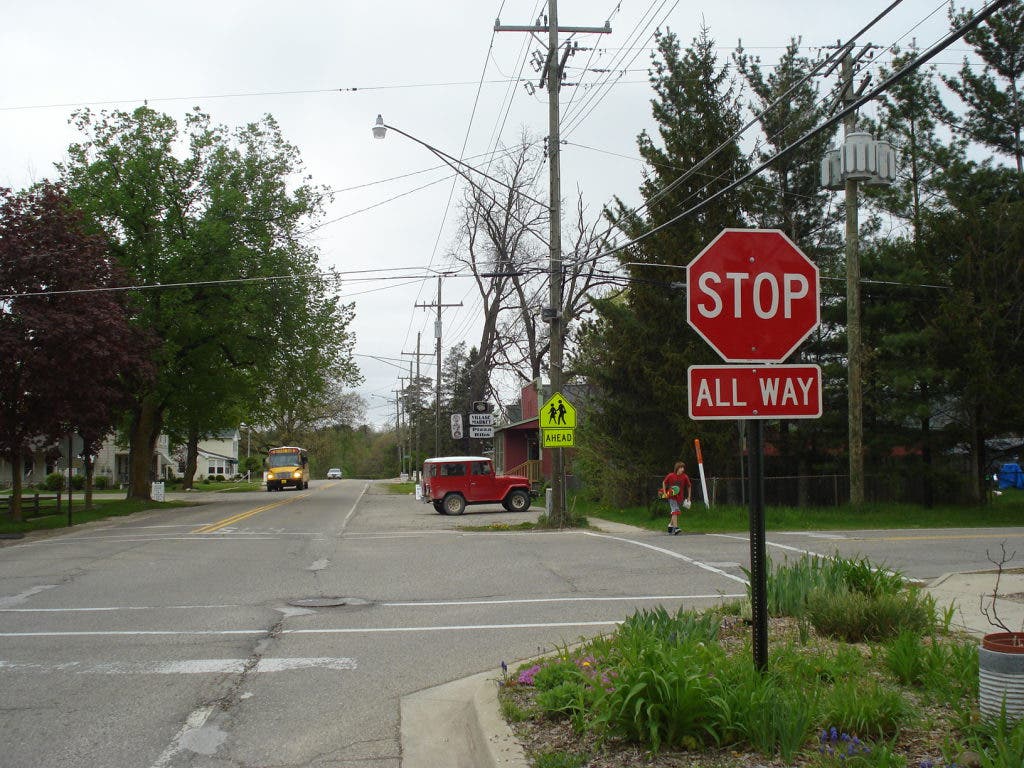
Our people will stop at stop signs when no one is around. We will pick up after our dogs when it is dark and no one could possibly see us do so. Although we bend the speed limit frequently, most people will stay within certain bounds of the limit — perhaps never driving more than ten over the limit — even when we know no officer is around. We will place our faith in elections (and recalls or other processes that are built into the system) instead of watching government officials removed by coups. We will fear civil process, but, for the most part, not concealed weapons.
Why the difference?
We are, and always have been, a very legalistic people. Even the Declaration of Independence, our most revolutionary document, is a legal argument to the king of England.
To paraphrase:
When, in the course of human events, it becomes necessary for one people to dissolve its ties with another, decency requires that the rebelling peoples explain their position. The government only gets its authority to act from its people. Governments should not easily be overthrown, but for a long list of abuses to the people. The Declaration then lists out specific grievances to the king, states that he has failed to address these grievances and describes independence as the only way to correct the situation.
From the very beginning, America has resorted to legal arguments and law. We took the steps to prioritize our laws from the most fundamental laws of structure (the Constitution) to the laws that bind us together (federal laws) to the everyday laws that affect our health and safety (state laws). We have refused to go to war without some legal explanation, and sometimes stretched and strained ourselves very hard to find those explanations. Even now, in some of the most animated politics in a generation, each side is seeking the legal answer.
Why do we obey laws when no one is looking? They mean something to us. They are important to us. We recognize the benefit of a society that obeys, for the most part, its own laws. And when society does abide by the little laws, we have a lot fewer incidents of the bigger laws being broken.