Health & Fitness
It’s Time for the Political Left to Step Forward, Start Acting and Not Just Reacting —Part II
In this article, I take a look at state and local recall election law and possible corrective actions.

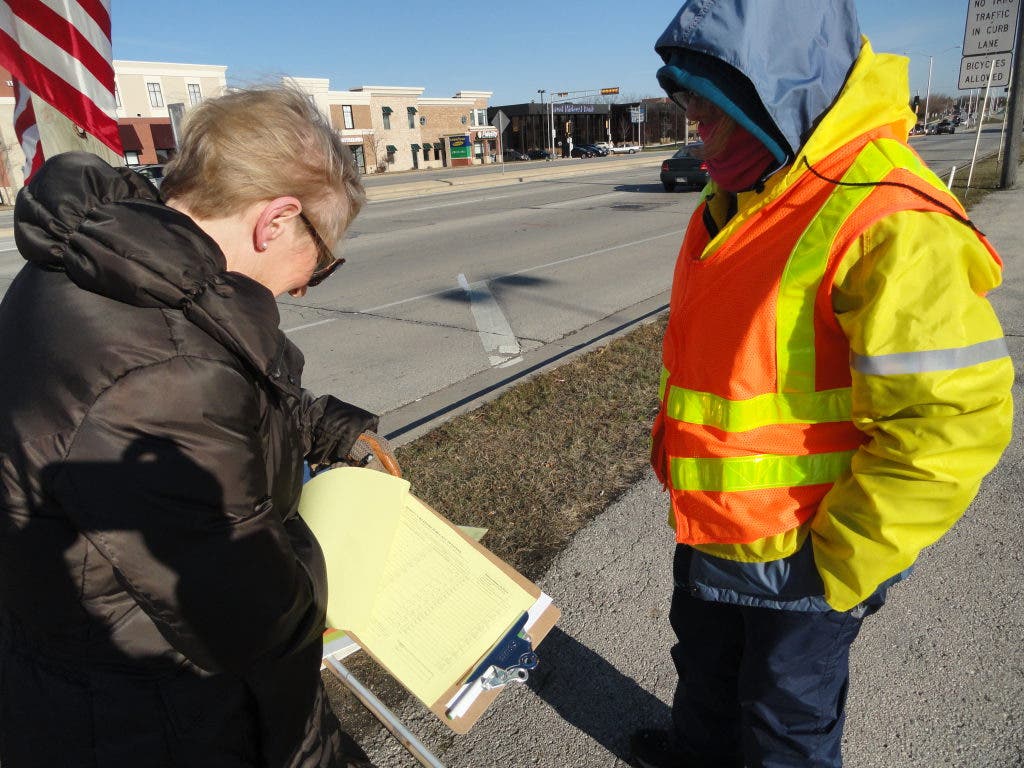

You don’t have to be a committed Republican or Democrat to acknowledge that the State of Wisconsin has just gone through one of the most divisive and unsettling periods in the state’s history. We have been in a perpetual election mode since the general election of November 2010. That election swept Republican majorities into both chambers of the legislature; and besides capturing the statehouse, the Republicans found themselves in control of the State Attorney General’s Office and a conservative majority in the State Supreme Court. The liberal political left reacted and thus began the power struggle using every legal means possible to change the power matrix.
Recall
Beginning in 1905, then Governor Bob La Follette (“Fighting Bob"), began the push for Wisconsin to have a recall law. The idea was based on the principle that the public should have a means to directly challenge and remove public officials in the state of Wisconsin who were not performing to the expectations of the electorate. A law was passed in 1911 and then a constitutional amendment was finalized and took effect in 1926. Until recently the recall provision was used sparingly and never was a major issue. However, with the results of the election of November 2010, all that changed. The Republicans, who gained complete control, began passing their “wish list of legislation and reforms” and alienated nearly half of the electorate, resulting in 16 recalls in a 16-month period. We could debate from now and untill the cows come home whether the recalls were justified or not.
Find out what's happening in Shorewoodfor free with the latest updates from Patch.
In hind sight, both the politically right and left now see that the recall law probably should be amended. Some are calling for the elected official to be removed from office only based on malfeasance; but, that is already addressed within the state constitution’s impeachment section. Other’s want to see recall removed completely, while still others want to see a change in criteria and conditions for recall. The political left should only support the option of changing the criteria for recall, primarily the number of signatures required to trigger the recall.
Not all elected offices are of equal importance and the impact of a recall on governmental functioning is not equal either. Officials who stand for statewide election are of much greater importance than officials elected to local districts, counties and municipalities. Therefore, the criteria for recall should be different for officials based on whether they are elected by statewide elections or limited local elections.
Find out what's happening in Shorewoodfor free with the latest updates from Patch.
Currently, to recall an elected official in the State of Wisconsin, a recall can be triggered in state races by the accumulation of 25 percent of qualified electors during the last election for governor. The question posed is if this should remain as the criteria for recall. I maintain that for some positions that it is sufficient and for others it isn’t. I recommend the following recall signature levels:
- All local elected positions should remain at the 25 percent level.
- State Assembly and Senate Representatives should remain at the 25 percent level.
- Secretary of State should be 35 percent.
- State Attorney General should be 35 percent.
- Lt. Governor should be 35 percent.
- Governor should be 45 percent.
- Supreme Court Justice should be 45 percent.
- U.S. Representative or U.S. Senator should be 45 percent.
Currently, once a recall signature campaign begins, the incumbent who is the target of the recall is able to begin accumulating funds for use in defense of a recall election. This provision should be dropped and all recall campaigns should be publically financed once the signature collection officially begins. No campaigning could occur by any candidate, incumbent included; until the G.A.B. certifies that sufficient numbers have been collected to trigger the recall. At that point, candidates could begin expending the government provided funds.
Recall campaign financial limits
The 16 recalls have been estimated that between public and private funds, to have came to represent expenditures of around $125 million. This is clearly obscene and requires positive action to eliminate buying elections through excessive campaign donations and third party actions. Our goal should be to level the playing field and make running for political office under recall as inexpensive as possible to gain responsible leadership. I propose that recall campaign financial limits should be limited to the following:
- Governor - $5 million to each qualified candidate
- Lt. Governor – $2.5 million to each qualified candidate
- State Supreme Court Justice - $2.5 million to each qualified candidate
- Attorney General - $2.5 million to each qualified candidate
- Secretary of State - $2.5 million to each qualified candidate
- State Assembly Representative - $1.5 million to each qualified candidate
- State Senate Representative - $1.5 million to each qualified candidate
- U.S. Congressional Representative - $5 million to each qualified candidate
- U.S. Senator - $5 million to each qualified candidate
- County Officials - $1 million to each qualified candidate
- Municipal Officials - $1 million to each qualified candidate
- Village and School Board Elected Officials - $50,000 to each qualified candidate
I know that there will be many who will view these changes as making it too easy to recall an elected official. However, the purpose of a recall is obvious, to keep politicians from promising one thing and doing something else. This is nonpartisan and doesn’t give an edge to either the political right or left. By rationalizing the signatures needed to trigger a recall, recalls will only again occur on a rare basis. By severely limiting campaigns to public funding only with strict conditions will reduce the “buying of elections” by outspending the competition.
Recall funding revenue sources
Funding for such changes will always be of a primary concern to some, especially in light of the current feelings about cutting the size of government. However, the recall process is so important and getting the obscene levels of money out of the equation, it is imperative to publically fund recall elections. My preferred means to fund recall elections would be to set up an isolated special fund, administered by the Government Accountability Board, from an additional 1/2 percent added to state sales tax. This would mean that the state sales tax would increase from 5 percent to 5.5 percent. This could also set the precedent for public funding of all state elections in the future.
It is time that rationality took over after this tumultuous period. No matter the political leanings, we have everything to gain and little to lose by amending the current recall provision; knowing full well such changes will require amending the State Constitution.