
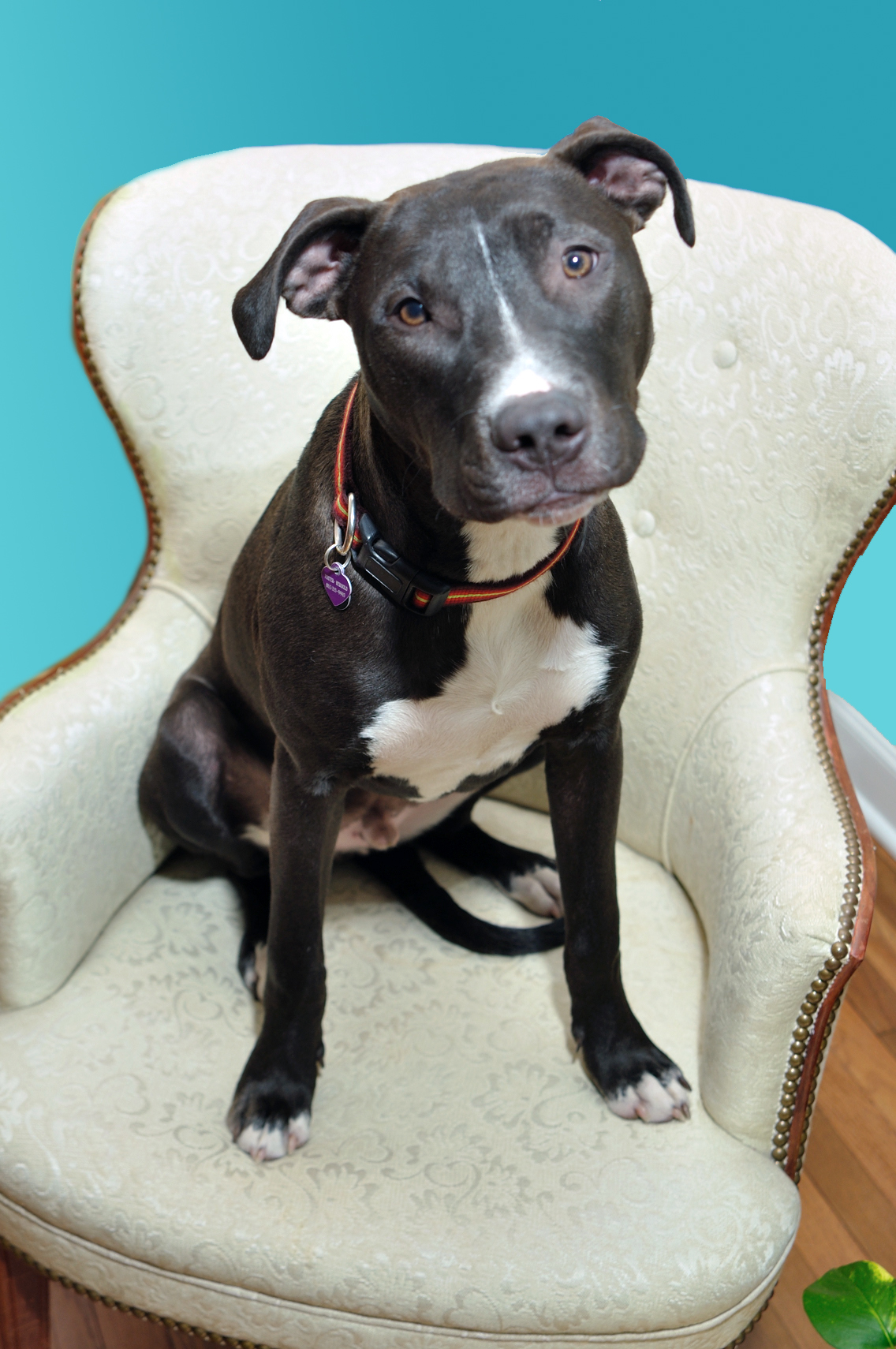
There is a plethora of information and misinformation out there on “pit bulls”. It consists of everything from factual data to hysterical rants and unproven theories about these dog’s temperaments and anatomy. Let’s separate fact from fiction.
We’ll start by defining what a “pit bull” is. There isn’t a universally accepted legal definition for a “pit bull”. What one city considers to be a “pit bull”, another does not. The definition of “pit bull” is highly subjective. Second, "pit bull" is not a breed or breed mix, but an ever expanding group that includes whatever an animal control officer, dog trainer, newspaper, shelter worker, politician, dog owner, or police officer says it is. There isn’t a kennel club on the planet that recognizes “pit bull” as breed. The dogs lumped under the “pit bull” label are a genetically diverse and expanding group of purebred and mixed-breed dogs with a variety of individual personalities and behaviors. It is totally impossible to apply breed traits to this genetically incoherent group of dogs.
What you see on the outside – pure breed or mixed breed – does not determine how a dog will behave. Simply put, a dog’s behavior is not determined by its appearance. The same can be said of human beings. What does a person’s hair color, or body shape tell you about their personality? Nothing. Experts agree that breed identification should not be used as a tool to determine if a dog is or is not dangerous. Each dog is an individual and his physical and behavioral traits will be the result of multiple factors, including genetics, training, handling, and environment. Physical appearance alone cannot predict behavior or personality. In fact, a dog’s entire physical appearance is determined by a very small amount of genetic material. For example, of the 19,000 genes in the canine genome, as few as six can determine a dog’s head shape. More importantly, none of the genes associated with head shape influence behavior or personality. (Report of Dr. Kristopher Irizarry,” Nicholas Criscuolo et al. v. Grant County et al. , United States District Court Eastern District of Washington 2011)
This fact applies to purebred dogs as well. Any reputable breeder will tell you, purebred dogs are not genetic clones of one another. There is always variation among individual dogs, even within dogs of the same litter. So rather than focus on breed, evaluate dogs based on their present behavior and personality. Dog behavior can only be evaluated on an individual basis
There is no behavior that is unique to only one breed or type of dog. Dogs are more alike than they are different. There is so much behavioral variability within each breed, and even more so within breed mixes, that we cannot reliably predict a dog’s behavior based on breed alone. Every dog is an individual.
If you would like to learn more about how you can help "pit bull" dogs in your community please join us for a free workshop with Animal Farm Foundation on Friday, August 9 or Saturday, August 10 (you can attend either or both) at the Shorewood Village Center, 3920 N Murray Avenue, Shorewood, Wisconsin. RSVP to reserve your spot: milwaukeeanimalalliance1@gmail.com.
Kelly Herbold
Wisconsin Voters for Companion Animals Advisor
Milwaukee Animal Alliance Director