Politics & Government
Sober House for Recovering Addicts Might Not Be Welcome in Shorewood
Neighbors worried about lack of supervision at the house, but owners say it's safe. Village officials, meanwhile, look into oversight questions.
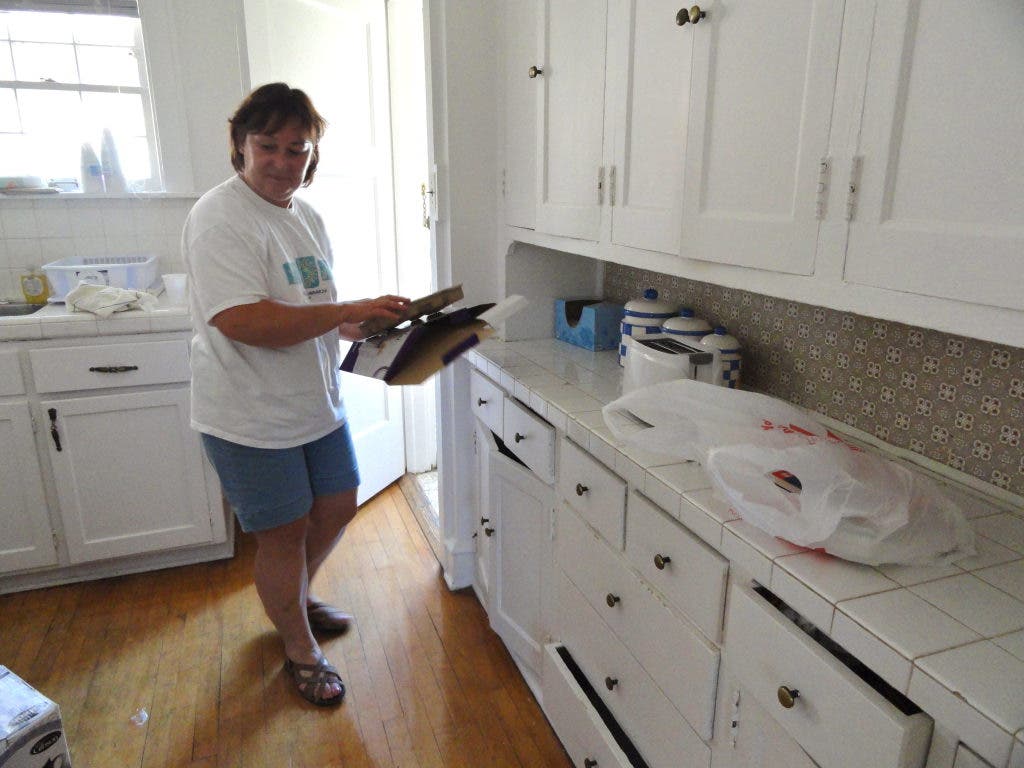


Rachael Horning says she can barely make ends meet, but finds a way to make it work — for her daughter.
Horning's neighborhood in the 4100 block of North Woodburn Street is a safe place for her 15-year-old daughter to grow up, but some new neighbors in the village have her concerned.
Down the block, Christine Litwin and Don Myles are preparing to open Next Step, a sober-living house for men who have completed treatment programs for addiction to alcohol or other drugs. Tenants could arrive within the month.
Find out what's happening in Shorewoodfor free with the latest updates from Patch.
“I’m furious that they’re putting this three doors down," Horning said. "(My daughter) will walk that way to go to school."
After 10 years of planning and three years of aggressive property hunting Litwin and Myles did not expect their biggest challenge in opening the house could be the neighbors. Their plans for Next Step came as a shock to nearby residents as word spread haphazardly, through sidewalk conversations and over Little League games.
Find out what's happening in Shorewoodfor free with the latest updates from Patch.
Because Myles and Litwin are not opening the house as part of a business or non-profit, they consider themselves as nothing more than landlords in the eyes of the law. Therefore, they did not seek any permission from the village to open the house.
Village Manager Chris Swartz said village officials are investigating whether Myles and Litwin can in fact operate without village oversight. Swartz said he first found out about the house opening when he read an article in ShorewoodNOW.
“My reaction was, we have to review this through our legal counsel,” Swartz said. “Neighbors have expressed their significant concerns.”
Who’s coming to town
Litwin and Myles, who live together in Port Washington, dreamed of opening a house like Next Step for many years in their professions working with addicts — Litwin with students at a community college, Myles as a caseworker in the criminal justice system.
They said there is a need in the Milwaukee area for safe and sober living environments for individuals adjusting to a clean lifestyle.
“People who successfully complete treatment often go back to the same community where people doing the same stuff, and before you know it they’re back to their addiction,” Myles said. “If instead they live somewhere that no one is using, where they support each other, they have a better chance at long-term success, which means keeping their addiction in remission.”
Litwin and Myles are advertising the four-bedroom house at local treatment centers and colleges. The house has enough room for six tenants with two units, each with one single room and one double room.
There are a few requirements of applicants: they must have completed treatment programs, be involved in community support programs and either be in school, working, or searching for work.
Myles and Litwin said applicants with a criminal history would be considered on a case-by-case basis, but that no one in the court system would be accepted.
Additionally, they said anyone who has committed a crime against persons would be automatically rejected. This includes assault, battery, harassment, domestic violence, stalking and hate crimes. They said a record of robbery would also likely rule someone out.
“We really have to make sure they’re safe and the neighborhood is safe,” Myles said.
There will be a zero tolerance policy regarding sobriety — one slip-up and a resident is evicted.
This policy will rely primarily on the honor system, as Myles and Litwin will continue living in Port Washington, checking on the house a few times a week.
“Someone who’s at that place in their recovery won’t allow somebody who’s relapsing to be here,” Myles said. “There’s an accountability to the roommate: I’m going to stay clean. You’re going to stay clean. And we’re going to help each other.”
Myles and Litwin would eventually like to turn the house into a non-profit that they would continue to oversee. In the meantime, they are charging $450 per month for rent — a price they say will allow them to break even.
Neighborhood concerns
Horning said she was frustrated that the owners did not give her any warning or information about Next Step.
“I want details,” she said. “If I had known about it, maybe this could be a great thing. But the fact that I don’t know anything makes me fear the worst because I have to keep my child safe.”
Myles said he has received mixed feedback talking to neighbors while working in the yard and on the house. But he said he and Litwin haven’t gone door-to-door or passed out any information.
“I’d rather address their concerns on a personal level,” he said. “It really is just a residence. But if they have questions we’re available. We don’t want to keep anything secret. Once we’re up and running we can demonstrate that it’s a good thing.”
Bob and Carol Gosse, who live with their two children on North Morris Boulevard behind Next Step, found out about the new owners about two months ago when Bob Gosse saw Myles outside.
When the Gosses heard it would be a sober house, their first concern was their children’s safety.
“We’re comfortable now to allow our kids to go walk or bike a block or two,” Carol Gosse said. “That’s not going to happen after this.”
Gradually they have spread the word to neighbors.
“We chewed on this for about five days, ingesting it and talking amongst ourselves,” Carol Gosse said. “Then we were like, our neighbors need to know.”
In response to the Next Step house, as well as recent crime in the area, Gosse is setting up a community block watch. She wants to get village residents to gather on National Night Out and have a meeting about how to make the neighborhood safer, with tips from the Shorewood Police.
“We’re trying to do things to change the neighborhood,” Bob Gosse said. “Now we feel like we just went one step back.”
John Arneson, executive director of Sober Alternative Living Spaces, which has four sober houses in the Milwaukee area, said he received a similar reaction when he opened a house in Waukesha. But he said people came to appreciate the residents after getting to know them.
“The fear is in the unknowing,” Arneson said. “These are wonderful people to live next to because they’re turning their lives around and they’re really quality residents.”
Litwin said she understood why people might be hesitant, but said the residents would be a positive part of the community.
“People with addictions are just like us, but addictions take them away from their lives. We’re trying to create that place for people to get back to their lives,” Litwin said.
Myles stressed that the residents have already completed treatment programs.
“This is the maintenance stage,” he said. “They’re on track. This is to keep them on track.”
Still, the Gosses said they worry about residents relapsing without an authority to keep them in check.
“Who’s watching this?” Gosse said. “I don’t have any problems with people trying to recover from addictions, but this is a lot of them together, not supervised.”
Supervision won't be on site
Counting on the residents to self-police, Litwin and Myles said they did not plan to have a house manager or officer.
Oxford House, a network of over 1,200 sober houses in the U.S., recommends that houses elect officers to run meetings and resolve fights.
SALS Houses each have a house manager, also in recovery, who mediates arguments, plans social events and informs staff of relapses.
Arneson said he once tried to start a sober house without a house manager three years ago, only a few blocks north of Next Step on Woodburn. He wouldn’t recommend it; he shut the house down after about a year.
“If there was a problem they’d have to police it themselves,” he said. “But if they have someone on call who lives there, they can turn to that person rather than confronting it themselves.”
Though Litwin and Myles both work full time and will not be living at Next Step, they said they will be available to deal with conflicts or relapses should they arise.
“If we see signs of relapse, we’ll take that into our own hands,” Litwin said. “They could be asked to leave in a day’s notice.”
They can bet the neighbors will be watching for signs. But Litwin and Myles hope the Next Step residents will prove themselves as positive members of the community.
“We want them to be part of the neighborhood, and take some pride in where they’re living,” Litwin said. “This is their home.”
Village conducting investigation
Myles approached the village in fall of 2009, with his intentions for the sober living home on North Woodburn Street, according to Ericka Lang, the village's planning and zoning administrator. At the time, Lang couldn't find anything prohibiting Myles from setting up in Shorewood.
"Based on the information, we couldn’t find anything," she said. "There’s no program; he’s just targeting an audience."
Lang says Myles' last contact with the village was December 2009, and after reading the NOW article, the village was left scrambling for details. She contacted Myles, but didn't get much information.
"We’re taking information from the article and formulating a legal response," Lang said.