Politics & Government
Derse Associates Offers Reef Land To City In Parting Gift
Ancient coral reef eyed for local historic designation to protect geologic gem.
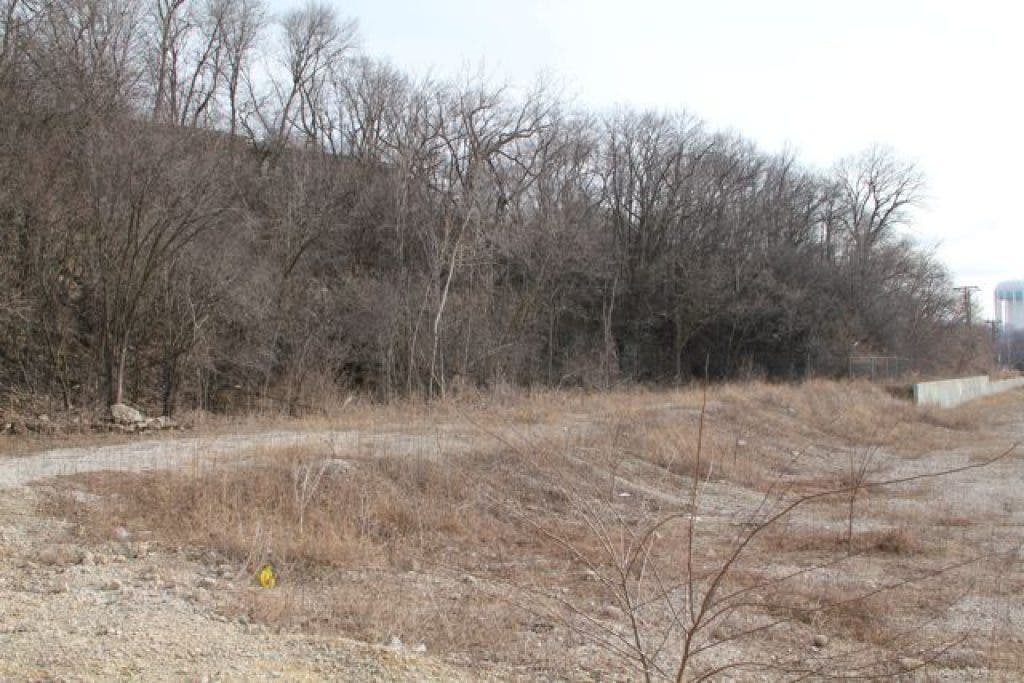


A long-awaited offer to give the city a 2.44-acre lot that includes a portion of an ancient reef on a bluff just north of West State Street is in hand.
Derse Associates, LLP, offered to donate to the city its property that includes the Schoonmaker Reef in "as is" condition in a letter Thursday. The city has had e at 1245 N. 62nd St. since new development along West State Street in recent years raised concern about the need to protect the , which dates back to the Silurian geologic period, 425 million years ago.
"Every agency of the city has been just awaiting the formal offer, and this letter is the formal offer," said Ald. Dennis McBride. "I'm just really excited about it, in terms of its history and its scientific significance."
Find out what's happening in Wauwatosafor free with the latest updates from Patch.
McBride serves on the city's Historic Preservation Commission, which has discussed local designation of the reef as an historic landmark. Local designation as an historic site would confer greater protection to the reef than its National Historic Landmark distinction, awarded in 1998. The national distinction, McBride said, is more of an honor; local historic designation is needed to make it a protected site.
"This is something that should have happened years ago, and I'm just glad it is something that is happening now," McBride said.
Find out what's happening in Wauwatosafor free with the latest updates from Patch.
The city also is working with developer David Israel, who owns land adjacent to the reef, to ensure the reef is protected. The Israel site, just north of West State and west of North 62nd, has been idle since it was cleared for development.
Israel expects to submit new plans for the site to the city in the coming weeks. Any new proposals, like those proposed by Israel in 2005 and 2009, would include some sort of land set-aside to buffer any new development from the reef, according to McBride.
Israel is slated to receive up to $1.9 million in tax incremental financing (TIF) from the city to develop the site. Of that funding, $185,000 is intended to cover the costs to put in sidewalks, security fences and security lighting between his development and the reef.
With the Derse donation, McBride said, the city's intent would be to create a park-like pathway below the reef, and to install fencing to protect the historic site. A landscaped public walkway would allow area residents off-street access to shopping at North 68th and West State streets via "a pleasant detour from one part of town to another," McBride said.
"We would provide (reef) access in the sense of visual access, but we wouldn't provide physical access to the reef," with the exception of scientists, geologists and students, McBride said.
"This is a green space, but it is not something that we would open to full access, partly because it is such a daunting site to get access to, because it is so steep, but also because it's so significant," McBride said. "We don't want harm to befall it."
After its discovery nearly 170 years ago as the first ancient fossil reef identified in North America, Schoonmaker Reef lured geologists from around the globe to study its fossils and features. Its geologic significance was established in 1862 by James Hall, who recognized it as a fossil tropical reef from the Silurian period.
The reef also has significant local ties. Increase Lapham, the legendary Milwaukee naturalist, visited Schoonmaker Quarry in 1844 and discovered the fossils that later were identified as being from the Silurian period. Prominent Wauwatosa physician and amateur geologist Dr. Fish Holbrook Day also gathered fossils at the site, many of which are among collections in prominent natural history museums.
Day's former home, at 8000 W. Milwaukee Ave., is on the National Register of Historic Places. That Day's favored geologic stomping ground will gain similar designation is fitting, McBride said.
"The interesting thing about this reef, too, is that it ties in to the Dr. Day mansion," McBride said. "He was the one who started taking fossils from the site, and (the reef) is a tie-in to one of the most significant (residential) properties" in the city.
"It really is kind of the early Wauwatosa history in miniature," McBride said. "It just ties it all together."
The Derse site, which was primarily used for vehicle and other storage, currently is zoned commercial and valued at nearly $360,000. If the city declines the land donation offer, the letter notes Derse would sell the site to a truck storage/light industrial user, to fit with the property's current zoning.
Derse moved its operations to a new building in the Lower Menomonee Valley in Milwaukee and sold the largest part of its property, south of Martin Drive between 60th and 62nd streets, to the developers of .
Derse's land donation offer will go before the Community Development Committee May 31.