Health & Fitness
The Cost of Doing Business, NBA-Style
Senator Kohl has his job cut out for him in convincing metro Milwaukee that it should subsidize a new arena for the Bucks.
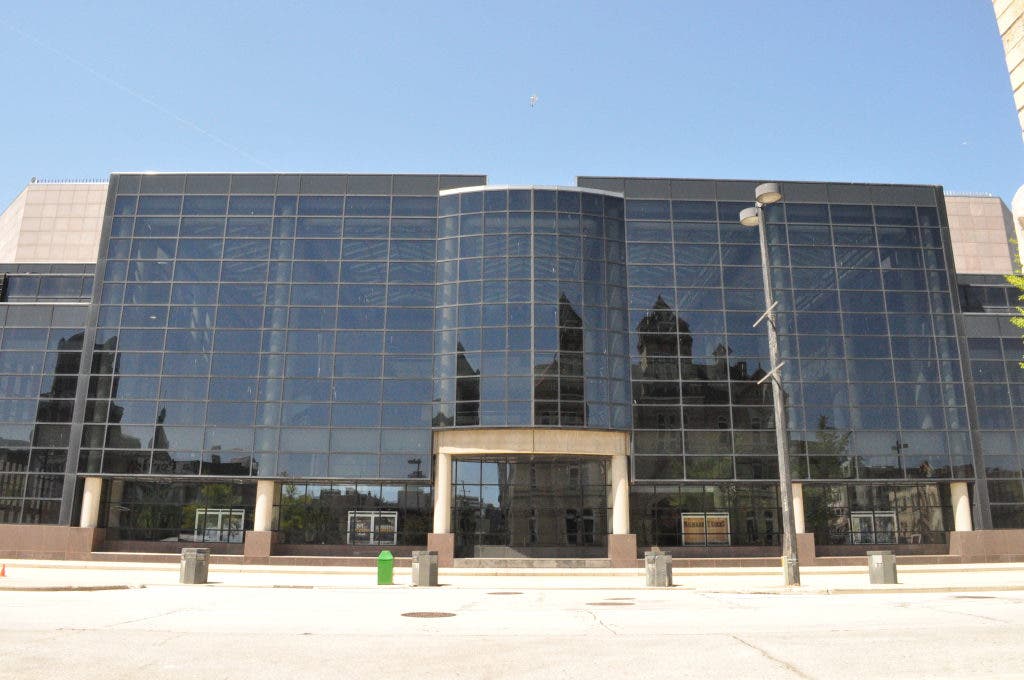

As Senator Herb Kohl has finally added his voice to the discussion surrounding what it will take to get the Milwaukee Bucks a new arena, the following point needs to be emphasized: Professional sports franchises have made a common practice of leveraging taxpayer funds to build new arenas simply because they can. As long as there are major cities willing to ante up to build arenas in order to lure teams, there is no reason for franchise owners not to implicitly threaten relocation if their demands are not met.
I will take it on faith that the Bucks would take in appreciably more revenue in a new arena. Though such an arena would not offer the tangible upgrade in utility that Miller Park's retractable roof gave the Brewers, there would certainly be a honeymoon period during which fans would flock to the new arena for the sheer novelty of the experience. However, novelties have limited shelf lives by definition. After the initial ogling of a new arena takes place, the only thing that will draw in Bucks fans - and, more importantly for the Bucks' bottom line, corporate luxury box tenants - is wins. For all that Miller Park has done to make the Brewers relevant, there is no way that the team would annually draw over 3 million fans if it had continued to produce losing season after losing season. Will fans continue to travel to the Park East Corridor – and with all due respect to the ghosts of freeway spurs past, I will give a shiny buffalo head nickel to anyone who can give the downtown area north of Juneau a new name that sticks – to watch a bad team in a new arena over the course of 41 home games?
The fact that Senator Kohl is now publicly soliciting taxpayer financing for a new arena because it is an established business practice has been rehashed ad nauseam, which begs the question: Why do so many in the community indulge the Bucks by extolling the virtues of the ancillary benefits that a new arena might bring? I am a huge Bucks fan and would support voting in favor of any reasonable tax increase needed to fund the arena's construction. Still, let's frame the discussion in an intellectually honest way. If the Bucks do not get a new arena, likely funded partly through local taxation, they will eventually leave Milwaukee. Let's parse the benefits of what the Bucks bring to the community and compare them to what it will cost in taxes to keep them here. Please, don't lead us on with promises of Bruce Springsteen concerts in the new arena; don't distract us by detailing the cool new restaurants that would be housed in the arena; and, for the love of everything holy, do not prattle on about how a new arena will lead to the revitalization of downtown. Concerts and restaurants are not the reason that subsidizing a new arena will likely be put to a vote; keeping the Bucks in Milwaukee is.
Find out what's happening in Whitefish Bayfor free with the latest updates from Patch.
So, what benefits do the Bucks provide Milwaukee? This biased observer counts Ray Allen's 3-point barrage in Game 6 of the 2001 Eastern Conference Finals as one of the most spectacular displays he's ever witnessed and remembers the referees' gifting of Game 4 of that series to the Sixers with abject bitterness. As a fan of basketball and the city, witnessing the Bucks compete on the game's penultimate stage was a nearly priceless opportunity. With average attendance at 14,718 this past season - and trust me, the real figure was far less - it's tough to remember that the Bradley Center was once ranked amongst the loudest arenas in the league. All this is to say that, as the Brewers have found, Milwaukee can punch far above its weight class when it comes to embracing and supporting a winner. The Bucks hope that there are many more fans who remember the excitement that a winning team can bring the city.
And really, the prospect of future excitement may be the Bucks' best bet to win over the masses. Despite Senator Kohl's and others' allusions to the ancillary benefits that a new arena will bring, the general public seems to agree with researchers who have cautioned against using the "economic impact" that a new arena may bring to determine whether the construction of sports arena should be taxpayer subsidized. Sports economist Andrew Zimbalist has indicated that taxpayer funds may be appropriately used to subsidize a sports team's arena only if the team's presence helps the psychic, social, and cultural aspects of a community. To metro Milwaukeeans who have an inferiority complex about the city, Zimbalist's take might be the best argument of all to foot some of the bill for the arena. Hubert H. Humphrey once said that, "Without professional sports, the Twin Cities would be a cold Omaha." We may soon find out whether metro Milwaukee shares Humphrey's zeal to be a "big league" city.