Community Corner
Letter to the Editor: Who Are These Pesticide People and What Do They Want?
Whitefish Bay resident Anne O'Connor explains why she opposes the use of pesticides and encourages people to research the scientific effect of pesticides.
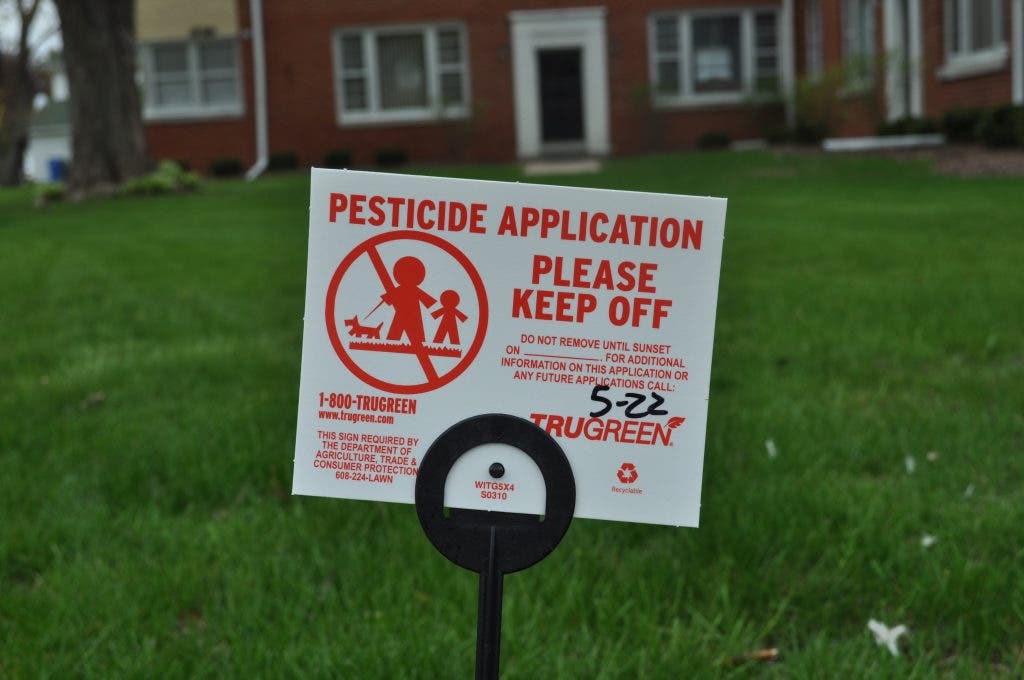
(Editor's note: Resident Anne O'Connor submitted this letter to the editor regarding .)
Since I have been educating myself over the past year on the use of pesticides in public spaces – and let me be clear, I formerly used them myself at my own home– I have been formulating an opinion based on the evidence available, and as of late, am making that opinion be known. Let me also be clear on this - I am not advocating that the village take any stance on the personal use of pesticides. Nor am I advocating that all of village green spaces be allowed to revert back to prairie.
Typically, I am not comfortable with loudly and clearly expressing an opinion – it’s much easier and nicer to not care one way or the other about something. But because of what I’m learning – and the information is disturbing: links to ADD, cancer & Parkinson’s, not to mention the effects on the lake - I do care, and I feel like I have to challenge my own comfort level to say so.
Find out what's happening in Whitefish Bayfor free with the latest updates from Patch.
Many people in our community have not yet become so comfortable and thus, knowing my opinion, have confided their thoughts in me. That’s why I’m particularly qualified to let you know who some of those people are – no names will be used of course – and to let you know who else besides me is concerned with the use of pesticides in our community. These people are your neighbors and your friends. They are the teachers at our fine schools. They are our soccer and baseball coaches. They are parents and members of Little League, Friends of Whitefish Bay Baseball, the Whitefish Bay Garden Club, the Whitefish Bay Civic Foundation, the Girl Scouts and the Boy Scouts. We’re a diverse group of people bound by our common concern about the risks associated with pesticide exposure.
Here’s the main problem: no matter how safe pesticides may be in a very controlled environment when conditions conform exactly to the manufacturer’s and government’s strict requirements, in the real world of public parks it is impossible to protect people from becoming exposed to the toxins contained in these chemicals. Kids chasing a ball pursue it into a just-treated garden bed at the park. Children in mid-run do not usually stop to read (if they even can read) a small sign posted somewhere around the area. Children are also the most susceptible to the toxicity of chemicals because their bodies are smaller, their inhalation rates are higher, their hand-to-mouth activity is much higher, and their immune systems are not fully developed enough, which means that they cannot process toxins as effectively as adults.
Find out what's happening in Whitefish Bayfor free with the latest updates from Patch.
We’ve seen similar circumstances surrounding lead paint. Did lead paint provide superior aesthetic results, a nicer sheen, a longer lasting finish? Absolutely. But did it also cause neurological damage in developing children? Yes. Thus we decided as a nation to discontinue the use of lead paint. The use of pesticides in public spaces is not yet illegal in the United States, though it is in Canada. The states of New York and Connecticut have banned pesticides in schools to protect children from exposures. Across the country, cities like Portland, Chicago, and closer to home, Shorewood, have decided to eliminate the use of pesticides in their public green spaces, because they were no longer able to overlook the risks associated with them.
Now back to the issue of safety with pesticides as used in public spaces. When covering such large areas of park space, drift always occurs, exposing people who live nearby or are just passing. Such an incident occurred last fall when a chemical called Momentum, which was also applied in our community at Cahill Park on May 6th, drifted through the windows of a middle school in Ohio and sent 47 students to the hospital. At Cahill this past Sunday, the rain intervened and washed a lot of the chemical away before it came into contact with most people. I say “most” because an eye-witness observed a little boy hopping the fence during the application. Hopefully he’s ok. But if had become ill that day, would his parents have made the connection to the exposure he experienced at the park?
Can we still have beautiful parks without the use of pesticides? Absolutely. Will it happen overnight? Probably not. Will it be as straightforward, easy, and cheap as using pesticides? Not yet. We are experiencing a paradigm shift and may unfortunately have to feel some of the growing pains that go along with that. There are national resources like SafeLawns.org, or those closer to home like Healthy Communities Project, to help us become educated in natural turf care practices. And we need to harness the energy of the community for green space improvement. The organic turf product market is also growing leaps and bounds, with new and effective products being introduced all the time. Will it all be worth it? Yes! We can all have peace of mind, knowing that we have protected ourselves and our children from unnecessary harm, worked together for beautiful green spaces, and maybe learned a little bit about ourselves in the process. Who knows – maybe we’ll love our parks even more now that we recognize the enormous amount of thought and effort it requires to keep them both safe and beautiful.