Weather
Atlantic Hurricane Predictions Turn Nasty, 12-17 Named Storms Expected
Breaking: NOAA has revised its predictions for the 2016 Atlantic Hurricane Season, saying the year could be the most active since 2012.


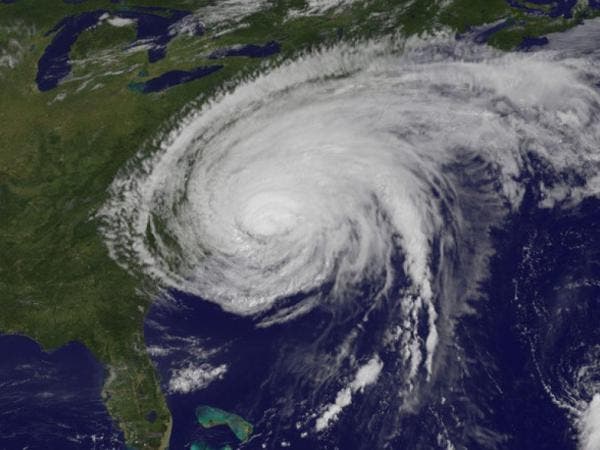
Maryland has seen heavy thunderstorms and flooding at times this summer, but the 2016 Atlantic Hurricane Season has been a non-event for our state, so far. That could change, warn the forecasters at the National Oceanic and Atmospheric Administration, who say the season is far from over.
In fact, they’ve revised their predictions for the season, saying there’s a 70 percent chance of 12 to 17 named storms forming. NOAA’s updated predictions were released Thursday. The forecast for the season, which doesn’t end until Nov. 30, now includes the potential for two to four major hurricanes.
“We’ve raised the numbers because some conditions now in place are indicative of a more active hurricane season, such as El Niño ending, weaker vertical wind shear and weaker trade winds over the central tropical Atlantic, and a stronger west African monsoon,” said Gerry Bell, lead seasonal hurricane forecaster at NOAA’s Climate Prediction Center.
Find out what's happening in Dundalkfor free with the latest updates from Patch.
The season so far has given rise to five named storms, most recently Hurricane Earl.
NOAA said there is a higher likelihood of a near-normal or above-normal season, decreasing the chance of a below-normal season to only 15 percent from the initial outlook issued in May.
Find out what's happening in Dundalkfor free with the latest updates from Patch.
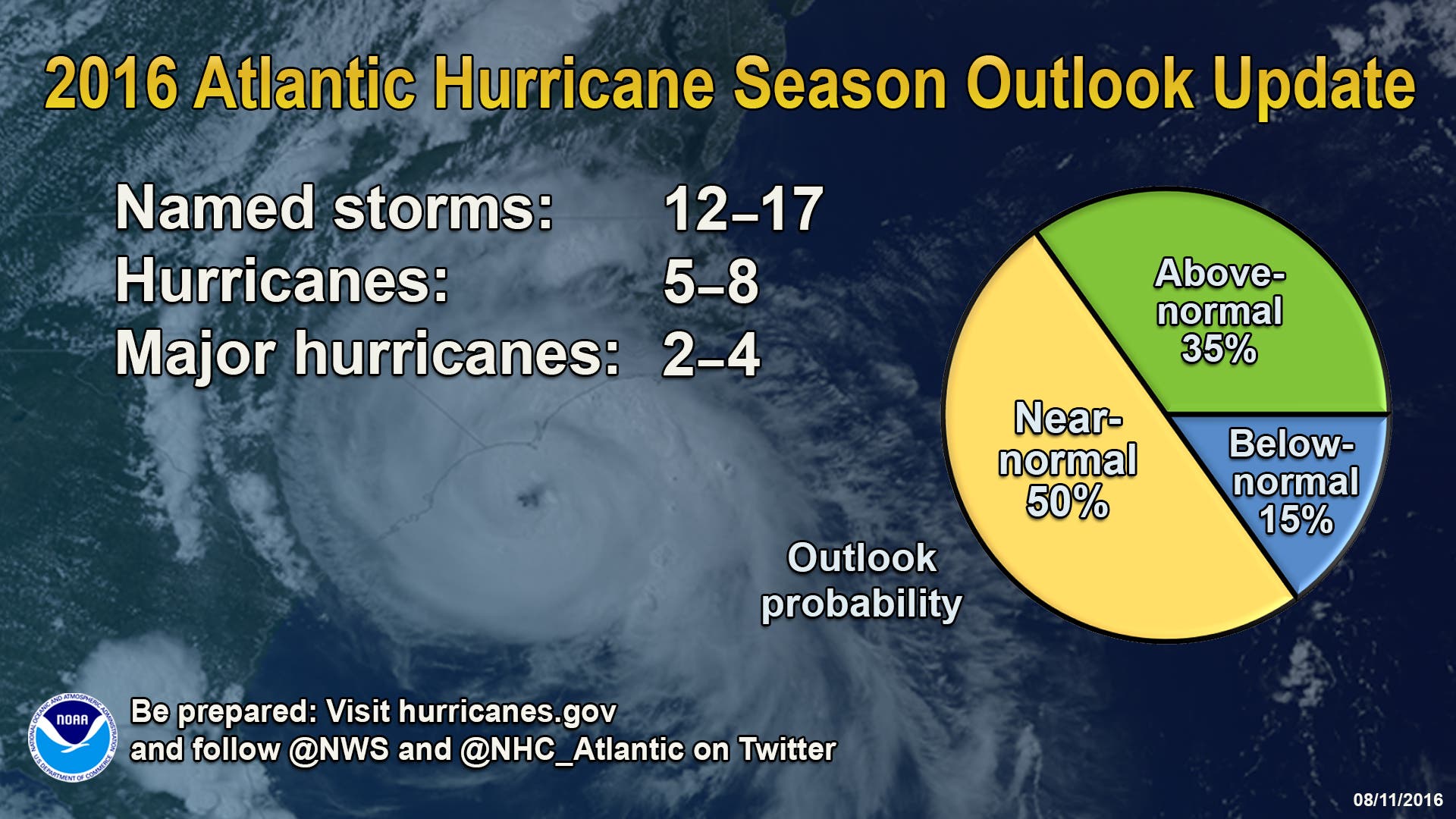
The initial outlook called for 10 to 16 named storms, four to eight hurricanes, and one to four major hurricanes. The seasonal averages are 12 named storms, six hurricanes and three major hurricanes.
The 2012 Atlantic hurricane season produced 19 total storms and 10 hurricanes. Sandy produced 115 mph winds and tore up much of the shoreline, particularly in New Jersey.
However, less conducive ocean temperature patterns in both the Atlantic and eastern subtropical North Pacific, combined with stronger wind shear and sinking motion in the atmosphere over the Caribbean Sea, are expected to prevent the season from becoming extremely active, he said.
As the 2016 season nears its peak, forecasters at NOAA urge residents in coastal areas to be prepared. It’s not a question of if, but when, forecasters say.
To find out more about hurricane season and storm preparation, read these related Patch stories:
- Time to Prepare for 2016 Atlantic Hurricane Season
- Remember Agnes? 14 Maryland Hurricane Names You May Want To Forget
- Hurricane Tips If Storm Hits Maryland
Maryland has been spared "the big one" on most occasions, but for roughly 60 years, named hurricanes have battered our water-oriented state, altering our lifestyles and our history.
Hurricanes Connie and Diane pounded Maryland in October 1955. Just days apart in their torture on the East Coast, the storms caused widespread flooding. Connie essentially came right up the Bay. Meanwhile, Diane came on land near the Carolina border and turned east to pass over northern Maryland before going back out to sea.
Most recently, Hurricane Sandy in October of 2012 made landfall just north of the upper Chesapeake Bay region, and destroyed the Ocean City fishing pier. From there it went on to devastate oceanfront areas of New Jersey and New York.
To keep up with storm activity as the season develops, bookmark the National Hurricane Center’s website and keep an eye on your hometown Patch site for local information.
Residents readying for the season can get tips and advice on the federal government’s Ready.gov website. For local weather and severe weather alerts, visit the National Weather Service online.
Graphics courtesy of the National Hurricane Center/NOAA
Patch editors Sherri Lonon and Tom Davis contributed to this story
Get more local news delivered straight to your inbox. Sign up for free Patch newsletters and alerts.