Home & Garden
Time to Prepare for 2016 Atlantic Hurricane Season
State and Anne Arundel County emergency officials offer ways to keep safe during the 2016 hurricane season.


ANNAPOLIS, MD – With the official start of the 2016 hurricane season just weeks away, Anne Arundel County’s Office of Emergency Management is encouraging residents to take part in Hurricane Preparedness Week May 15-21.
“As we move closer to summer, I encourage our citizens to learn more about what they can do to prepare for possible hurricanes and tropical storms,” said County Executive Steve Schuh. “While strong hurricanes and tropical storms are rare, our county does face unique challenges with more than 530 miles of shoreline.”
The experts at Colorado State University have issued their forecast for the upcoming season, which starts June 1 and runs through Nov. 30.
Find out what's happening in Annapolisfor free with the latest updates from Patch.
2016 Hurricane Season Outlook
The good news is that forecasters anticipate average hurricane activity this year. That bad news is that average could still produce a total of 12 named storms, five hurricanes and two major hurricanes, according to Colorado State’s forecast.
Find out what's happening in Annapolisfor free with the latest updates from Patch.
“We anticipate that the 2016 Atlantic basin hurricane season will have approximately average activity,” the school's forecast says. The probabilities set for “at least one major (Category 3-4-5) hurricane landfall” are as follows:
- Entire U.S. coastline – 50 percent (the average for the last century is 52 percent)
- U.S. East Coast including the Florida peninsula – 30 percent (average for the last century is 31 percent)
- Gulf Coast from Florida’s Panhandle to Brownsville – 29 percent (average for the last century is 30 percent)
“Coastal residents are reminded that it only takes one hurricane making landfall to make it an active seasons for them, and they need to prepare the same for every season, regardless of how much activity is predicted,” the forecasters said.
How to Get Home, Family Ready
The Office of Emergency Management suggests following these steps next week to get your family and home ready for hurricane season.
Sunday, May 15 – Determine your risk
Understand how hurricanes can affect where you live, work, go to school and play and how the weather could impact you, your family and your community. When you understand your risk, you are more likely to know how to prepare. Check the weather forecast regularly and sign up for local alerts from emergency management officials and obtain a NOAA Weather Radio.
Monday, May 16 - Develop an evacuation plan
Create an emergency plan and practice how and where you will evacuate if instructed by emergency officials. Ask about evacuation plans at the places where you spend time such as work or community organizations. If you typically rely on elevators, have a back-up plan in case they are not working.
Tuesday, May 17 - Secure an insurance check-up
Examine your insurance policy to understand your coverage and make sure everything is up to date. Most standard policies for homeowners, farm and ranch owners, renters and condominiums do not cover damage caused by rising water. Contact your local insurance provider to discuss National Flood Insurance Program policies.
Wednesday, May 18 - Assemble disaster supplies
Create a kit to plan for at least three days based on you and your family’s personal needs. Set aside one gallon of water per person per day, including pets. Some recommended items are: perishable food, battery-powered or hand-crank radio, flashlight with extra batteries, first aid kit, can opener, prescription medications, infant formula and diapers, pet food, and important documents (i.e., copies of insurance policies, bank accounts, identification).
Thursday, May 19 - Strengthen your home
Fortify your home can reduce the impact to your property. You can act now by trimming trees and shrubs, reinforcing roofs, windows, and doors, elevating and anchoring utilities and installing sewer backflow valves.
Friday, May 20 - Identify sources of information for a hurricane event
Identifying trusted sources to stay informed of a hurricane event is critical to understanding the expected impacts from the storm for your area, instructions from local officials, and when it is safe to return home. We encourage you to register for the County’s Mass Emergency Notification System at the Community Notification Enrollment page.
Saturday, May 21 - Complete your written hurricane plan
Create a communications plan. Your family may not be together when a hurricane strikes, so plan on how you will contact one of another. Text messaging or email may be more accessible than landlines during a disaster but we strongly urge you to designate an out-of-town contact, not in the impacted area, to be a point of contact for your family.
More information can be found at http://www.aacounty.org/departments/office-of-emergency-management/ or the Spanish-language website http://www.listo.gov.
Residents readying for the season can get tips and advice on the federal government’s Ready.gov website.
To keep up with potential storm activity, bookmark theNational Hurricane Center’s website. For local weather and severe weather alerts, visit the National Weather Service online.
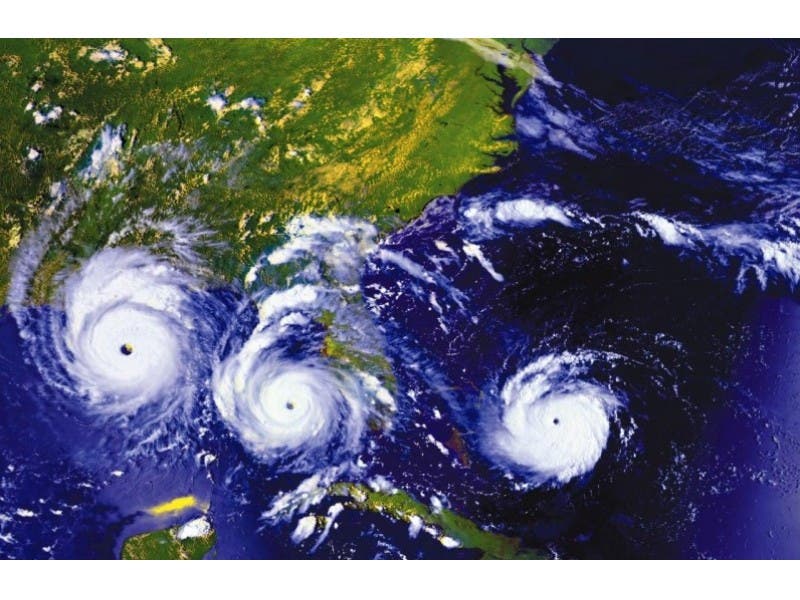
Time lapse image of Hurricane Andrew courtesy of the NASA
Get more local news delivered straight to your inbox. Sign up for free Patch newsletters and alerts.