Politics & Government
MacArthur: Trump Health Care Bill Changes Make Me A 'Yes' Vote
Breaking: As pressure builds from President Trump to pass revised American Health Care Act, 3rd District congressman says he now backs it.


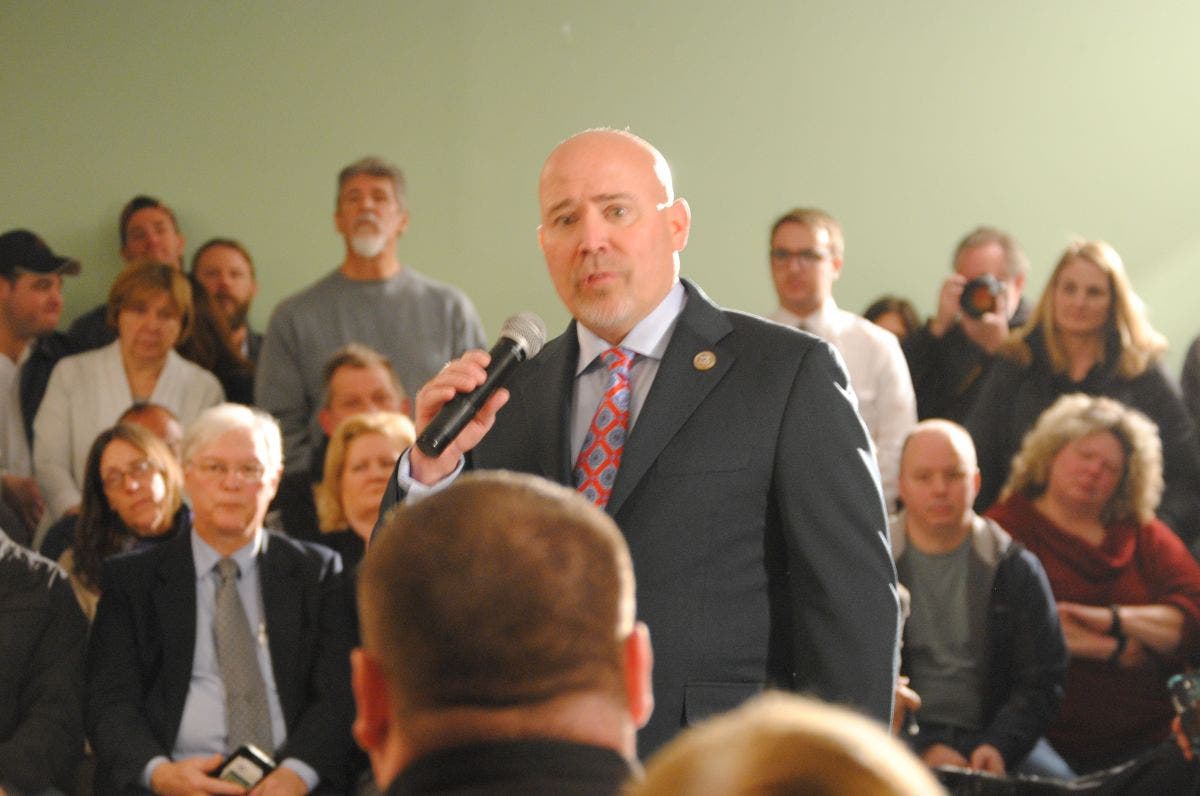
WASHINGTON, DC — When the House of Representatives votes on the bill that aims to replace the Affordable Care Act on Thursday, at least one former "no" voter will be a "yes."
Rep. Tom MacArthur, the Republican who represents New Jersey's Third District, said that changes made to the initial version of the American Healthcare Act — the Republican bill that would replace the Affordable Care Act, also known as Obamacare — address some of the issues that he has been most concerned about, especially ensuring that those covered under the Medicaid expansion won't be left with nothing.
MacArthur, whose district covers parts of Ocean and Burlington counties, said in a telephone interview Tuesday evening that the changes, the result of meetings over the weekend with President Donald Trump, Vice President Mike Pence, Secretary of Health and Human Services Tom Price and Republican House leaders were on matters he felt were most important.
Find out what's happening in Toms Riverfor free with the latest updates from Patch.
MacArthur, who voted no on the House's initial Jan. 20 move to repeal and replace the ACA, said he was unhappy with the American Healthcare Act when it was released two weeks ago.
"I thought about it and realized I could be an obstructionist or I could engage," MacArthur said. "I decided to engage to make the bill better."
Find out what's happening in Toms Riverfor free with the latest updates from Patch.
MacArthur said two weeks ago at his town hall meeting in Waretown that he was committed to making sure that those who gained healthcare under the ACA would not have the rug pulled out from under them, particularly those who gained coverage under the Medicaid expansion.
And one of the changes, he said, was a commitment from Trump that the Medicaid expansion transition in the bill would remain scheduled for 2020, instead of being moved to an earlier date.
Moving the transition date forward — 2018 was a date considered, MacArthur said — "would have created a gap that would have left people without coverage."
Those involved with the Medicaid transition "need time; this is a complex undertaking," MacArthur said.
In addition to the commitment to leave the transition for 2020, MacArthur said he secured an addition of $145 billion to help those who are most vulerable, namely the disabled and the elderly. Of that, roughly $60 billion would go to help those covered under Medicaid, increasing the indexing (which increases the funding assistance) to "CPI Medical plus 1 percent," meaning an additional 1 percent increase in aid to those groups, he said. The remaining $85 billion would be directed to increase tax credits for the 50- to 64-year-old age group, whose premiums are predicted to rise significantly under the American Healthcare Act, according to a report by the Congressional Budget Office.
"I felt the credits were inadequate," MacArthur said; the additional $85 billion will amount to an increase of about $2,000 in tax credits per person, he said.
"I voted no at the beginning because I felt like the process was moving too fast," MacArthur said. "We've made substantial improvements that will help constituents and I feel better about this," adding that for him to vote no after these changes were made would be disrespectful. "Not everything in this bill is perfect, but this is what compromise looks like."
"I still feel we could have done this in a better way," MacArthur said.
There is no guarantee the bill will pass when the House votes on Thursday. There are a number of Republican members of the House who are still holding out for various reasons, including some who want a blanket repeal of the ACA. MacArthur said that if it passes, there are more tasks that need to be tackled to fix the healthcare system, starting by finding a way to bring down the costs of premiums and prescription drugs.
"This bill sets up a framework to get the federal government out of the role of being at the center of it all," MacArthur said. Once that is accomplished, the government can help with some of the difficult issues that so many face, including the sometimes endless fights over denials of coverage by insurance companies and the costs for care that get charged to those who lack insurance.
"I spent a good deal of time fighting with insurance companies over Grace's bills," he said, referring to his oldest child, who was born with special needs and died at age 11. That shouldn't happen, he said.
And those who lack insurance shouldn't be charged sky-high rates, he said. "Nobody should be able to charge that much more over what's charged to someone who's insured," MacArthur said. The negotiated rates should apply to everyone, he said.
With the government freed up from the central role, it "becomes the honest broker to make sure no one in the process abuses anyone else," MacArthur said.
Tom MacArthur, speaking at the March 6 town hall in Waretown. Photo by Karen Wall
Get more local news delivered straight to your inbox. Sign up for free Patch newsletters and alerts.