Crime & Safety
Ohio State Attack: Muslim and Refugee Communities Fear Retaliation
After 11 were injured in an attack on OSU's campus, both student and city organizations fear attacks on their members.


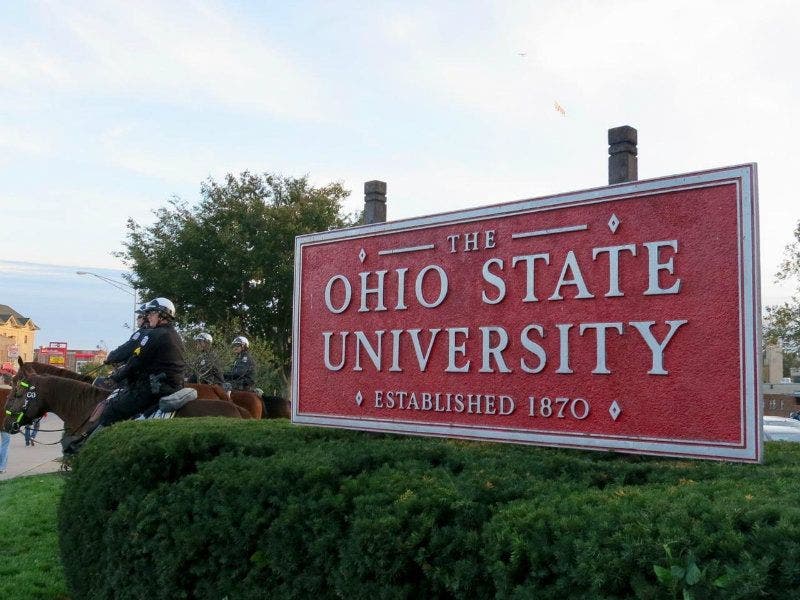
COLUMBUS, OH — Usama Khan was as frightened as everyone else on Ohio State University's campus when news of an active shooter was sent over the school's emergency broadcast system Monday. Eventually, everyone learned there was no shooter, but someone had driven a car driven into pedestrians and the driver went on a stabbing spree with a butcher's knife.
Khan was convinced the attacker wouldn't be associated with Islam and would instead be a student with personal problems that manifested in a hideous and heinous way. Then the world learned the attacker was Abdul Razak Ali Artan, an 18-year-old OSU student and Somalia-born refugee.
"I was shocked to learn that it was a Muslim attacker," Khan said.
Find out what's happening in Clevelandfor free with the latest updates from Patch.
Prior to executing the attack, Artan posted to Facebook and decried the treatment of Muslims in America and referenced lone wolf terrorist attacks. Despite law enforcement officials and Ohio Gov. John Kasich cautioning against assigning a motive to Artan's attack, many suggest the Facebook post is proof of a terrorism connection. There is now fear among Muslim and refugee communities in Columbus of retaliatory attacks against them.
Besides being a Muslim, Khan is also an immigrant. He came to the United States from Pakistan in 1997. He's 21 now and a senior at OSU. He's studying biomedical engineering and applying to medical schools. He is also the leader of a small group for Muslim students called the Ahmadiyya Muslim Students Association.
Find out what's happening in Clevelandfor free with the latest updates from Patch.
See Also
- Full Recap of Monday's Attack
- Police Search for Motive in Stabbing Spree
- Social Media Reacts to Ohio State Shooting
"I told our members that they may want to pray on their own for a few days," he said. "I told them I have a car and I can pick them up. We can pray in someone's apartment."
The Refugee Community
Another group that fears retaliation for Monday's attacks is Columbus' refugee community. Several organizations throughout the city and on campus either declined to speak on the record or didn't return requests for comment.
Emily Gray, a spokesperson for World Relief, an international relief agency that works with refugees and has offices in Columbus, said that in today's turbulent world, unfortunately, these types of attacks do happen. She said her organization would continue to try and create cities that welcome refugees and immigrants.
"All of our offices work closely with the communities that we serve. I think that we serve vulnerable people and we are aware of that all the time," Gray said. "This makes us a bit more aware. We are there to serve. And will continue to be for a very long time.”
She added that all of the groups that World Relief serves go through a vigorous screening process.
"We begin that process when they arrive in the United States," she said. "We do it through U.S. and international federal agencies, from the point that someone is referred to us from the United Nations."
There are 16,569 refugees in the Columbus area, according to the Impact of Refugess 2015 Report. Somalians represent more than half of the refugees resettled into Franklin County since 2002.
OSU's Somali Students' Association posted a lengthy statement on Facebook following the attacks. It read, in part:
As a student organization on Ohio State's campus, we are just as shocked and hurt by this occurring on our campus, somewhere that we view as being a safe haven for students. Our organization not only condemns such actions but actively engages in making our organization a place of peace and unity not just on Ohio State's campus but also within the Columbus community. As students, we definitely foresee the campus atmosphere changing within the next few weeks, with students being more on edge and vigilant while on and around campus. Regarding the suspect, we want to be clear, our organization does not have any affiliation to this person.
The group also told members that if they experienced any type of backlash they should contact university police or call 911. You can read their entire statement in an embedded post below.
"Terrible for Our Communities"
Khan was further shocked when he read a 2015 piece by the campus newspaper, the Lantern, that profiled Artan on his first day at OSU. In that piece, Artan said that he was frightened to pray publicly on campus and that he believed the media was responsible for a growing bias against the Muslim community.
"If people look at me, a Muslim praying, I don’t know what they’re going to think, what’s going to happen," he told the Lantern.
Khan said reading that article in the context of Monday's attacks was "maddening."
"It takes away credibility from Islam," he said. "It’s terrible for the Muslim and Somali community, and now we have to pick up our pieces. This isn’t what our culture and our religion teaches."
However, Khan also said that he understood feeling out of place as a Muslim at Ohio State. Muslims have to pray five times a day, so Khan has had to pray in public places, like the school library. He adds that prior to praying there is a cleansing process that Muslims must go through, and when he goes to the restroom to wash up, he worries that he's going to "weird" others out.
"When people feel ostracized, that’s when you lose them. Artan didn’t feel like he was a Buckeye, and he didn’t feel accepted. It causes people to distance themselves, and then maybe they become vulnerable," Khan said.
While the community is reeling from yesterday's attacks, Khan said he still believes OSU is an inclusive place and that the the school will rally together. He noted that college students tend to be more progressive and open-minded, so his fear of a retaliatory attack on him or his group's members is relatively low.
"I still feel pretty safe on campus, but there's always the 'I don't know' factor," he said. "Someone may decide to retaliate against us because they're feeling angry or distraught. There's still fear out there."
Photo by Rick Uldricks, Patch
Get more local news delivered straight to your inbox. Sign up for free Patch newsletters and alerts.