Community Corner
Birmingham Podcasters Uncover Details In 50-Year-Old Murder Case
Birmingham journalists Chip Brantley and Andy Grace may have solved a 50-year-old murder case in Selma via their NPR podcast, "White Lies."


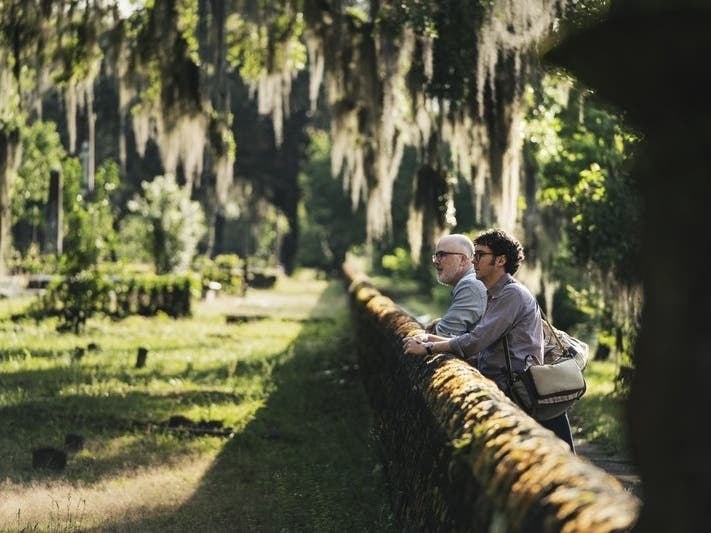
BIRMINGHAM, AL - Alabama may likely never escape its ugly past in regards to the Civil Rights era, with the state firmly entrenched in the history of discrimination and segregation and many of the most pivotal moments in the civil rights movement occurring in the state. One of those incidents, the unsolved murder of minister James Reeb in Selma, has been brought back into national focus thanks to two Birmingham journalists whose investigation into the murder has been detailed in their podcast, "White Lies," on NPR.
Chip Brantley and Andy Grace embarked on the investigation four years ago after hearing about the murder and realizing its historical significance. "We both grew up in Alabama, a generation after the Civil Rights Movement, but we first heard about his murder - which was headline, national news at the time - from a civil rights reporter," Brantley said. "Neither of us had heard about it growing up, or in school. As we started looking into it, we realized it was one of the few high profile civil rights murders, the ones that percolated out into the American consciousness, that was unsolved."
Although it remains unsolved, Brantley and Grace have made a breakthrough in the case, and were able to track down a man who was directly involved.
Find out what's happening in Birminghamfor free with the latest updates from Patch.
Reeb, 38, was a white Unitarian-Universalist minister who lived and worked in Boston's black neighborhoods and was passionate about social justice. He had been on the staff of the American Friends Service Committee, aiding low-income families in Boston, when the Rev. Martin Luther King Jr. invited clergy to Selma after Bloody Sunday, according to the Associated Press. Reeb headed to Alabama, despite warnings of how dangerous it could be for him.
Shortly after Reeb arrived, he and two other ministers were attacked, and Reeb died as a result of his injuries. There was a trial, but the all-white jury acquitted the men. The FBI reopened the case in 2011.
Find out what's happening in Birminghamfor free with the latest updates from Patch.
"Once we started looking into the story, we quickly found that an elaborate lie had been created to absolve the accused (and Selma itself) of Reeb’s murder," Brantley said. "We saw a chance for ourselves to undo this narrative, and a responsibility as white southerners to do so."
Brantley and Grace pursued Bill Portwood, a man whose name was mentioned in the trial that acquitted suspects Stanley Hoggle, Namon O’Neal “Duck” Hoggle and Elmer Cook. Portwood admitted to being part of the attack on Reeb in the sixth episode of the podcast, although his memory was not clear and his health was failing during the time Brantley and Grace were conducting their interviews. Portwood died in 2017 after a series of strokes.
The podcast not only looks into the case itself, identifying one of Reeb's killers and investigating the events that led up to and followed the murder, but it also paints a picture of the culture of Selma and the state as a whole during that era. As well, it forces listeners to take stock in just how much Alabama has changed - if much at all - since that time.
“The story in White Lies tells us so much about who we have been and who we are," Brantley said. "It’s hard to hear the story of Jim Reeb’s murder and think, ‘Oh, that was just those horrible people over there, back then.’ Those people are still a lot of us now.”
Check out the story of the murder of James Reeb as told in NPR's podcast "White Lies"
Get more local news delivered straight to your inbox. Sign up for free Patch newsletters and alerts.