Seasonal & Holidays
Which Alabamians Came Closest To The Presidency
There has never been a U.S. President from Alabama, but a handful of Alabamians have come close.


BIRMINGHAM, AL - As the country celebrates Presidents Day today, the 45 men who have held the highest political office in the United States are honored and remembered, but for Alabamians, none of those honored today are from their home state. While no Alabamaian has been elected president, a few have held an office that was in line to the presidency and one earned a party nomination for president.
Alabama has had one resident serve as vice president, although his service was brief. William Rufus King was the 13th U.S. Vice President, serving as the VP for President Franklin Pierce. King served as VP for only six weeks, as he became the first vice president to die in office after a battle with tuberculosis.
Although King did manage to hold the office of vice president, Alabama has had one other person picked as a running mate for a major party. John Sparkman, who served in the United States House of Representatives and the United States Senate from 1937 until 1979, was also the Democratic Party's nominee for Vice President in the 1952 presidential election as the running mate for Adlai Stevenson. They were defeated by the Republican ticket of Dwight D. Eisenhower and Richard Nixon.
Find out what's happening in Birminghamfor free with the latest updates from Patch.
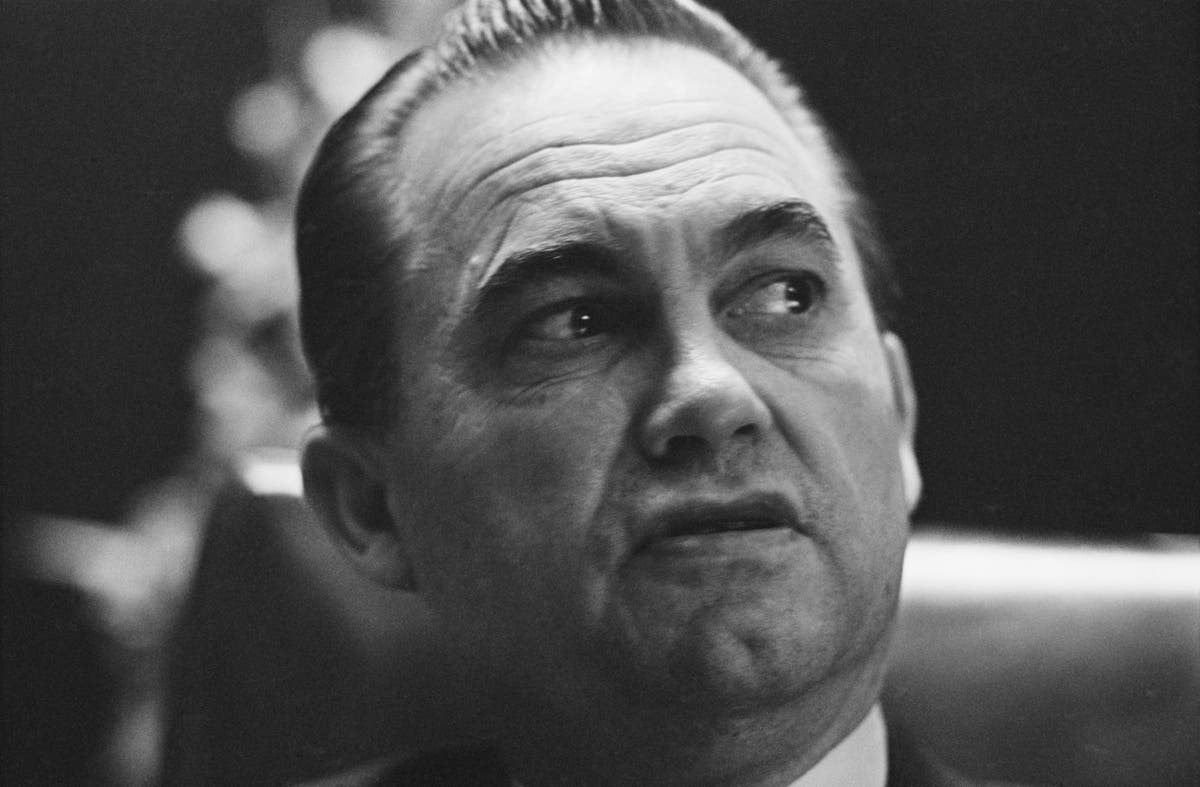
Alabama's four-term governor George Wallace perhaps came closest to the presidency. Wallace announced his intention to oppose John F. Kennedy for the 1964 Democratic presidential nomination. After Kennedy was assassinated in November of 1963, Wallace entered the Democratic primaries in 1964 campaigning on his opposition to integration and a tough approach on crime.
In Democratic primaries in Wisconsin, Indiana, and Maryland, Wallace garnered at least a third of the vote. Wallace would later drop out of the race, but that was not the end of his quest for the presidency. He ran as an Independent in the 1968 presidential election with Curtis LeMay as his running mate. Wallace was a controversial figure during a time of intense political unrest in the United States. The Civil Rights era had divided the nation and Wallace was the face of racial segregation in the country.
Find out what's happening in Birminghamfor free with the latest updates from Patch.
Many feared that Wallace would split votes among both major parties, with support from Southern white voters and blue-collar voters in states like Ohio, Pennsylvania and Michigan. Wallace had a strategy, however, which was to prevent either major party candidate from winning a majority in the Electoral College. This would throw the election into the House of Representatives, where Wallace would have bargaining power sufficient to determine, or at least strongly influence, the selection of a winner.
(For more local news and free news alerts for your neighborhood, sign up for your local Patch morning newsletter.)
Wallace's bid for the presidency came up short in 1968 but had enough momentum to prompt a run as a Democrat in the 1972 primaries. His polling numbers continued to rise rapidly during the beginning of his campaign, but on May 15, 1972, Wallace was shot five times while campaigning in Maryland. He was hit in the abdomen and chest, and one of the bullets lodged in Wallace's spinal column, leaving him paralyzed from the waist down for the rest of his life.
After the shooting, Wallace won primaries in Maryland and Michigan, but his near assassination effectively ended his campaign.
Other Alabama politicians have held offices that are in line for the presidency.
Rep. William Bankhead served as Speaker of the House of Representatives from June 4, 1936 –January 3, 1937. Bankhead, a Democrat, represented Alabama's 7th Congressional District.
Birmingham native Condoleeza Rice served as Secretary of State under Pres. George W. Bush during Bush's second term.
Alabama has produced three U.S. Supreme Court justices. John McKinley of Alabama served on the Supreme Court of the United States from 1838 to 1952, appointed by Pres. Martin Van Buren. John Archibald Campbell, appointed by Franklin Pierce, served on the SCOTUS from 1853 to 1851. Hugo Black, appointed by Franklin Roosevelt, served as a justice from 1937 to 1951.
Photo of George Wallace by Harry Benson/Daily Express/Hulton Archive/Getty Images
Get more local news delivered straight to your inbox. Sign up for free Patch newsletters and alerts.