Politics & Government
ANALYSIS: 5 Takeaways From Tuscaloosa Mayor's FY23 Budget Proposal
Here are our biggest takeaways and a whole bunch of numbers following the mayor's budget presentation for 2023.


TUSCALOOSA, AL — It's the busiest time of year for municipal officials as budget season is in high gear ahead of the new fiscal year beginning on Oct. 1.
Click here to subscribe to our free daily newsletter and breaking news alerts.
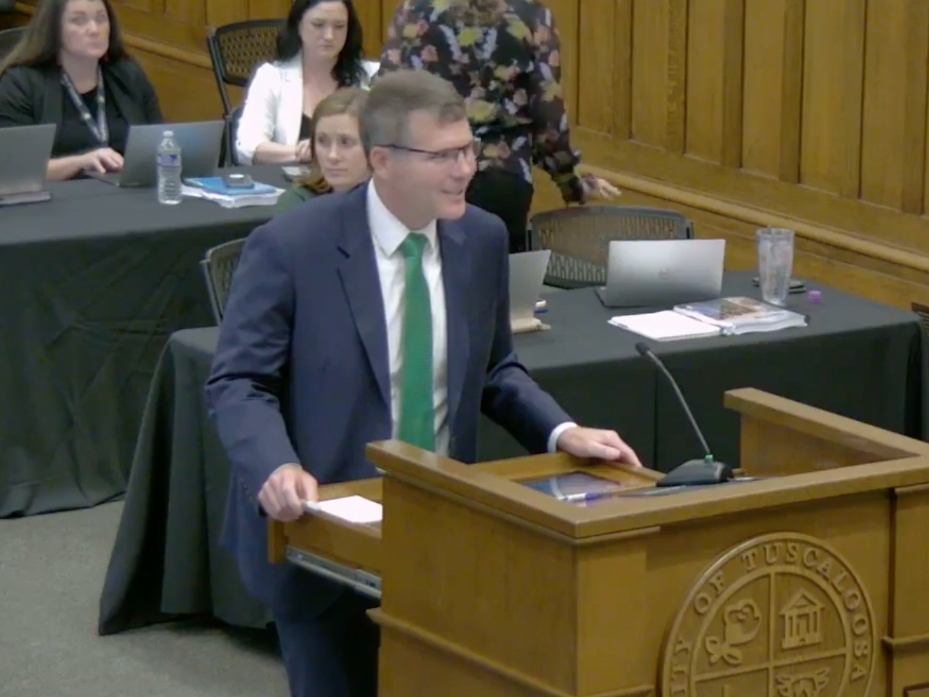
Tuscaloosa Mayor Walt Maddox on Thursday presented his proposed FY2023 budget to members of the City Council for the first time publicly as talks kick off, so Patch plans on following the developments in real time as leaders mull over the finer details of the budget for the coming year.
Find out what's happening in Tuscaloosafor free with the latest updates from Patch.
But before we get into our biggest takeaways, it's worth nothing the overarching theme of the proposed budget — "becoming elite."
Indeed, the theme evokes the words of the beloved Terry Saban and provides a condensed glimpse into what Maddox sees on the horizon for the city — a city he believes is poised to benefit greatly from the slew of tourism-centered capital projects currently in the works, namely the Saban Discovery Center and an adjoining events center.
Find out what's happening in Tuscaloosafor free with the latest updates from Patch.
But before we get into the weeds, let's get a quick glimpse at the numbers ...
- Maddox's FY23 budget proposes investing the following amounts in each of these sectors: Public safety ($76.7 million); Stormwater and sewer infrastructure ($19.9 million); Street paving ($3.4 million); Water and sewer ($67 million); Code enforcement ($354,385).
- The City of Tuscaloosa's sales tax rate — 3% — remains lower than the others ranked as the 10 largest cities in Alabama.
- In terms of the city's outstanding debt ($190,005,000), it still ranks behind the much smaller rival city of Auburn ($261 million). Debt service for the City of Tuscaloosa comes out to approximately 6.93% of its budget.
- Maddox's FY2023 budget proposed a 1.5% step raise for city employees, along with a 2.6% cost of living adjustment or COLA. As Patch has previously reported, 2021 represented the only year where city employees did not receive step or COLA raises.
- The proposed budget calls for a 2.5% step raise for public safety employees.
- The proposed budget also projects the city will bank $175 million in revenues in the coming fiscal year, compared to $157 million in FY2022. The largest chunk of the city's revenue — approximately 47% — will come from sales and use taxes, while 14% will come from business license fees and 12% from property taxes.
Now, here's a quick look at our takeaways ...
1. The Saban Discovery Center
As Patch earlier this month, the city has already moved ahead into the design phase of the project, with the Saban Center expected to be built around a wide range of science, technology, engineering, the arts, and math (STEAM) offerings for children, similar to Birmingham's McWane Science Center, while also bringing together community organizations such as Children's Hands-On Museum (CHOM) and the Tuscaloosa Children's Theatre.
After receiving council approval, the design phase is set to begin in the new fiscal year. It will also be complimented by a proposed 70,000-square-foot event center on the same campus, which is currently the location of the Tuscaloosa News building.
According to the mayor's proposed budget, $2 million in grant funding during FY23 will go toward the project from Elevate Tuscaloosa. It's worth noting that for the coming fiscal year, Elevate is budgeted to secure roughly $26 million in revenue, which is up from $22 million in the current fiscal year.
City leaders expect to bid the project out in October 2023, before construction begins the following December. The official opening is tentatively set for October 2025.
2. Investment in public safety and code enforcement
Few issues are consistently mentioned among the wants and needs of Tuscaloosa residents like public safety, as gun violence among local youth has been a visible problem in the last year.
With the problems showing no signs of slowing down, Mayor Maddox hopes to combat crime in the city by increased investments to police and fire that includes not just much-needed equipment, but pay raises to help with recruitment and retention of quality employees.
Maddox also alluded to the creation the city's Public Safety Fund last year that was used as the vehicle to implement a new employee pay plan for police and fire.
What's more, Maddox spoke to its potential in providing the city an opportunity to move its police and fire employees to the Retirement Systems of Alabama — another key selling point when it comes to employee recruitment.
The mayor then explained that the Public Safety Fund would be used as a foundation for an eventual conversion to RSA, potentially as early as 2026 or 2027. Revenues for this fund for the current fiscal year are predicted to come out to $3.8 million, with the city spending most of that and reaping a surplus of $94,000.
"You will see that I'm recommending $1 million be transferred from our surplus last year and be placed in the fiscal year '23 public safety escrow," he said. "The reason why is so that as we begin talking about a conversion to the RSA, we can begin building a nest egg. We know that if a conversion date of '26 or '27 is going to happen, we're going to have to be financially ready for it and have money in reserves to take that challenge on."
But apart from the pay raises for police and fire, the FY23 proposed budget would see $1.28 million dedicated to new equipment for the Tuscaloosa Police Department, along with roughly $97,000 for Tuscaloosa Fire Rescue.
In total, Maddox aims to see the city invest a little more than $8 million into new equipment across its departments.
Combatting blight is another goal of the mayor and city officials, as Maddox pointed out that the city has just five code enforcement officers to cover 66 square miles of the city.
This prompted Maddox to recommend adding four new team members to its Code Enforcement division.
"This will significantly increase our ability to preserve protect our blighted neighborhoods," he said. "One of the recommendations that [the Council has] adopted is allowing us to have a unified code enforcement for the first time in the city's history. I have great confidence in [Planning Director Ashley Crites] and her team in making this happen. It is going to be a major, major push of the city that we can continue to make certain that we go after the blighted areas of our communities."
3. Water and sewer
Given that water and sewer are considered "enterprise funds" — meaning they must pay for themselves and are not subsidized — the need is more pressing than ever to run the departments with a business-first mindset.
"As I shared with you last year, one of my frustrations in years past had been that the council had treated this more as a political and governmental activity instead of as a utility," Maddox said, before mentioning Tuscaloosa is one of three governmental bodies in Alabama that runs its own utility.
While plans adopted by the Tuscaloosa City Council call for an 11.1% increase in rates for customers, Maddox is recommending a flat increase of 10%, which will result in the average customer paying approximately $6.38 more more per month for their service.
The average monthly bill for residential water and sewer, according to city data, is currently $70.20. This remains far and away the cheapest of utility services offered in the city limits and is well below comparable cities and nearby municipalities like Northport, where the average bill for water and sewer is $102.
Maddox also pointed out that a gallon of tap water in Tuscaloosa costs $0.0037, compared to the national average cost of $0.0059.
In total, the city's finance team expects increased revenue for both water and sewer rates, with each generating approximately $3 million more in 2023 than the projected revenue for 2022.
Still, the biggest component of the city's push to address issues in the longterm is a ten-year capital plan for the water and sewer fund to implement investments in infrastructure totaling $297 million by fiscal year 2031.
Maddox said these investments will ensure clean drinking water, while providing the infrastructure for businesses and industries and expanding the opportunities for homebuilding across the city.
4. Infrastructure
Every time it rains in Tuscaloosa, you can be sure the complaints will flood in regarding standing water and poorly maintained storm drains in certain parts of the city.
And when it's not standing water that's the problem, talk often turns to the quality of city streets and the desperate need for resurfacing.
These are common municipal problems that never truly leave the city's radar and were factored in to Maddox's budget presentation on Thursday.
One of these projects covered under grant funding will be the University Boulevard corridor project, the design phase of which is currently underway. This project will be covered by a $17 million RAISE grant received by the city from the U.S. Department of Transportation.
In terms of paving, the mayor hopes to secure $3.4 million, with the general fund bearing the brunt of the costs with $2.1 million budgeted for FY23.
The city also is considering $860,000 — mostly from its general fund — to be put toward addressing neighborhood drainage issues.
5. Education
While the city does indeed contribute in excess of $6 million each budget year to Tuscaloosa City Schools, Maddox on Thursday proposed additional funding to improve the quality of athletics at high schools and middle schools in the city's purview.
As Patch reported on Thursday, Maddox is proposing the creation of an Athletic Excellence Fund that would see $500,000 initially budgeted for the coming fiscal year to then be doled out evenly among the city's three high school "clusters" — Bryant High, Central High and Northridge High.
"Another recommendation came in to keeping our youth busy between the hours of [3 p.m. and 11 p.m.], and as we know, that's the highest crime period in the city of Tuscaloosa," Maddox said. "And we've also seen in recent years an ever increasing amount of juvenile crime in our community. And there's only one institution that touches the majority of our children and young people in Tuscaloosa every single day and that's Tuscaloosa City Schools in some form or fashion."
The quality of TCS athletics has been a sore subject for many since Central High School was split up in the early 2000s and it's worth noting that in the opening week of the 2022 high school football season, the city's three high schools each notched losses and were outscored 118-22 by opponents.
Separate from athletics, however, Patch previously reported that Tuscaloosa City Schools is requesting a 4% increase in funding for the coming fiscal year, which was prompted by a 4% pay raise for state employees approved by the Alabama legislature earlier this year.
Be sure to follow us in the coming weeks for more coverage as budget talks heat up!
Have a news tip or suggestion on how I can improve Tuscaloosa Patch? Maybe you're interested in having your business become one of the latest sponsors for Tuscaloosa Patch? Email all inquiries to me at ryan.phillips@patch.com
Get more local news delivered straight to your inbox. Sign up for free Patch newsletters and alerts.