Community Corner
Column: Looking Away From The COVID-19 Abyss
Tuscaloosa Patch Founder and Field Editor Ryan Phillips gives a range of viewpoints as COVID-19 deaths are occurring with more frequency.



*This is an opinion column*
"He who fights with monsters might take care lest he thereby become a monster. And if you gaze for long into an abyss, the abyss gazes also into you" — Friedrich Nietzsche, "Beyond Good & Evil"
TUSCALOOSA, AL — I was one of no more than two-dozen people at a small funeral last week for a friend who died after contracting COVID-19. A family member told us the 59-year-old had not yet come around to receiving the vaccine and, despite his best efforts, had been unable to access monoclonal antibody infusions before his symptoms worsened to the point of hospitalization.
Find out what's happening in Tuscaloosafor free with the latest updates from Patch.
To his credit, he often wore a mask, even if it did say "Trump 2020: No More Bullshit." And regardless of any political differences we might've had, he was a warm soul to me for the brief time I knew him and that much was readily apparent on the surface.
Click here to subscribe to our free Tuscaloosa Daily newsletter and breaking news alerts
Find out what's happening in Tuscaloosafor free with the latest updates from Patch.
More than a year and a half into this pandemic, I've long since quit keeping track of the number of people I knew on a first-name basis who have died after falling ill with the virus. Maintaining that list is just too much to bear. But as pallbearers wheeled my friend's flag-draped casket down the aisle and out the door to the tune of "American Trilogy" by Elvis Presley, I was reminded once again how personal this entire crisis has become.
Indeed, just this week, I was forced to put one story on hold about a young mother in her 40s from Northport who died from COVID-19 after a 41-year-old father and husband — ALEA Senior Trooper Jason Vice — lost his battle with the virus on Thursday. Unlike any other point during this wretched plague, deaths in our community are becoming more frequent and occurring among an increasingly-younger subset of the population.
Until now, as medical professionals have pointed out in my past stories, those under 50 have been the most hesitant cohort when it comes to receiving the vaccine. This is believed to be due, at least in part, to the first major wave not resulting in acute symptoms for younger patients, thus lulling many into the belief that even if they catch the virus, it will represent nothing more than a head cold and minor inconvenience.
ALSO READ: Mother Of Late Bama Superfan Tweets Plea To Unvaccinated
These deaths also came within days of President Joe Biden announcing sweeping new mandates requiring vaccinations for employees of large businesses and the federal government. And the following day, I published yet another heartbreaking account of a 25-year-old Tuscaloosa man who is still fighting for his life on a ventilator, all while the harsh reality of mounting medical expenses loom over a young family. To the family's financial lament, the story has gone largely unnoticed, overshadowed by the partisan static that consumes our tiny screens, and met mostly with sharp keyboard criticisms focusing on the man's vaccination status.
While I understand the hesitancy in being forced to take a shot, I'm still left asking how simple requirements are any different in practice from the mandatory vaccinations our kids must receive before they start school? As far as I know, nobody has threatened to topple the government over tetanus shots.
For those of us keeping score, the pandemic has come in noticeable waves that have each brought something different to our doorsteps. In the first few months of 2020, it was a pandemic of uncertainty that had the public and our economy by the throat. But the first confirmed cases in the spring would eventually balloon into deaths at nursing homes and longterm care facilities early that summer as the country stumbled over itself trying to implement an effective testing program.
Likely hoping to avoid further panic, officials were quick to point out at the time that those who were hospitalized were either elderly or suffered from underlying medical conditions. I saw this with my own eyes when a mental health facility in Mississippi was decimated by an outbreak. And at the same time, this is when the argument of "the flu killing more people than COVID-19" began as the goalposts were uprooted by skeptics and primed for perpetual motion in the tragic weeks and months to come.
Then came the gradual rise beginning in the middle of last summer, moving at such a comparatively slow pace that the public was numb by the time hospitalizations topped out just short of 200 at DCH following the holidays — a number few would admit they thought they would ever see. It hurts to remember last Christmas Eve, covered head to toe and leaving presents in my Dad's driveway as he was in isolation with COVID-19. That was my pandemic rock bottom. It had been a slow and painful build, and the first time we began to see the demographics of those hospitalized begin to include more than just the most vulnerable in our society.
But it's important to note the coronavirus vaccine, which has now received full authorization from the federal Food & Drug Administration, first became available during the brutal winter surge. What followed would be a mix of public excitement, skepticism and a false sense of security, as cases trended down sharply and we enjoyed a summer that somewhat resembled the normalcy we took for granted prior to the pandemic. Hospitalizations fell to single digits or zero, mask mandates were allowed to expire and large indoor events returned — all presenting a light, however faint, that seemed to be glimmering just out of reach at the end of the tunnel.
As summer wore on, though, the trends didn't so much fluctuate anomalously from the previous year as they did intensify at a rate we haven't seen before. As I've reported ad nauseam for the last couple of months, the rate of new hospitalizations in Tuscaloosa — when compared to the latest comparable surge following the holidays — far outpaces the weeks and months leading to when DCH Health System hit its peak in January. For context, it took DCH just a couple of months to see COVID-19 inpatient totals rise at a rate that previously took nearly eight months to reach.
Apart from the obvious deviations from the last surge with respect to transmissibility of new strains and the availability of the vaccine, the biggest difference in September 2021 and September 2020 is the wholesale lack of regard for our public health and hospitals. It's like we stuck our heads in the sand and gave up.
Across the country, not just in Tuscaloosa, concert venues are full, football stadiums are packed and kids not old enough to be vaccinated, in many cases, are being sent back into the classroom — oftentimes in schools who refuse to put politics aside and require masks for the newest most-vulnerable segment of our population.
Parents now have to weigh sending their unvaccinated child to school without a mask or settle for the alternative. In the deeply-conservative outlying areas of Tuscaloosa County, sending a child to school in a mask when there isn't a standing mandate is the equivalent of the child wearing a "BIDEN 2020" T-shirt. Such a simple act of caution — even during the present height of the worst pandemic of our lifetimes — will no doubt draw the jeers of radicalized young-ins who parrot the politics they hear at the dinner table. The roots of our problems run that deep and most of us are to blame.
I'm referring, of course, to the toxic attitudes we take toward one another. Patience is in short supply and common sense even more so. I've seen more friends than I can count, people who I know are compassionate and loving, become cold and callous when sharing stories of the unvaccinated dying from COVID-19.
Conversely, I've seen intelligent and grounded people who, for whatever reasons, have cast aside logic and empirical evidence in favor of the conspiracy theories that reinforce their preconceived worldview. On both sides, there is no room for compromise, and that's what truly worries me when looking ahead to what is sure to be another heartbreaking winter.
This pandemic has worn on nerves across the political spectrum, while at the same time limiting so much of our communication with one another to social media. It's a story of the same indifference and distain for "the other" on opposite poles. And while I would say we've lost our moral compass during this crisis, that would imply our society had one to begin with.
Referring back to the story about the young man from Tuscaloosa who is currently hospitalized, I was disappointed in some of the social media comments on the story and some of the feedback I received in my emails. So many unwarranted assumptions were thrown around as this man's family struggles with the complexities of their situation. Why would I add insult to injury if he wasn't vaccinated? How is my community better served by pointing this out?
My readers will vouch that I advocate for the vaccine at every turn, almost to a fault. But in my opinion, the stories of those still clinging to life is not the time to grandstand and say "I told you so."
There is a time and a place to point out irresponsible behavior for those who are not vaccinated, but I would venture to guess many of the same folks who attempted to lampoon and belittle this young man likely take little issue with college football stadiums full of unmasked and unvaccinated fans.
But one thing I've learned above all else during this pandemic is that the information I report as a professional journalist, while valuable and informative, is highly-unlikely to convince someone as equally-hardheaded as me to do something they don't want to do. It's that simple.
That's a job that should be reserved for loved ones and friends of those who aren't vaccinated — and one best handled with compassion, respect and empathy. Shaming by either side does nothing but further drive the idealogical wedge that divides us and this adversarial approach we continue to take toward our own neighbors will only deepen the bitterness.
It's time we all look away from the abyss of this pandemic on our phone screens and turn our focus toward one another as human beings. If not, we all risk becoming the unsympathetic monsters we profess to fear.
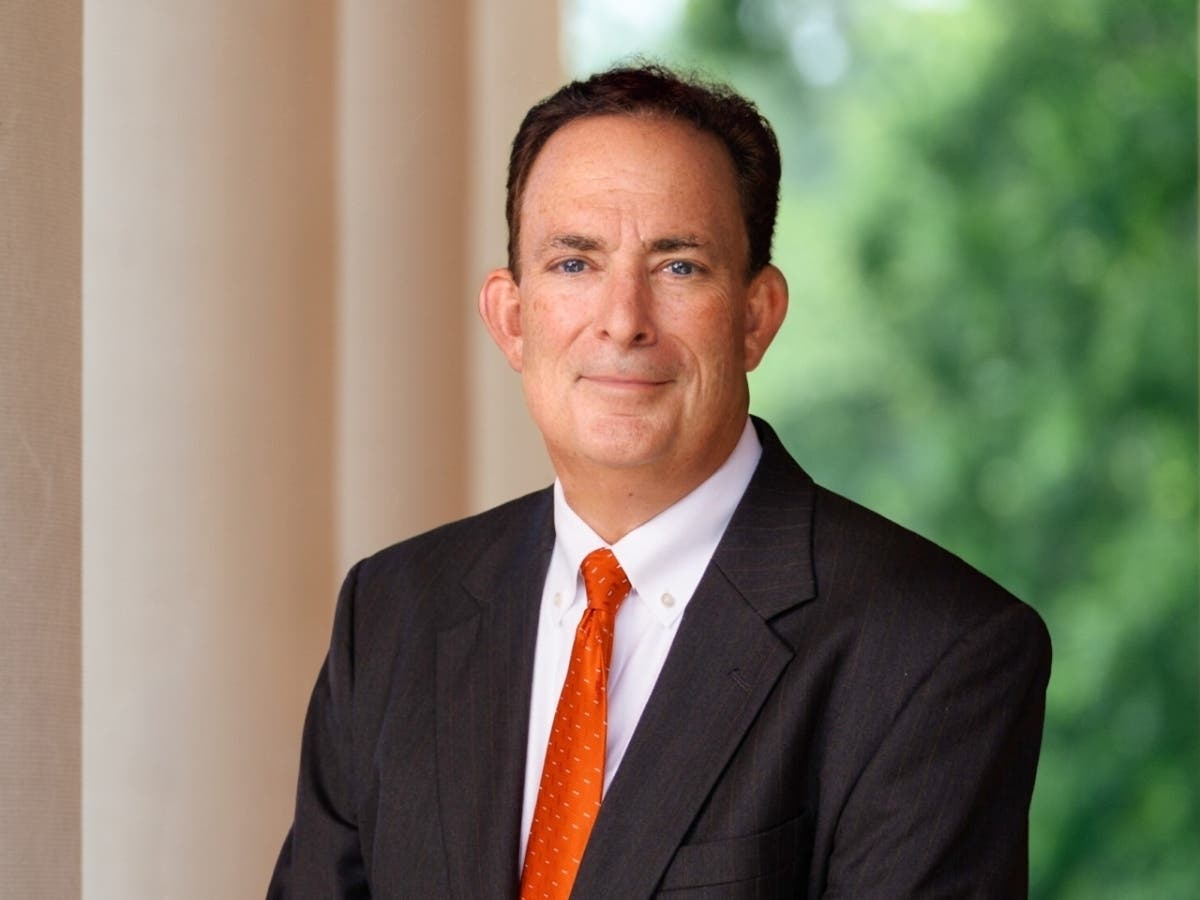
Ryan Phillips is the founder and field editor of Tuscaloosa Patch. A Tuscaloosa native and graduate of the University of Alabama, he has won numerous awards for investigative reporting, feature writing, editing and commentary. To reach him with comments or feedback, email ryan.phillips@patch.com.
Get more local news delivered straight to your inbox. Sign up for free Patch newsletters and alerts.