Schools
Crimson Tide Football Players March For Racial Equality
UA football players and coaches marched to Foster Auditorium Monday to speak out against racial injustice and police violence


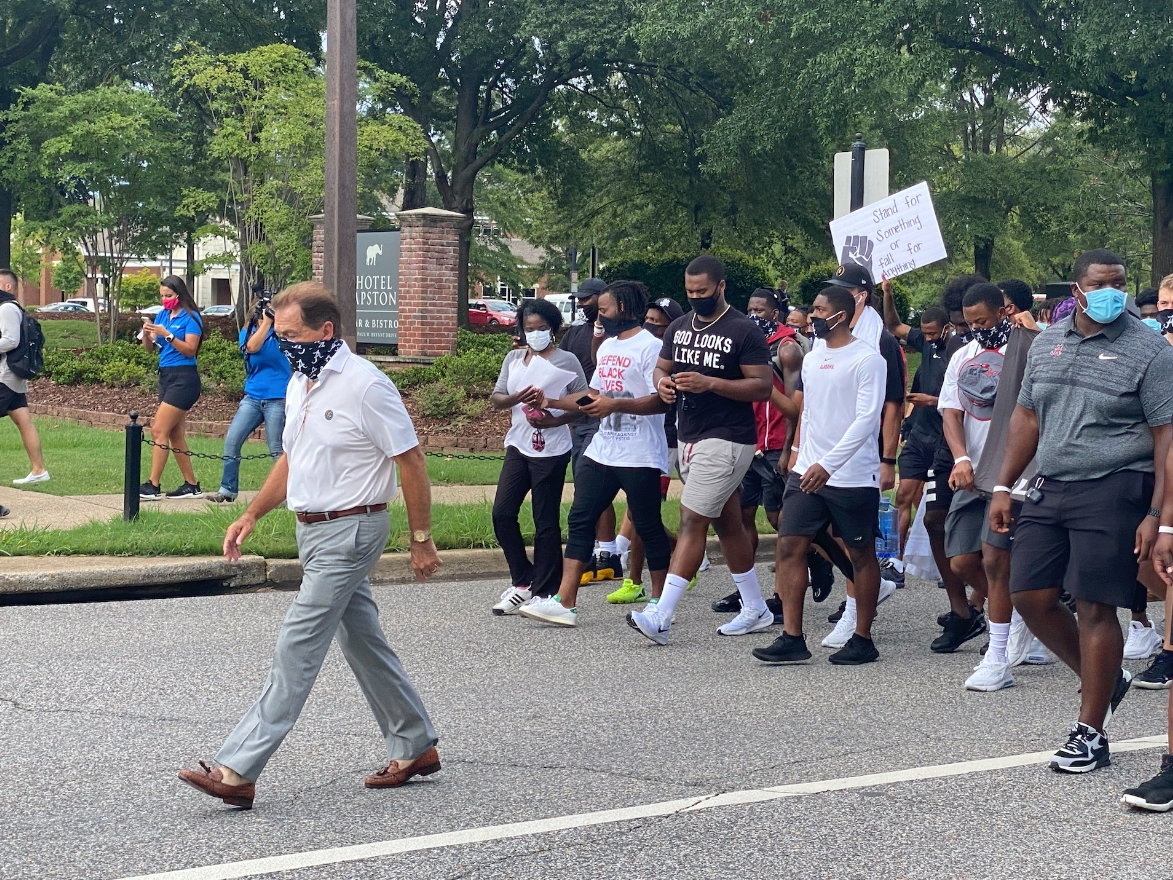
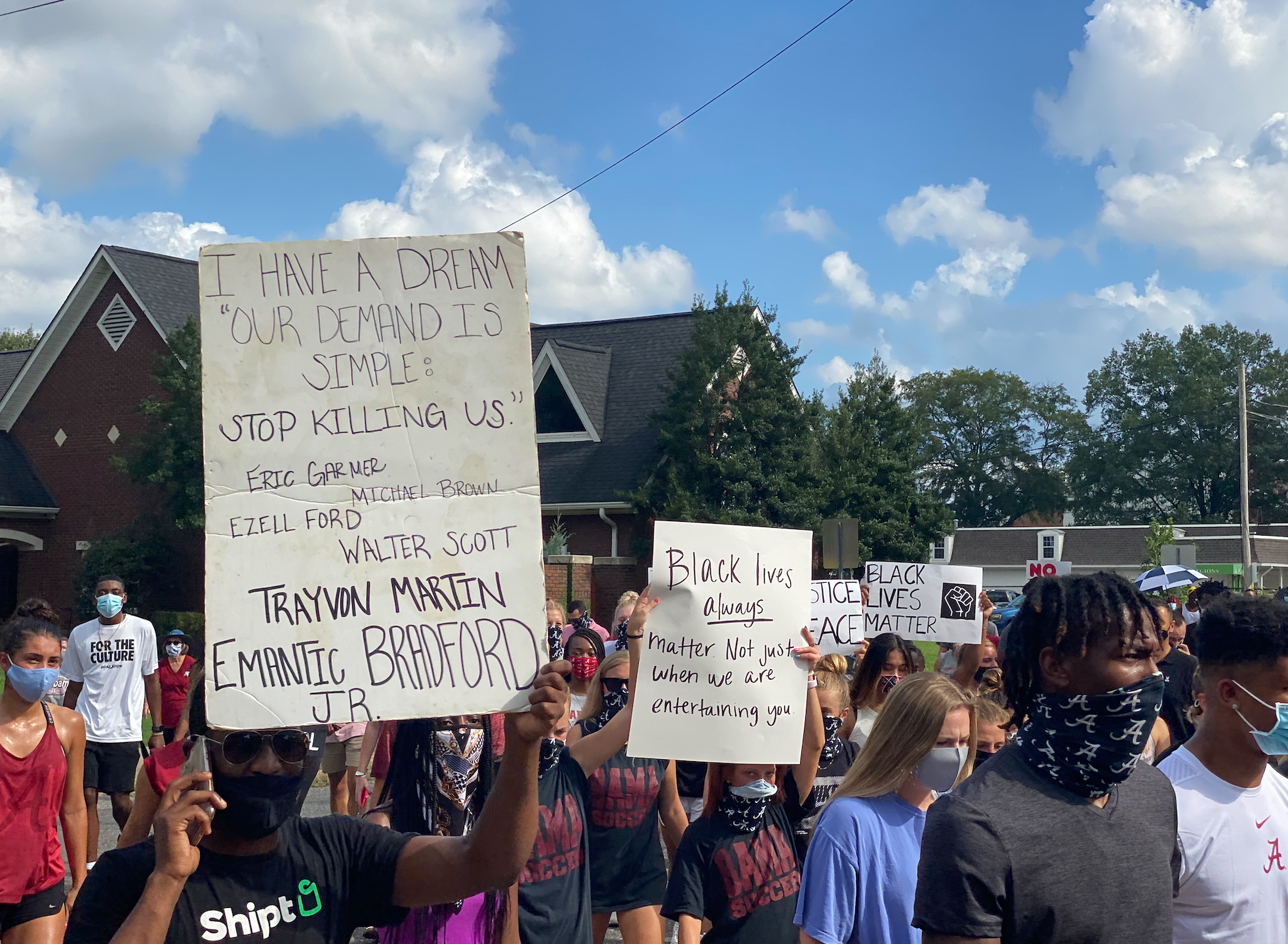
TUSCALOOSA, AL. — University of Alabama football coach Nick Saban walked at the front of a large caravan of Crimson Tide student athletes Monday afternoon as the group marched to Foster Auditorium to show support for the Black Lives Matter movement by protesting racial inequalities and police violence.
The peaceful demonstration began at the Mal Moore Athletic Facility and moved along Paul W. Bryant Drive — named for the legendary coach who first integrated the university's football program — and ended at an even more appropriate site: Foster Auditorium.
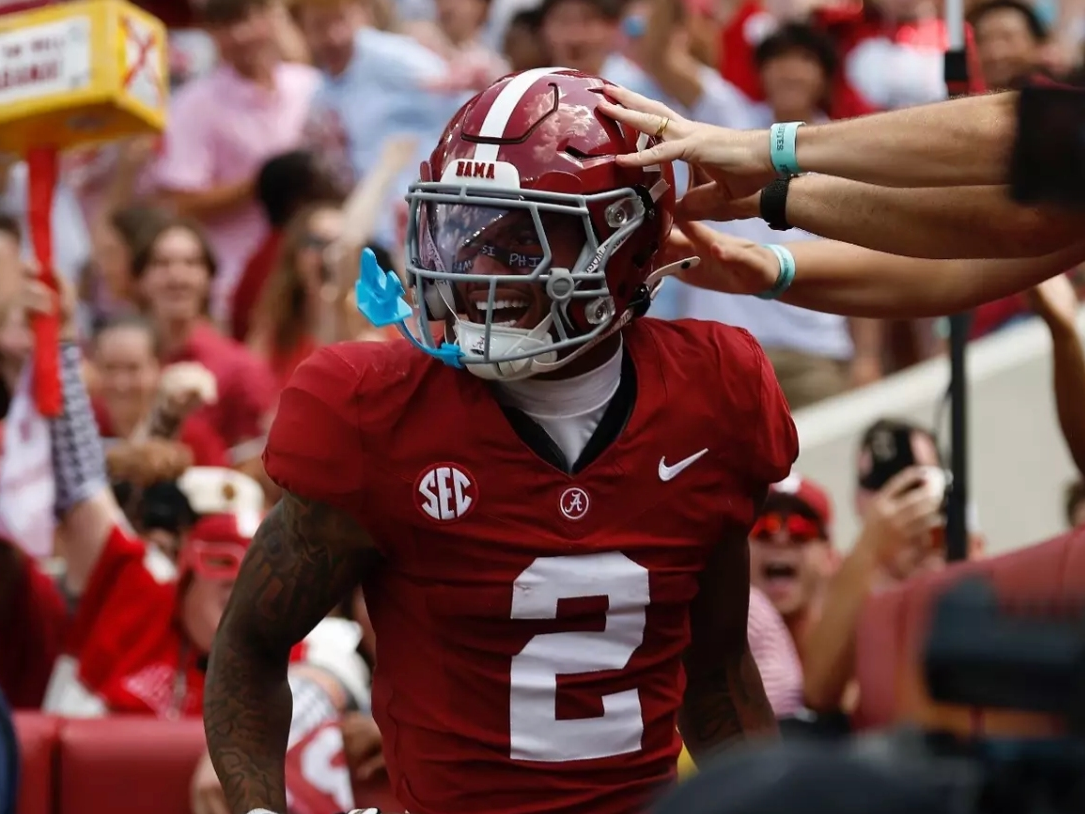
Senior running back Najee Harris, an early contender for the Heisman Trophy if college football is played this fall, was a primary organizer of the march. In stepping up to the podium, he addressed the large crowd in the very spot where Alabama Gov. George Wallace stood on June 11, 1963 and defied federal authorities by attempting to block the admission of Vivian Malone and James Hood, who became the university's first Black students.
Find out what's happening in Tuscaloosafor free with the latest updates from Patch.
"This call for change can’t end here today," Harris said. "We walked to this schoolhouse door intentionally because, while much has changed in the last 57 years, too many things have not."
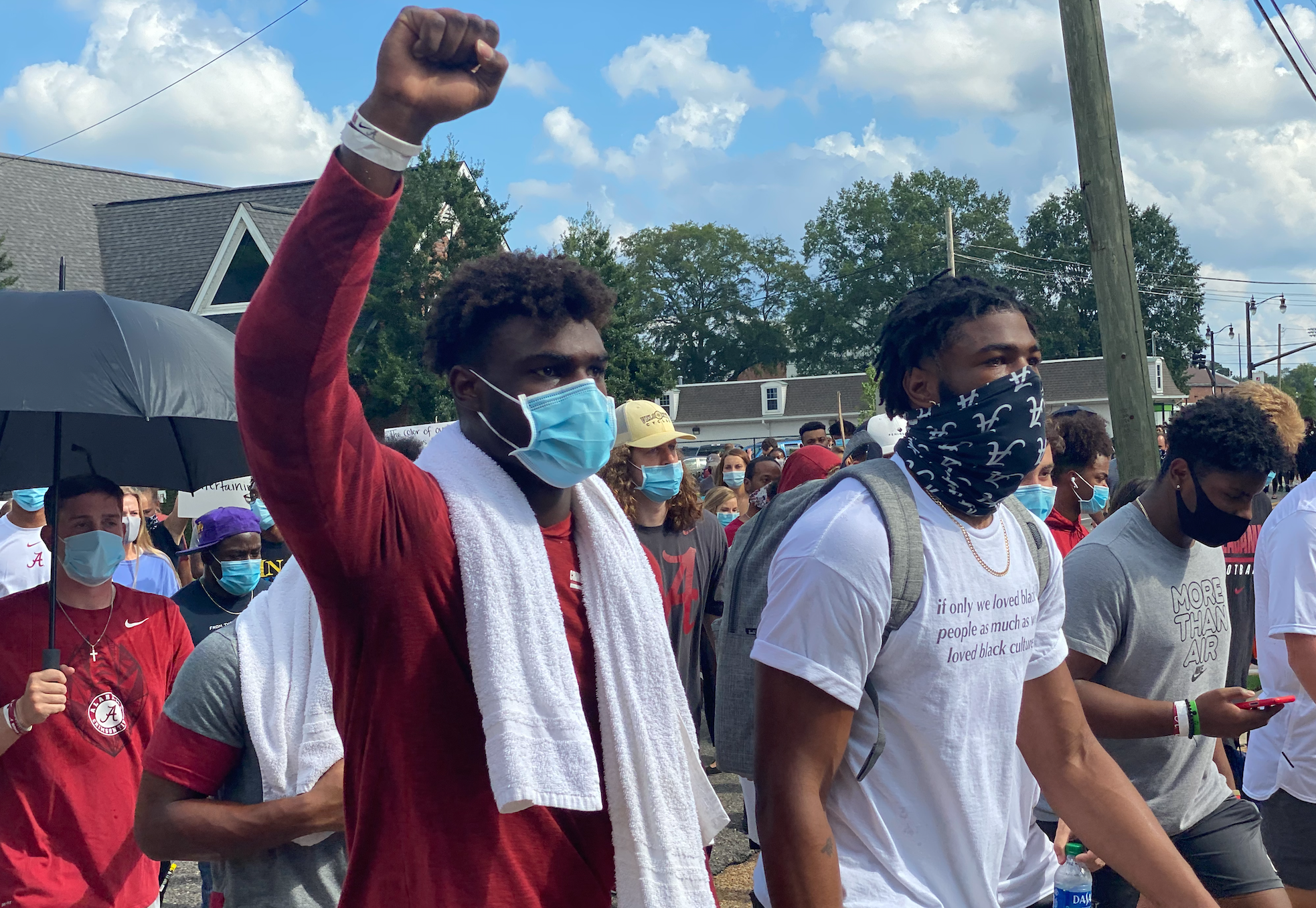
The protest by student athletes on the Tuscaloosa campus comes as the latest in a wave of high-profile athletes and teams using their platforms to speak out against racial injustice taking place in cities across the country, most recently in Oregon and Wisconsin.
Find out what's happening in Tuscaloosafor free with the latest updates from Patch.
Harris went on to say the problems of systemic racism facing the nation will not simply come and go with a news cycle. Rather, they will require diligence and an overall team mentality to make change possible, he said.
Looking to the short-term possibilities, Harris expressed his plans to contribute his time to Alberta Head Start and the Boys & Girls Clubs moving forward.
"It is not a problem that will eventually dissipate without action … but I ask you, what’s next?" Harris said. "We’re certain we won't let this momentum die. This must be an ongoing movement until change happens."
Saban also addressed those gathered in front of Foster Auditorium, where he praised the heart and initiative of his players, while stressing that sports have always offered a platform to effect social change. This puts the onus on the players, the coach said, to use their platform responsibly and in a positive way.
Coach Saban leading the march to Foster Auditorium pic.twitter.com/DnS9m5emoF
— Ryan Phillips (@JournoRyan) August 31, 2020
Referring to himself as a "proud parent" with respect to his team, he then commented that he has benefited from the numerous conversations had with players and colleagues in recent months because he doesn't see the world through the same lens.
"This is what helped me in my role as a leader," Saban said. "To listen to the players, learn from the players, and give them the opportunity to do things that could impact social change today."
Saban lauded the willingness of the players to demonstrate as a unified group, saying Monday's march was something that was decided as a team.
" I am very proud and supportive of everything they are trying to say in a peaceful and intelligent way," he said.
Another player that took to the podium was Crimson Tide Offensive Lineman Chris Owens, who spoke of the camaraderie and unity seen in the team every day, despite the social climate. In considering the current state of unrest, though, Owens lamented the division that continues to abound.
Throughout his speech, Owens referenced the cultural norms faced by people of color in America, such as a learned awareness of how to interact with police during a traffic stop or being taught to save receipts in the event of being accused of shoplifting.
"Now look at the status of our country," he said. "Unlike the example of our team, our country is not a place of equality and unity anymore. Because of this, we are unable to accomplish the goals of a just society."
UA President Stuart Bell was in attendance, along with Athletic Director Greg Byrne, and echoed Saban's pride in the athletes standing up for what they believe in, while also expressing the institution's support of their message.
"As we’ve seen through history, one man or one woman can have a profound impact," Bell said. "A team working together can have unlimited influence."
Bell evoked the memory of Congressman John Lewis, a civil rights icon who marched in places like Selma before serving in the U.S. House of Representatives until his death in July. Lewis was a recurring theme during the different speeches, cited by both Bell and Christine Taylor, who serves as vice president and associate provost for diversity, equity and inclusion.
"His message was that each one of us has a role," Bell said. "Each one of us has a responsibility in society and today is a reminder of that."
Numerous University of Alabama Police officers were in attendance and could be seen handing out water bottles to players and attendees on the march back to the Mal Moore Athletic Facility following the demonstration.
UA Police Chief John Hooks spoke to the athletes and those gathered to offer a dialogue that will hopefully foster a more positive relationship between his department and the UA community moving forward.
Hooks said he has focused on hiring and training the right officers, while also monitoring and reviewing their performance and building strong partnerships in the community.
In utilizing terminology made popular by Saban during his time at UA, Hooks said hiring the right officer is often difficult, but highly important.
"It's a tough job and not everyone is up to that challenge," he said. "It was important for us to develop a process that we would recruit and be proud of the person we would be standing next to."
Communication is essential in law enforcement, Hooks commented, which factors in to the hiring of each officer.
"The first thing I look for in a candidate is are they a good human being?" he said. "I can teach someone how to be a police officer. I can’t teach someone how to be a good person."
Hooks invited the players and those in the community to get to know the officers in his department and stressed that the best way to build bridges is to first start the dialogue and know the person behind the uniform.
"As society continues to evolve, we must evolve with it if we’re going to be what our communities need us to be," he said. "I’m in no position to judge anyone else, but I know as hard as my officers work … no one is perfect, including me."
Once all of the speakers were finished, the central theme in each speech stood out as the need for progress — a sentiment that was initially mentioned by Harris in his closing remarks to begin the demonstration.
"We need change in our system in law enforcement," he said. "We need change in our communities and we need change in our hearts. This is something that must be done."
Get more local news delivered straight to your inbox. Sign up for free Patch newsletters and alerts.