Crime & Safety
New Details Revealed As High-Stakes Defamation Trial Involving Former UA Basketball Player, NYT Starts
Here's our courtroom coverage from the first day of the defamation trial against the New York Times brought by a former UA basketball player


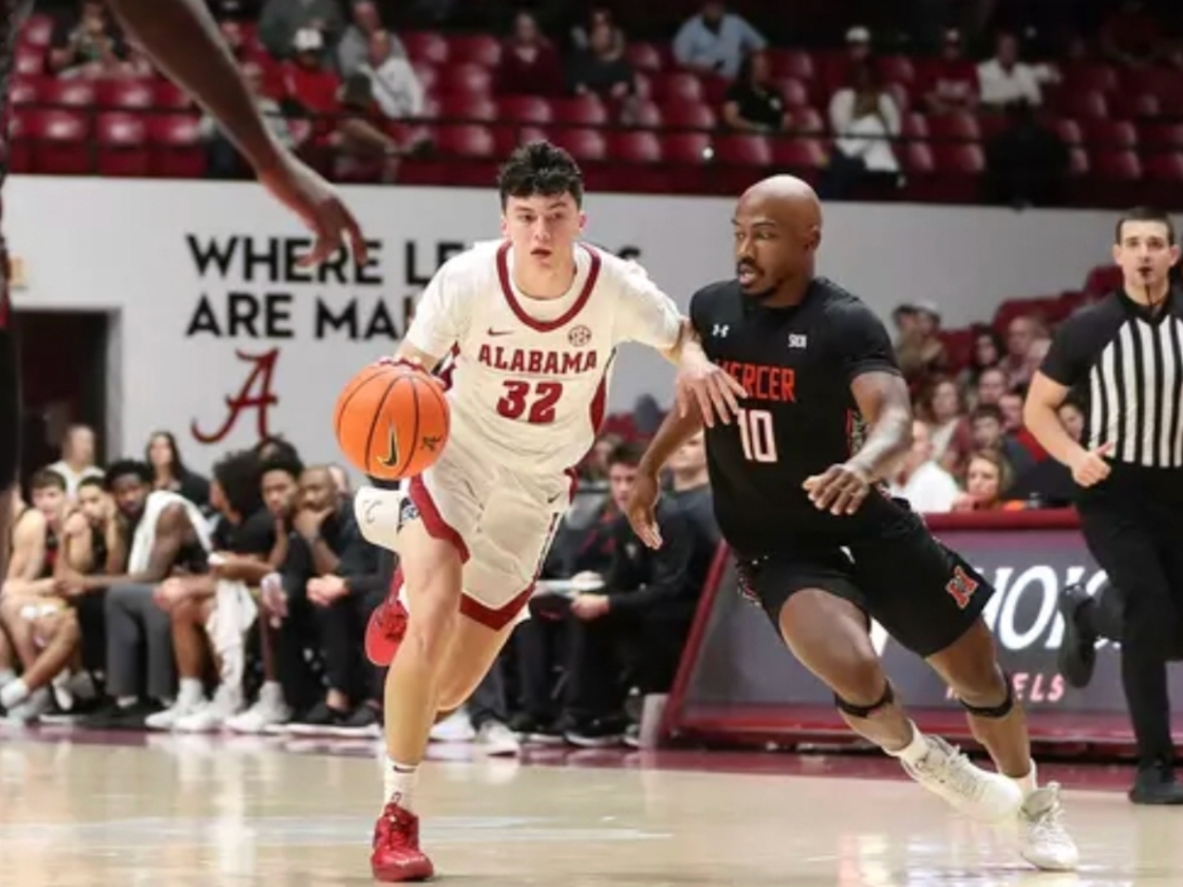
TUSCALOOSA, AL — Jurors heard opening statements and initial testimony Monday as the defamation trial brought against the New York Times by a former Alabama basketball player began in federal court in Tuscaloosa.
Click here to subscribe to our free daily newsletter and breaking news alerts.
As Patch previously reported, the lawsuit stems from a March 2023 New York Times article by sports reporter Billy Witz, titled "A Fourth Alabama Player Was at a Deadly Shooting, in a Car Hit by Bullets."
Find out what's happening in Tuscaloosafor free with the latest updates from Patch.
Kai Spears, who was a walk-on on the basketball team at the time of the shooting, contends the article incorrectly reported that he was in former Alabama basketball standout and eventual No. 2 overall pick in the NBA Draft Brandon Miller's vehicle, and at the scene when the shooting occurred.
The fatal shooting on Grace Street in the early morning hours of Jan 15, 2023, resulted in the death of 23-year-old Birmingham mother Jamea Harris. The investigation then saw former Alabama basketball player Darius Miles and his childhood friend Michael Lynn Davis both charged with capital murder.
Find out what's happening in Tuscaloosafor free with the latest updates from Patch.
Miles is still awaiting trial for allegedly providing the gun Davis used in the fatal shootout with Harris' boyfriend.
As Patch previously reported, Davis was found guilty in May 2025 and sentenced to life in prison without the possibility of parole.
Spears transferred from the program after his sophomore year and is currently a senior on the basketball team at West Liberty University in West Virginia.
Trial Begins
The eight-person jury for the civil trial consists of six White women and two White men, with U.S. District Court Judge Annemarie Carney Axon presiding.
Both sides were each given 30 minutes to provide their opening statements to the jury, with Tuscaloosa attorney Matthew Glover of Prince Glover Hayes speaking on behalf of Spears.
Spears is also represented by West Virginia attorney Stephen P. New.
Spears' legal team has levied two counts in its lawsuit against the New York Times, alleging defamation and false light/ invasion of privacy, while requesting the jury to grant unspecified damages if it rules in their favor.
During his opening statement, Glover said the initial article was based on an "unknown, anonymous source," before it was posted online for the newspaper's 10 million subscribers and then in print the following day for a circulation estimated to be in the hundreds of thousands.
Glover also pointed out the swell of media attention surrounding the Alabama basketball program following the shooting, which came during one of the Crimson Tide's most successful regular seasons in school history.
Indeed, Alabama was the No. 1 overall seed in the 2023 NCAA Men's Basketball Tournament and Glover insisted the New York Times was looking for a controversial story about the program on the eve of the tournament.
With Alabama set to take on No. 16 seed Texas A&M-Corpus Christi at Legacy Arena in Birmingham for the first round, Witz was allegedly in Tuscaloosa eight hours before tip-off meeting with an anonymous source whom he had only known for about a week.
Both sides in the case agree that the anonymous source, referred to in court Monday as "Source A," showed Witz photos, surveillance video and a transcript from the preliminary hearing for Davis and Miles.
It was this evidence provided by Source A that allegedly convinced Witz and his editor, Oskar Garcia, that Spears had been in Miller's vehicle at the time of the shooting.
Instead, it was revealed after the article was published that the other occupant of Miller's vehicle was Crimson Tide basketball manager Cooper Lee.
What's more, Glover contended that Source A had their own anonymous sources who they would not reveal to the New York Times. There was also a second source Witz was allegedly in communication with, Source B, who is believed to have expressed doubt to the reporter after the story was published.
After this meeting at a Tuscaloosa office with Source A, Witz then made the short drive to Birmingham to cover the Crimson Tide in the NCAA Tournament.
Witz made three audio recordings related to the story inside Legacy Arena where he could be heard asking Spears and Miller if the walk-on had been in the star forward's car at the time of the shooting.
A former University of Alabama athletic department spokeswoman testified Monday that the players had received training on how to address questions from the media about the ongoing criminal investigation. The jury also heard the recording of Spears telling Witz he couldn't comment when asked by the reporter if he had been in Miller's car.
Glover went on to tell the jury that Witz then threatened the Crimson Tide basketball staff when his request for a private meeting with Alabama head coach Nate Oats was rebuffed.
A recording was then played for the jury that showed Witz telling a staffer that if he could not meet with Oats in private to discuss "sensitive information," Witz would ask him during a televised press conference the following day.
Glover continued his opening statement by focusing on the actions of Witz and the newspaper prior to the publication of the story, including a list of questions sent to the UA athletic staff roughly three hours before the article about Spears was published.
University officials have said under oath that they were never informed of a deadline for the story and had convened a communications committee to work out answers for the New York Times before the story was posted online.
UA Deputy Director of Athletics for External Affairs Jessica Paré later testified Monday that less than an hour after the article was published, UA informed the New York Times that its information was inaccurate.
This was followed by public denials issued by Spears' father, former Marshall University Athletic Director Christian Spears, and University of Alabama Director of Athletics Greg Byrne.
Still, Glover insisted to the jury that the newspaper continued on with the story, updating it online to include each new denial, before a correction was eventually published both online and in print.
Birmingham attorney Michael L. Bell delivered the opening statement on behalf of the New York Times and said the foundation of Spears' case rests on the accusation that Witz and the newspaper were "purposely trying to avoid the truth."
He then referred to Witz as a "hard-working journalist busting his tail to get to the truth."
Bell went on to paint a narrative that the newspaper had the best of intentions but fell victim to an otherwise credible source who got their facts wrong.
He also addressed the alleged "threat" to Coach Oats, instead saying that Witz was trying to handle the matter in the most professional way possible while giving the coach every opportunity to address the allegations before they became public.
In the wake of the story being published and receiving negative attention when the factual inaccuracies came to light, Bell said Witz was "ghosted" by UA staff who allegedly refused to respond to his follow-up requests after each new denial.
Following Paré's testimony, Glover called Mike Abrams to the stand to discuss the newspaper's policy on anonymous sources and how it relates to the case at present.
Abrams, who holds the aptly named title of deputy editor for Trust at the New York Times, admitted at several turns that the story was found to be inaccurate immediately after it was published.
He also confirmed Glover's assertion that Source A made Witz aware that they had their own sources but did not disclose the identity of their sources to the reporter.
Abrams then said the newspaper wanted to avoid a "Russian nesting doll of sources," as it related to a source who was viewed as credible, so there was no documented effort to follow up with Source A's sources to verify the facts before the story was published.
"That's not how journalism works," Abrams told Glover while on the stand.
Abrams' testimony is set to resume Tuesday morning at the Richard Shelby Federal Building and Courthouse.
Have a news tip or suggestion on how I can improve Tuscaloosa Patch? Maybe you're interested in having your business become one of the latest sponsors for Tuscaloosa Patch? Email all inquiries to me at ryan.phillips@patch.com
Get more local news delivered straight to your inbox. Sign up for free Patch newsletters and alerts.