Health & Fitness
How DCH Health System Facilities Scored In New Hospital Safety Grades
New national hospital safety ratings reveal years of improvement at DCH Regional Medical Center and room for improvement in Northport.


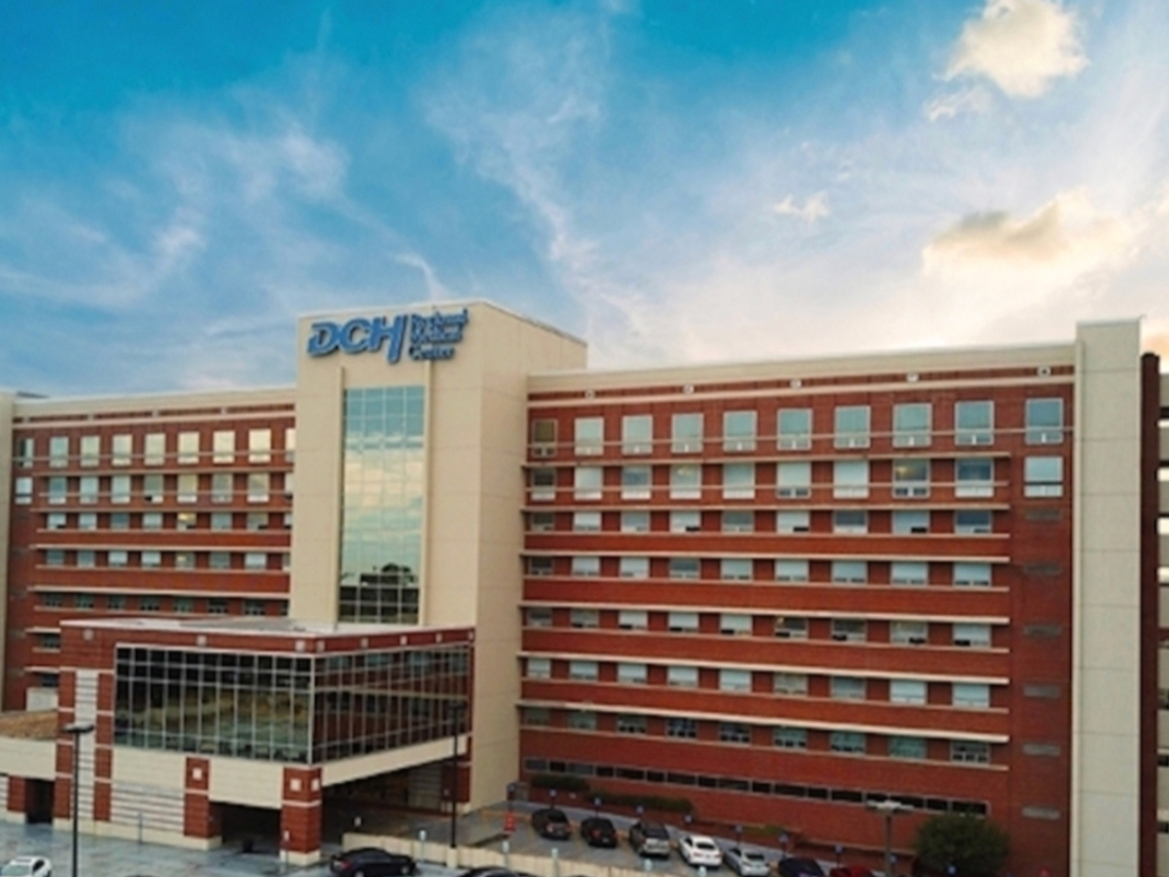
TUSCALOOSA, AL — DCH Regional Medical Center received a "B" in the latest national hospital safety ratings released Wednesday, which shows sustained multiyear improvement in several categories measuring patient safety and the prevention of medical errors.
Click here to subscribe to our free daily newsletter and breaking news alerts.
The Tuscaloosa hospital received its latest grade in the fall 2026 Hospital Safety Grade report from The Leapfrog Group, an independent nonprofit organization looked to as a leading authority evaluating hospitals on their efforts to protect patients from preventable injuries, infections and medical mistakes.
Find out what's happening in Tuscaloosafor free with the latest updates from Patch.
“While participation in The Leapfrog Group’s survey is optional for hospitals, we believe transparency is important to maintain the trust of the communities we serve," DCH Health System said in a statement to Patch. "Patient safety and quality care are among our highest priorities at DCH. We take these evaluations seriously as we continue working towards the highest standards of care for our patients.”
As Patch previously reported, the results come as Alabama continues to struggle nationally with hospital safety, with just seven hospitals statewide earning an "A" in the latest evaluation and the state ranking 45th nationally.
Find out what's happening in Tuscaloosafor free with the latest updates from Patch.
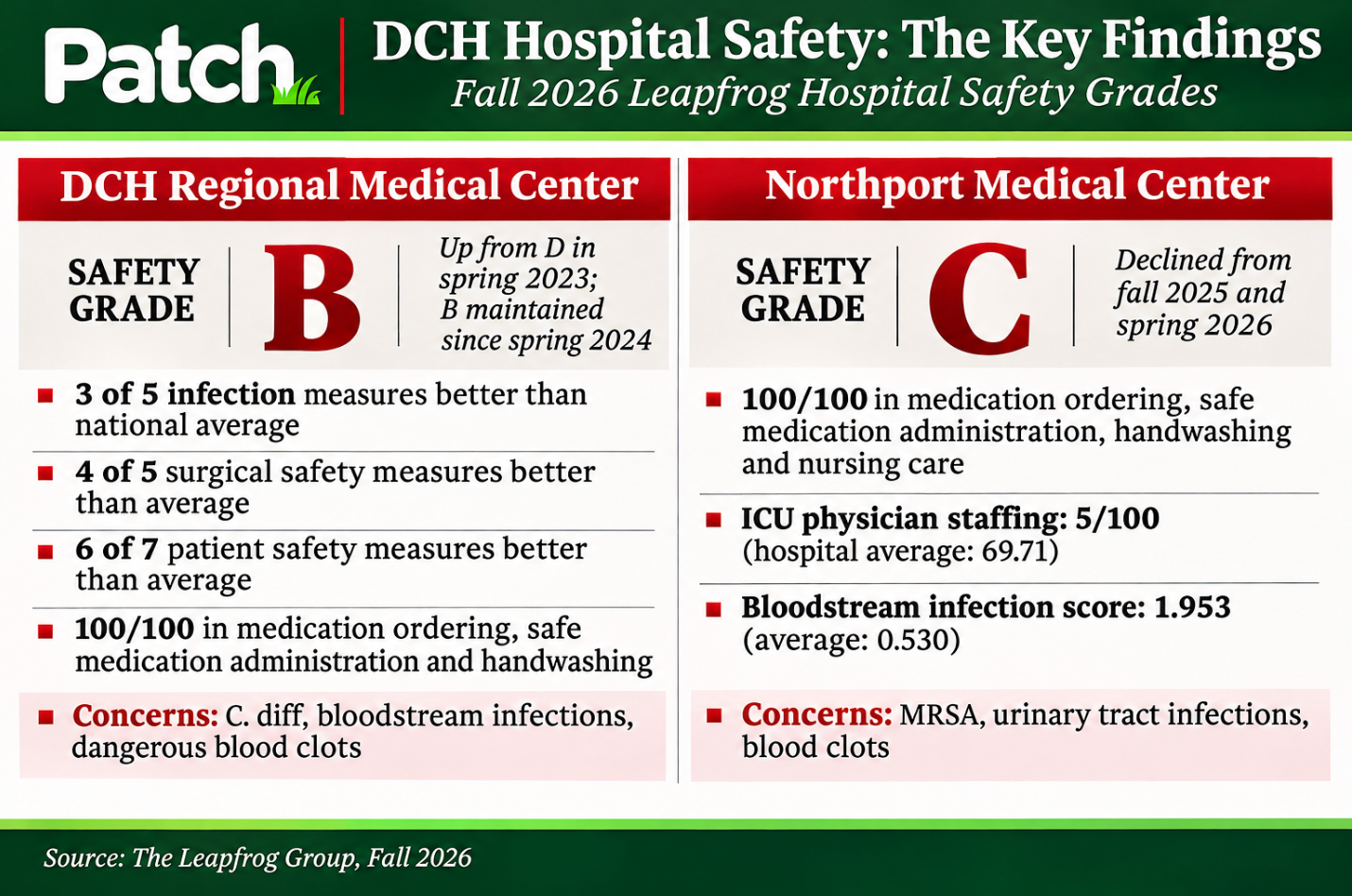
For DCH Regional Medical Center, the latest report offers a more detailed look at the hospital's performance, highlighting strengths in medication safety, hospital leadership and certain infection-prevention measures, while also identifying areas where its scores were less favorable.
The findings also come six months after the May 12 killing of 27-year-old DCH nurse Ada Chapman Doss in the hospital's parking lot — a tragedy that prompted the health system to implement sweeping new security measures across its facilities.
While the Leapfrog ratings focus on clinical patient safety rather than workplace security or criminal violence, the killing raised broader concerns about safety on the hospital campus that has dominated conversation in the community.
Improvement Since 2023
One of the most notable findings in the latest report is DCH Regional Medical Center's sustained improvement over the past several years.
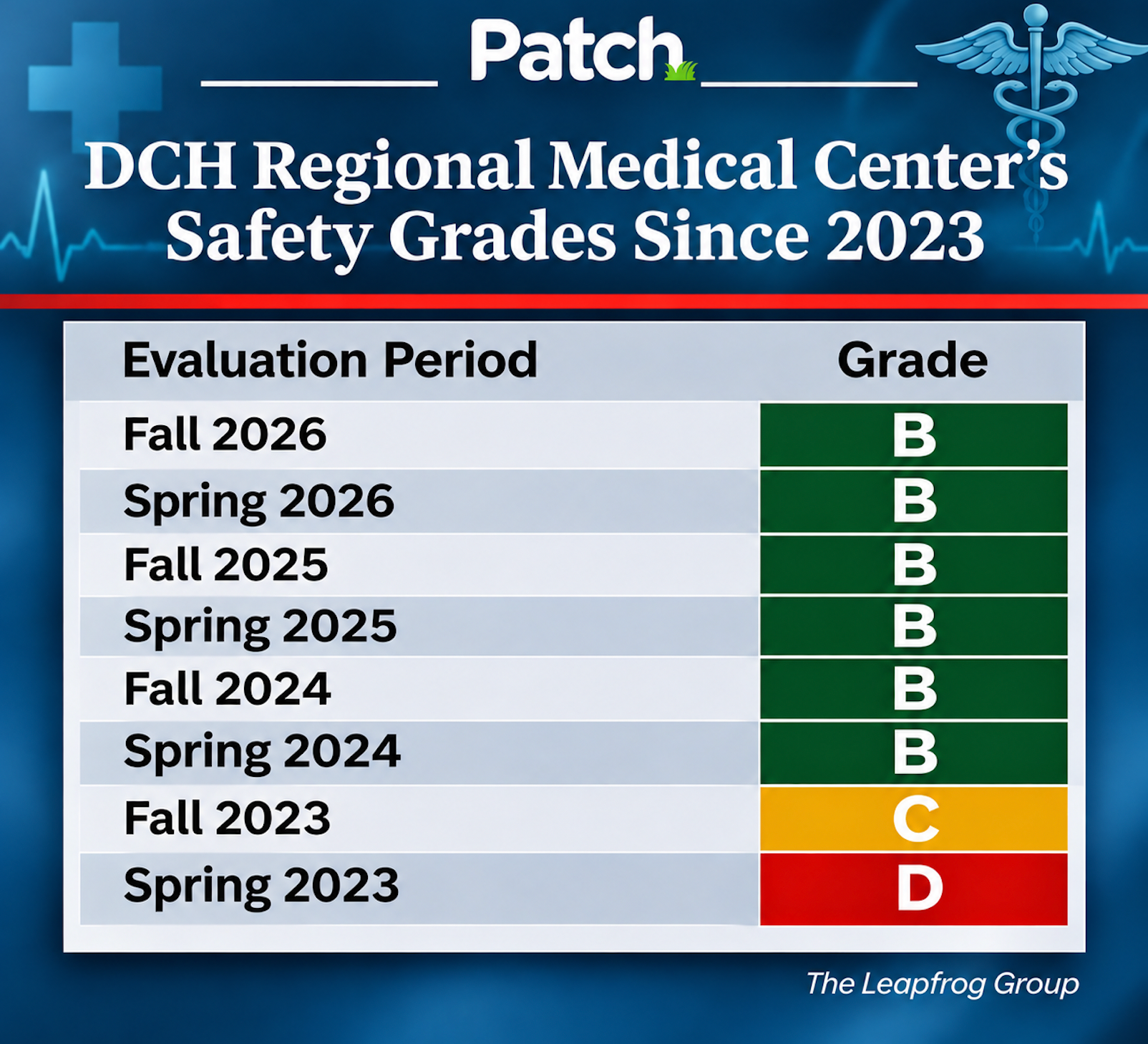
The hospital received a "D" in spring 2023, followed by a "C" that fall, before improving to a "B" in spring 2024.
It has maintained that grade in every subsequent evaluation, including the latest fall 2026 report.
DCH Regional Medical Center's grades since 2023:
It's worth noting here that the individual measures underlying the overall grade reveal a more complicated picture, with some areas outperforming national averages and others presenting opportunities for improvement.
Infection Prevention: Mixed Results
DCH Regional Medical Center's infection-prevention scores showed mixed results, with the hospital outperforming national averages in three of five measured categories but falling behind in two others.
According to Leapfrog's 2025 data, the hospital received a score of 0.650 for methicillin-resistant Staphylococcus aureus (MRSA), slightly better than the national hospital average of 0.656.
DCH also performed better than average in preventing catheter-associated urinary tract infections, scoring 0.244 compared with the national average of 0.450.
Surgical site infections following colon surgery were another relative strength, with DCH scoring 0.682 compared with the national average of 0.786.
However, the hospital performed worse than average in two other categories:
- C. difficile infections: DCH scored 0.720, compared with the national average of 0.322. The bacterial infection can cause severe diarrhea and other gastrointestinal complications.
- Central line-associated bloodstream infections: DCH scored 1.092, compared with the national average of 0.530. These potentially life-threatening infections can occur when bacteria enter the bloodstream through intravenous catheters.
Leapfrog's infection scores compare observed infections with the number expected based on patient populations and other risk factors. Lower scores indicate better performance, with scores below 1.0 representing fewer infections than expected.
All five measures reflect data collected between Jan. 1 and Dec. 31, 2025. Data for sepsis infections following surgery was unavailable.
Surgical Safety And Patient Injuries
DCH Regional Medical Center performed better than the national hospital average in four of five available surgical safety measures, although one category involving deaths from serious complications raised concerns.
The hospital received a perfect score of 0.000 for dangerous objects accidentally left inside patients following surgery, compared with the national average of 0.011.
Other favorable results included:
- Surgical wounds splitting open: DCH scored 1.54, compared with the national average of 1.77.
- Blood leakage during surgery: DCH scored 1.97, compared with the national average of 2.32.
- Accidental cuts and tears: DCH scored 0.95, compared with the national average of 1.05.
However, DCH performed worse than average in deaths following serious but potentially treatable surgical complications, receiving a score of 201.58 compared with the national average of 173.21.
The measure examines deaths among surgical patients who develop serious complications, including pneumonia, heart attacks or organ failure.
All five measures reflect data collected between July 1, 2022, and June 30, 2024. Data for kidney injuries following surgery and serious postoperative breathing problems was unavailable.
Patient Safety
DCH Regional Medical Center performed better than the national hospital average in six of seven patient safety measures, although its rate of dangerous blood clots following surgery was notably higher than average.
The hospital scored 5.12 for dangerous blood clots, compared with the national average of 3.52. The measure tracks potentially life-threatening blood clots among surgical patients, including those that can travel to the lungs.
However, DCH posted favorable results in several other categories:
- Harmful events: DCH scored 0.94, compared with the national average of 1.00.
- Dangerous bed sores: DCH scored 0.24, substantially better than the national average of 0.60.
- Patient falls and injuries: DCH scored 0.115, compared with the national average of 0.339.
- Falls causing broken hips: DCH scored 0.24, compared with the national average of 0.27.
- Collapsed lungs: DCH scored 0.20, slightly better than the national average of 0.21.
- Air or gas bubbles in the blood: DCH received a perfect score of 0.000, compared with the national average of 0.001.
The results suggest DCH has performed particularly well in preventing patient falls, serious pressure sores and certain medical complications, while blood clot prevention remains an area of concern.
As with the previous category, the seven measures reflect data collected between July 1, 2022, and June 30, 2024.
Preventing Errors
DCH Regional Medical Center received strong marks in several categories measuring hospital procedures designed to prevent medical errors, according to The Leapfrog Group's latest Hospital Safety Grade evaluation.
The hospital earned perfect scores of 100 out of 100 in three categories: computerized physician medication ordering, safe medication administration and handwashing.
All three scores exceeded their respective hospital averages.
For computerized medication ordering, DCH scored 100 compared to an average of 84.64. The measure evaluates systems that allow physicians to enter prescriptions electronically while identifying potentially dangerous medication errors.
DCH also earned 100 for safe medication administration, compared to an average of 86.71. This category measures the use of barcode technology to verify that patients receive the correct medications and dosages.
Handwashing practices were another area of strength, with DCH receiving a 100 compared to an average of 79.71. The measure evaluates hospital policies and monitoring procedures intended to reduce the spread of infections.
The hospital also received a perfect score of 120 for staff teamwork and efforts to prevent errors, slightly exceeding the average of 118.45. This measure examines hospital safety culture, including staff communication, leadership and procedures for identifying potential mistakes before patients are harmed.
However, DCH's patient communication scores were closer to average.
The hospital received a score of 76 for communication about medications, compared to an average of 75.66. This reflects patients' assessments of how effectively hospital staff explained new medications and potential side effects.
DCH also scored 84 for communication about discharge instructions, slightly below the average of 84.89.
The medication communication and discharge scores reflect patient feedback collected from Oct. 1, 2024, through Sept. 30, 2025, while the other four measures are identified as covering 2026.
Doctors, Nurses And Hospital Staff
DCH Regional Medical Center received high marks for hospital leadership, nursing care and specialized intensive care staffing in The Leapfrog Group's latest safety evaluation, although patient communication scores were slightly below average.
The hospital earned a perfect score of 120 out of 120 for effective leadership in preventing errors, exceeding the hospital average of 118.58.
DCH also received a perfect score of 100 for nursing and bedside care, substantially exceeding the average of 81.20.
Another area of strength was intensive care staffing, where DCH earned a perfect score of 100, compared to an average of 69.71. This measure examines whether critically ill patients receive care from specially trained intensive care physicians, known as intensivists.
However, as was the case regarding medications, patient communication scores were less favorable.
DCH received a score of 90 for communication with doctors, nearly matching the hospital average of 90.02 in a category that measures patients' perceptions of whether physicians explained medical information clearly, listened carefully and treated patients with courtesy and respect.
Communication with nurses received a score of 89, below the hospital average of 90.67.
One additional category, responsiveness of hospital staff, was unavailable for DCH and all other hospitals evaluated. Leapfrog said the Centers for Medicare & Medicaid Services temporarily paused public reporting of the measure, which examines how quickly hospital personnel respond when patients request assistance.
The measure is expected to return in the spring 2027 Hospital Safety Grade evaluation.
Hospital Security Strengthened Following Death Of Ada Doss
Although Leapfrog's Hospital Safety Grade evaluates clinical safety rather than security against violent crime, the discussion of safety at DCH Regional Medical Center comes against the backdrop of one of the most traumatic incidents in the hospital's recent history.
On May 12, Doss, a wife and mother, was fatally shot while walking to her vehicle during a shift change in the hospital's south parking lot.
As Patch previously reported, investigators described the killing of the beloved nurse as a random act of violence during an attempted robbery.
Matthew James Taylor was subsequently charged with capital murder and jailed without bond.
The tragedy prompted questions from employees and the community about security measures at the hospital, particularly in parking areas and during shift changes.
In the weeks following the killing, DCH leadership announced a series of changes intended to improve security for employees, patients and visitors.
As Patch reported in June, those improvements included:
- Additional security personnel: Expanded overnight security staffing and the use of off-duty police officers to patrol hospital property.
- Emergency communication stations: Installation of Blue Emergency Boxes in the Laundry Lot and South Lot, providing direct communication with hospital security.
- Expanded surveillance: Placement of a mobile camera unit in the Laundry Lot through a partnership with the University of Alabama.
- Increased security visibility: Yellow safety vests for security personnel and regular patrols using clearly marked vehicles.
- Security escorts: Around-the-clock escorts available to employees and visitors traveling to and from their vehicles.
- Improved communication: Security contact information posted on parking lot light poles and distributed to employees through identification badge attachments.
DCH also extended shuttle and escort services and began reviewing additional security improvements throughout its facilities.
The changes followed meetings with employees, consultations with law enforcement and security professionals, and a review of the events surrounding Doss' death.
As Patch reported in May, DCH Health System CEO Katrina Keefer emphasized the importance of making lasting improvements rather than relying solely on an immediate increase in police presence.
She also acknowledged the importance of ensuring employees feel safe while carrying out their responsibilities.
"I know that you can't take care of patients if you are worried about your safety coming to and from our facilities," Keefer said.
Northport Medical Center
Northport Medical Center received a C grade in The Leapfrog Group's fall 2026 Hospital Safety Grade evaluation, marking a decline from fall 2025 and spring 2026.
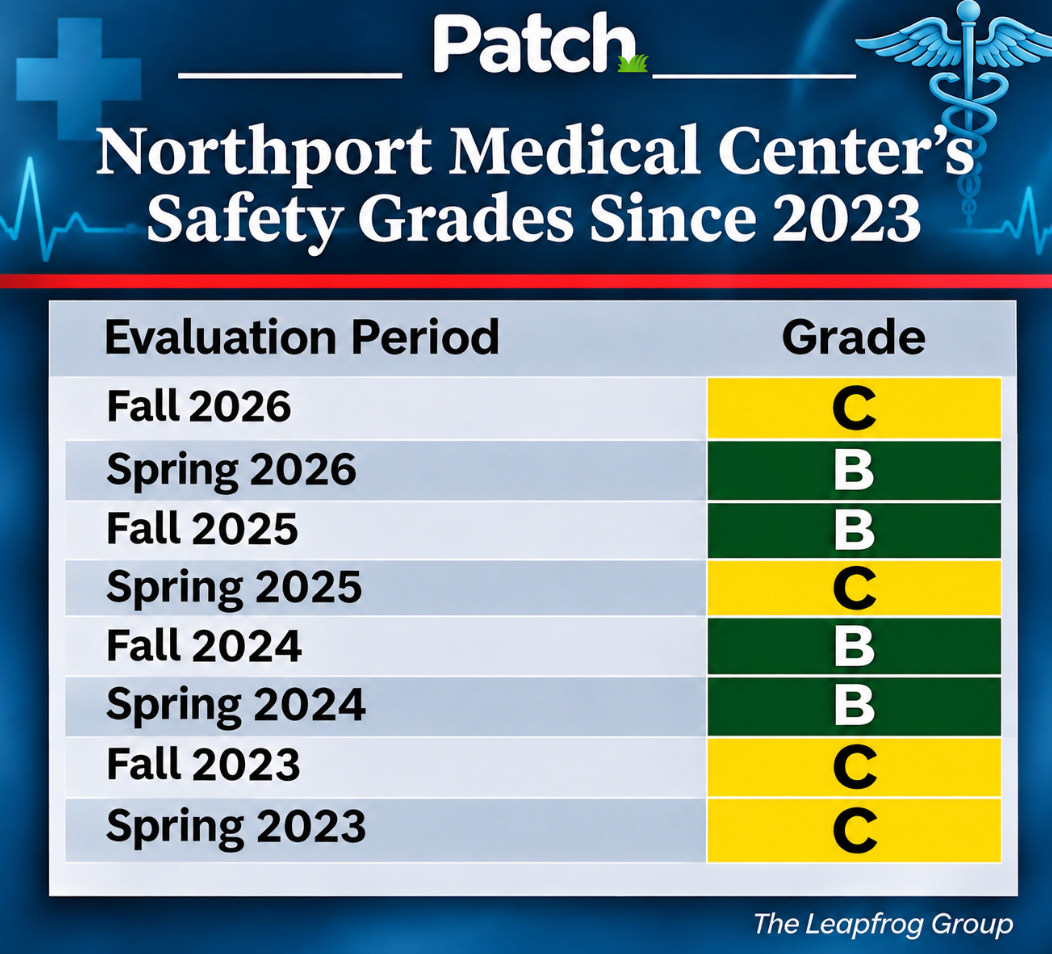
The latest evaluation identified several areas of concern, particularly hospital-acquired infections, complications following surgery and specialized intensive care staffing.
Northport Medical Center reported a bloodstream infection score of 1.953, substantially worse than the hospital average of 0.530.
Its MRSA infection score was 1.936, compared to an average of 0.656, while urinary tract infections scored 0.754 against an average of 0.450. For these measures, lower scores indicate better performance.
However, the hospital performed better than average in preventing infections caused by Clostridioides difficile, commonly known as C. diff, with a score of 0.268 compared to an average of 0.322.
The hospital also received a score of 201.58 for deaths from treatable serious complications, compared to an average of 173.21, indicating worse-than-average performance on that measure.
Other areas of concern included dangerous blood clots, where Northport scored 5.12 compared to an average of 3.52.
Despite those findings, Northport Medical Center performed well in several categories involving patient safety procedures and hospital management.
The hospital earned perfect scores of 100 for computerized medication ordering, safe medication administration, handwashing and nursing and bedside care.
It also received perfect scores of 120 for effective leadership in preventing errors and staff teamwork to prevent mistakes.
However, one of the most significant deficiencies involved specialized intensive care staffing.
Northport received a score of just 5 out of 100 for having specially trained physicians care for intensive care unit patients, compared to a hospital average of 69.71. This metric evaluates whether hospitals staff intensive care units with physicians who have advanced training in critical care.
Patient communication scores were also mixed.
Northport received a score of 90 for communication with doctors, essentially matching the average of 90.02, while communication with nurses scored an 89 — below the average of 90.67.
Communication about medications scored 76, slightly above the average of 75.66, while communication about discharge instructions received an 84, just below the average of 84.89.
The hospital also reported favorable results in several measures involving preventable injuries, including patient falls and injuries, which scored 0.115 compared to an average of 0.339.
Northport reported no incidents in the measures tracking dangerous objects left inside patients following surgery or air and gas bubbles entering the bloodstream.
Several measures, including surgical site infections following colon surgery, kidney injuries after surgery and serious breathing problems, were listed as unavailable.
Residents can review the complete statewide rankings and individual hospital performance measures through the Leapfrog Hospital Safety Grade website.
Have a news tip or suggestion on how I can improve Tuscaloosa Patch? Maybe you're interested in having your business become one of the latest sponsors for Tuscaloosa Patch? Email all inquiries to me at ryan.phillips@patch.com
Get more local news delivered straight to your inbox. Sign up for free Patch newsletters and alerts.